Medical Tourism Blog
Breast Nipple Whitening Desire: Nipple Bleaching Procedures in Korea for a Brighter Look
Table of contents
- Detailed Medical Procedures for Nipple Bleaching
- Best Clinics in Korea for Breast Nipple Whitening Desire
- The Nipple Bleaching Process in South Korea
- Costs and Medical Tourism for Nipple Bleaching
- Patient Experiences and Outcomes
- Conclusion
- References
Considering treatment in Korea? Everything you need to know e.g. — how to avoid scams, visas, interpreters, recovery tips — in our Medical Tourism Master Guide. Plan with confidence in minutes, not weeks!
Making changes to one’s appearance, including wanting a lighter nipple and areola area, is a deeply personal decision shaped by individual preferences. This trend, known as "breast nipple whitening desire," can significantly affect how people see themselves and their self-confidence. It's important to have reliable, medically sound information and to understand that diverse nipple colors are normal and healthy. Most people seeking these cosmetic options do so out of personal preference and not due to an underlying medical need.
Cosmetic nipple lightening, also called "nipple bleaching," covers several procedures aimed at reducing pigmentation in the nipple and areola. These treatments are mainly non-surgical, targeting melanin in the skin’s outer layers to create a lighter, even tone. It’s different from nipple reconstruction, which is done after mastectomy.
People searching for ways to change nipple color online may encounter terms like:
- Nipple Lightening
- Areola Lightening
- Intimate Bleaching (a broad term applied to intimate areas, including nipples)
- Nipple Brightening
- Nipple Whitening Treatment
- Nipple Embroidery (involves adding pigment, distinct from bleaching)
Nipple and areola color is affected by several factors. Hormonal changes (puberty, menstrual cycles, oral contraceptives), pregnancy, breastfeeding, genetics, aging, and friction can all play a role. Darker nipples and areolae are common and normal. Conversely, certain medical interventions, such as breast augmentation or lumpectomy with radiotherapy, may make the area appear paler. It’s crucial to distinguish between natural color variations and changes due to medical treatments or procedures and to seek medical advice if there are unusual or concerning changes.
For many, the motivation for nipple whitening comes from a desire for a uniform skin tone and improved body confidence. These procedures often provide meaningful psychological benefits. Effective patient counseling should explore these motivations to ensure that cosmetic procedures match patients’ true goals.
Detailed Medical Procedures for Nipple Bleaching
Nipple bleaching options are mostly non-surgical and minimally invasive, focusing on lowering melanin levels in the skin’s outer layers. Achieving noticeable results often takes multiple sessions. Treatment options range from home products to high-tech clinical interventions, and most patients start with gentler methods first.
Topical Creams and Ointments
These products are applied directly to the nipples and areolae and use various active ingredients:
- Hydroquinone: Strong lightener, but concentrations above 2% or with mercury should only be used under medical supervision due to serious health risks.
- Kojic Acid, Arbutin, Vitamin C, Niacinamide, Azelaic Acid: Work by disrupting melanin production and transfer.
Safe topical treatment usually means daily use for several weeks, and the products should be designed for sensitive skin. Any irritations (tingling, redness) should prompt immediate discontinuation. Only approved products should be used, and long-term or unsupervised use risks harmful chemical buildup.
Laser Therapy
Laser nipple bleaching uses targeted light energy to break down excess melanin, providing more even, lighter skin. Popular lasers include:
- Q-switched Nd:YAG
- Fractional CO2
- PicoSure
- Spectra Toning (Nd:YAG)
- Fraxel
- Enlighten Laser
Several treatment sessions, spaced weeks apart, are typically required for noticeable change.
Chemical Peels
Chemical peels use acid-based solutions to exfoliate and reveal newer skin. Common acids include:
- Glycolic Acid
- Lactic Acid
- TCA (Trichloroacetic Acid)
- Salicylic Acid
- Mandelic Acid
- Kojic Acid
- Vitamin C
Proper pre-procedure preparation and aftercare are important, and peeling, redness, and possible pigmentation change can occur.
Microdermabrasion
A gentle procedure that exfoliates pigmented skin layers to stimulate new, lighter skin growth. Often used in combination with other methods.
Other Approaches
- Cryotherapy: Brief application of extreme cold to treat pigmentation.
- Nipple Embroidery (Semi-Permanent Makeup/Tattooing): Adds pigment for a lighter or pinker tone. This method is semi-permanent and can also be used post-reconstruction.
Natural Remedies
Some turn to remedies like coconut oil, aloe vera, diluted lemon juice, turmeric, and general nipple creams for lightening, though scientific evidence for dramatic effects is lacking.
Best Clinics in Korea for Breast Nipple Whitening Desire
Listed below are the best clinics in Korea for breast nipple whitening desire:
| Clinic Name | Key Features | Special Techniques |
|---|---|---|
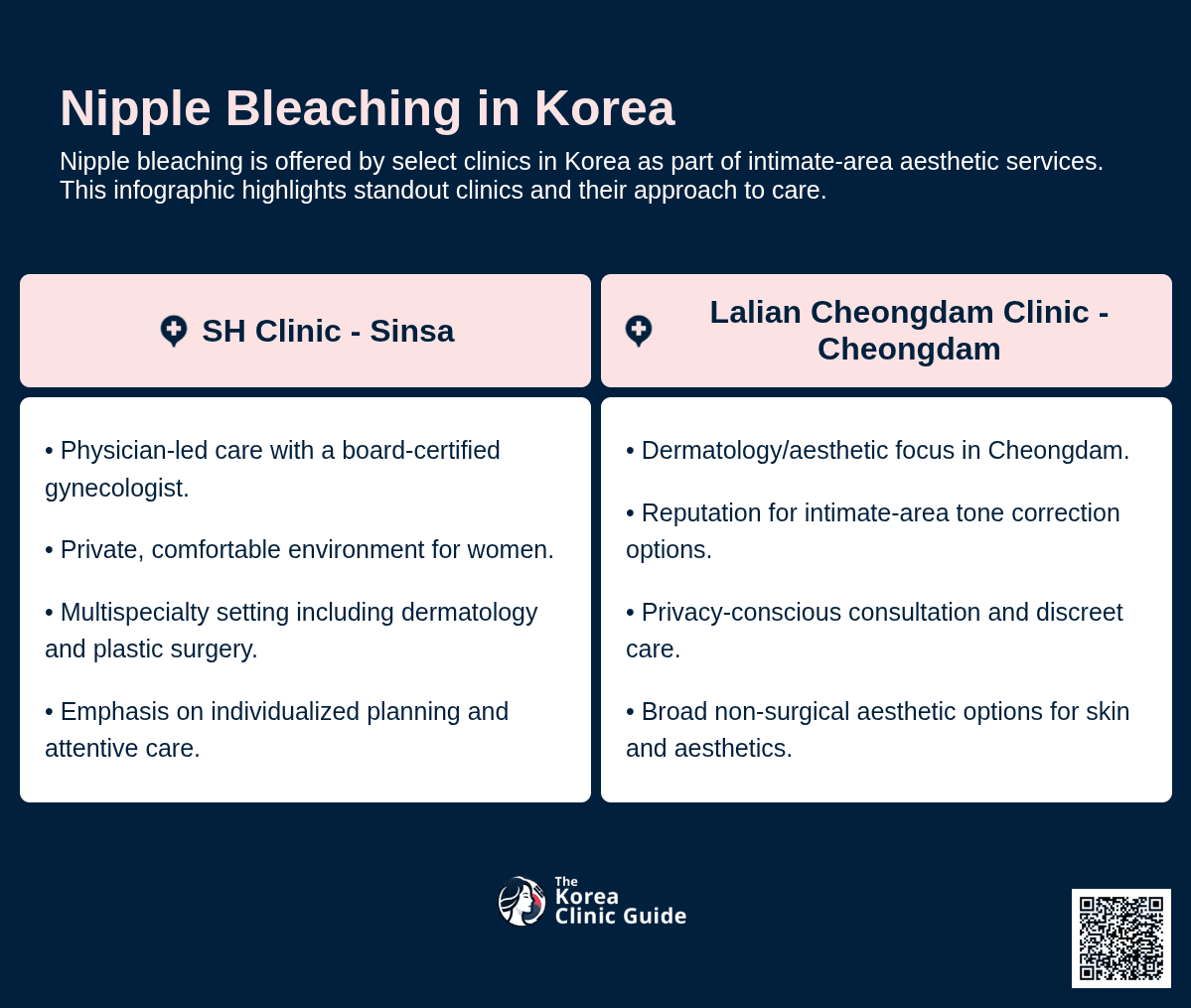
| SH Clinic Website | Located in Sinsa, Seoul, SH Clinic is a multi-specialty medical center that brings together stem-cell science, women’s healthcare, aesthetic dermatology, and modern plastic surgery under one roof. As a specialized women’s care clinic, it is designed to provide a comfortable, discreet setting with expertise tailored to female patients—an important consideration for those exploring intimate aesthetic concerns such as breast nipple whitening. At SH Clinic, all surgeries and procedures are performed directly by a highly experienced, board-certified gynecologist who has been recognized with a commendation from the Minister of Health and Welfare. This physician-led approach, combined with SH Clinic’s comprehensive gynecology services and commitment to personalized care, helps patients pursue aesthetic goals with a focus on medical safety, professionalism, and patient comfort. | Procedures are performed directly by a highly experienced, board-certified gynecologist; physician-led approach. |
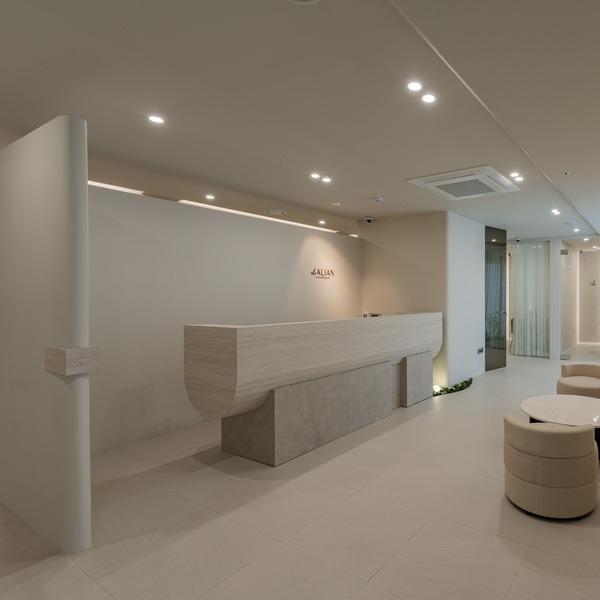
| Lalian Cheongdam Clinic Website | Lalian Cheongdam Clinic is a name that frequently comes up in conversations about aesthetic concerns in Korea, including interest in breast and nipple whitening as part of overall body-skin tone management. However, because the clinic’s official website content was not accessible from the “access forbidden” page available as a source, it is not possible to accurately describe the clinic’s specific nipple-whitening methods, devices, or products without risking misinformation. For readers considering any whitening-related procedure, the most reliable approach is to confirm the clinic’s current offerings directly (for example, by requesting an official procedure list or consultation details) and to ask about expected outcomes, number of sessions, downtime, and safety considerations for sensitive areas. Any article-level description of Lalian Cheongdam Clinic’s nipple-whitening services should be based on an official menu page, screenshots of the procedure list, or a clinic-provided treatment outline to ensure accuracy. Find more about this clinic here: Lalian Cheongdam Clinic Website | No specific nipple-whitening methods described; recommends confirming current offerings via official menu page, procedure list, or clinic-provided treatment outline to ensure accuracy. |
SH Clinic
Located in Sinsa, Seoul, SH Clinic is a multi-specialty medical center that brings together stem-cell science, women’s healthcare, aesthetic dermatology, and modern plastic surgery under one roof. As a specialized women’s care clinic, it is designed to provide a comfortable, discreet setting with expertise tailored to female patients—an important consideration for those exploring intimate aesthetic concerns such as breast nipple whitening.
At SH Clinic, all surgeries and procedures are performed directly by a highly experienced, board-certified gynecologist who has been recognized with a commendation from the Minister of Health and Welfare. This physician-led approach, combined with SH Clinic’s comprehensive gynecology services and commitment to personalized care, helps patients pursue aesthetic goals with a focus on medical safety, professionalism, and patient comfort.
You can check out their website here: SH Clinic Website
Lalian Cheongdam Clinic
Lalian Cheongdam Clinic is a name that frequently comes up in conversations about aesthetic concerns in Korea, including interest in breast and nipple whitening as part of overall body-skin tone management. However, because the clinic’s official website content was not accessible from the “access forbidden” page available as a source, it is not possible to accurately describe the clinic’s specific nipple-whitening methods, devices, or products without risking misinformation.
For readers considering any whitening-related procedure, the most reliable approach is to confirm the clinic’s current offerings directly (for example, by requesting an official procedure list or consultation details) and to ask about expected outcomes, number of sessions, downtime, and safety considerations for sensitive areas. Any article-level description of Lalian Cheongdam Clinic’s nipple-whitening services should be based on an official menu page, screenshots of the procedure list, or a clinic-provided treatment outline to ensure accuracy.
Find more about this clinic here: Lalian Cheongdam Clinic Website
The Nipple Bleaching Process in South Korea
South Korea is a leader in cosmetic procedures, including nipple whitening, noted for advanced technology and safety. The typical process includes:
Initial Consultation and Assessment
A certified dermatologist consults with the patient to discuss needs, medical history, and expectations. The skin is assessed for suitability, and possible allergies to whitening substances are checked.
Pre-Procedure Preparation
Skin is thoroughly cleansed and patients may be asked to avoid certain topical products or treatments for about a week beforehand.
Application of Topical Anesthesia
A topical anesthetic is applied to ensure comfort, so patients usually feel minimal discomfort.
The Treatment Session
Depending on the chosen method—topical agents, laser, or peels—nipple bleaching sessions range from about 20 to 30 minutes (more for embroidery). Several sessions are generally needed, spaced weeks apart.
Post-Treatment Care and Recovery
Post-procedure care features soothing creams, diligent moisturization, sun avoidance, and restrictions on friction and strenuous activities. Temporary redness, sensitivity, or peeling may occur but usually resolves in days. Multiple sessions and consistent follow-up are needed for optimal results. Korean clinics often invest extensively in both pre- and post-treatment patient care, adding to safety and satisfaction.
Costs and Medical Tourism for Nipple Bleaching
Nipple whitening in South Korea is competitively priced given its quality and technology.
Cost of Nipple Bleaching in South Korea
- Nipple Bleaching (specific): About $482–$500 USD (₩700,000–₩725,000 KRW)
- Nipple Whitening Treatment (general): About $300–$700 USD (₩435,000–₩1,015,000 KRW)
- Overall Skin Whitening Treatments: $70–$2,500 per session
- Average Laser Skin Whitening: $75–$400 per session
- Chemical Peels: $70–$300 per session
- Consultation: $30–$100
Service packages often include sessions, consultation, and aftercare products.
Key cost factors include clinic reputation and location, practitioner expertise, chosen method, and number of sessions.
Comparative Costs: South Korea vs. Other Countries
| Country/Region | Procedure/Service Type | Approximate Cost Range (USD) | Notes |
|---|---|---|---|
| South Korea | Nipple Whitening Treatment | $300–$700 | Includes multiple sessions, consultation, and aftercare |
| South Korea | Nipple Bleaching (specific) | $482–$500 | |
| South Korea | Laser Skin Whitening | $75–$400 per session | Costs vary by laser type (PicoSure, Spectra, Fraxel) |
| USA | Nipple Bleaching | $1,000–$3,000 | Dependent on number of sessions and aftercare |
| Malaysia | Laser Nipple Whitening | $174–$435 | 800–2,000 MYR |
| Singapore | Nipple Embroidery | $370–$520 | Typically includes multiple sessions and touch-up rates |
Considerations for Medical Tourists
Travelers should account for:
- Airfare ($500–$1,500 typical)
- Local transport ($1–$3 per subway or bus trip, taxis from $3.50)
- Accommodation
- Daily expenses and meals
- Visa requirements (if applicable)
- Lost income/time off work
South Korea offers a strong value proposition: advanced care, safety, and skilled professionals. Patients should budget for the total cost, not just the procedure.
Patient Experiences and Outcomes
Choosing nipple whitening often stems from personal concerns about body image and intimacy. Many report relief from self-consciousness and higher self-esteem after treatment.
Expected Results and Variability
Results generally start to show after one to two months, and several sessions are usually needed. Outcomes last for years but may need annual touch-ups. Effectiveness varies by skin type, original pigmentation, treatment type, and aftercare compliance.
Patient Satisfaction
Satisfaction rates, especially in South Korea, are high. Patients value improved appearance and confidence with minimal discomfort. Aesthetic nipple modifications are linked to enhanced psychological and sexual well-being.
Potential Side Effects and Risks
Possible effects include:
- Temporary irritation, redness, or sensitivity (usually short-lived)
- Swelling
- Burning sensation
- Peeling, scabbing, crusting (more common with laser/peel)
- (Rarely) hyperpigmentation, hypopigmentation, scarring
- Allergic reactions to creams
Using reputable clinics and trained professionals is vital for safety.
Importance of Professional Consultation and Realistic Expectations
A thorough initial consultation determines suitability and sets realistic expectations about results and recovery. Patients should carefully follow aftercare advice for the best outcomes.
Conclusion
The desire for breast nipple whitening is a personal, aesthetic choice grounded in self-perception and confidence. Various safe and effective procedures exist, from topical treatments to laser therapy and pigment modification techniques. South Korea stands out for its skilled professionals, safety standards, and comprehensive patient support. It’s essential to have realistic expectations, commit to multiple sessions, and consult qualified practitioners for the best and safest experience.
References
1, 2, 3, 4, 5, 6, 7, 8, 9, 10, 11, 12, 13, 14, 15, 16, 17, 18, 19, 20, 21, 22, 23, 24