
Medical Tourism Blog
Perennial Rhinitis Solutions: Rhinitis Surgery in Korea for Effective Long-Term Relief

Table of contents
- Surgical Solutions for Rhinitis
- Getting Rhinitis Surgery in South Korea: Patient Journey
- Which Are the Best Clinics in Korea for Perennial Rhinitis?
- Cost Breakdown of Rhinitis Surgery: South Korea vs. Other Destinations
- Patient Outcomes and Recovery
- Conclusion
- References
Considering treatment in Korea? Everything you need to know e.g. — how to avoid scams, visas, interpreters, recovery tips — in our Medical Tourism Master Guide. Plan with confidence in minutes, not weeks!
Perennial rhinitis, marked by year-round nasal inflammation, can be a frustrating and persistent problem for many. This guide explains what perennial rhinitis is, dives into the most common surgical treatments, outlines the process for patients considering medical tourism in South Korea, breaks down costs, and shares insight on outcomes. The goal is to help you confidently discuss options with your healthcare provider and make informed decisions about treatment.
Perennial rhinitis is a chronic inflammatory nasal condition. Its symptoms—nasal obstruction, sneezing, itching, or rhinorrhea—stick around for at least an hour most days of the year. Unlike seasonal allergies, symptoms are persistent and can make people feel constantly under the weather.
Common Symptoms and How They Affect Life
The most common sign of perennial rhinitis is ongoing nasal inflammation, leading to a stuffy or runny nose. Patients might also notice sneezing, itchiness, postnasal drip, facial pressure, itchy eyes, sore throat, and trouble sleeping. These issues can reduce your quality of life, making work, school, and daily activities harder. If symptoms appear only on one side of the nose—especially with increasing blockage, blood-stained mucus, or facial pain—a more serious condition might need to be ruled out.
Causes and Triggers
There are many causes of perennial rhinitis. Diagnosis can be tricky, so it’s important to consult with an ENT specialist to pinpoint what’s behind your symptoms. Some common types include:
- Allergic Rhinitis (Perennial): Triggered by dust mites, pet dander, mold, and cockroaches.
- Non-Allergic Rhinitis: Includes:
- Idiopathic Rhinitis, sensitive to things like strong scents or temperature shifts.
- Non-allergic Rhinitis with Eosinophilia Syndrome (NARES), with high nasal eosinophils.
- Hormonal Rhinitis, due to hormonal changes.
- Drug-induced or food-induced rhinitis, sometimes sparked by certain meds, foods, or alcohol.
- Infective Rhinitis: Can be from acute or chronic infections, or immune deficiencies.
- Structural Abnormalities: Like a deviated septum, enlarged turbinates, or adenoids.
- Nasal Polyps: Often linked with asthma and aspirin allergy.
- Granulomatous and Atrophic Rhinitis: Tied to systemic conditions or tissue changes.
- Cerebrospinal Fluid (CSF) Leak: A rare but important cause of watery runny nose.
A broad evaluation, not just allergy tests, is often needed to guide the right treatment.
Pseudonyms and Related Conditions
Perennial rhinitis goes by many names—Perennial Allergic Rhinitis, Idiopathic Rhinitis, NARES, Hormonal Rhinitis, Drug-Induced Rhinitis, Food-Induced Rhinitis, and more. Some conditions mimic its symptoms, like CSF leaks or nasal polyps.
Table: Types and Causes of Perennial Rhinitis
| Type | Causes/Key Features | Common Symptoms |
|---|---|---|
| Perennial Allergic Rhinitis | Allergens (dust mites, pets, mold, cockroaches) | Itching, congestion, runny nose, sneezing |
| Idiopathic Rhinitis | Non-specific triggers (smells, smoke, temp changes) | Obstruction, sneezing, rhinorrhoea |
| NARES | High eosinophils, negative allergy tests | Perennial symptoms, corticosteroid response |
| Hormonal Rhinitis | Hormonal fluctuations, menopause, “old man’s drip” | Obstruction, watery rhinorrhoea |
| Drug-Induced Rhinitis | Certain medications | Medication-specific nasal symptoms |
| Food-Induced Rhinitis | Spicy foods, additives, alcohol | Rhinorrhoea, obstruction |
| Infective Rhinitis | Infections, immune problems | Chronic “cold-like” symptoms |
| Structural Abnormalities | Deviated septum, enlarged turbinates | Congestion, snoring, obstruction |
| Nasal Polyps | Inflammation, often asthma/aspirin sensitivity | Obstruction, reduced smell, infections |
| Granulomatous Rhinitis | Systemic disease (Wegener’s, sarcoidosis) | Inflammation, crusting, bleeding |
| Atrophic Rhinitis | Tissue atrophy (primary or post-surgery/trauma) | Congestion, loss of smell, bad odor |
| CSF Leak | Trauma, surgery, neoplasia | Watery, often one-sided rhinorrhoea |
Surgical Solutions for Rhinitis
When medications aren’t enough, surgery may help improve airflow and reduce bothersome symptoms. The best procedure depends on the underlying cause, so a thorough evaluation—including endoscopy, imaging, and sometimes allergy testing—is essential.
Turbinate Reduction
Goal: Shrink enlarged turbinates (bony nasal structures) to improve breathing.
Who it’s for: Patients with persistent congestion not helped by medicines, especially with enlarged turbinates due to allergic rhinitis.
How it’s done: Techniques include radiofrequency ablation, submucosal resection, or outfracture. Generally done with local or general anesthesia on an outpatient basis.
Benefits: Better airflow, less congestion, and improved quality of life.
Septoplasty
Goal: Straighten a deviated septum (the wall between nostrils) to boost airflow.
Who it’s for: People with nasal blockage from a crooked septum, sometimes with snoring or poor response to medical rhinitis treatments.
How it’s done: The surgeon corrects or removes the deviated portion under general anesthesia, usually as an outpatient.
Benefits: Easier breathing, reduced congestion, and an improved response to other treatments.
Endoscopic Sinus Surgery (FESS)
Goal: Open up blocked sinus passages for better drainage and reduce sinus inflammation.
Who it’s for: Patients with chronic sinusitis and rhinitis that don’t respond to treatments, or with nasal polyps.
How it’s done: Using a small camera and tools through the nose, diseased tissue is removed and sinus openings widened.
Benefits: Improved drainage and symptom relief, with 80–90% of patients seeing improvements.
Balloon Sinuplasty
Goal: Non-invasive method to dilate blocked sinus openings.
Who it’s for: Patients with mild blockages or sinus issues limited to specific sinuses.
How it’s done: A tiny balloon is inserted and inflated to widen the sinus openings—no cutting required. Recovery is rapid, usually within 24 hours.
Benefits: Minimal pain and downtime with quick return to normal life.
Posterior Nasal Nerve Procedures & Cryotherapy
Goal: Reduce or block nerve signals behind chronic rhinitis symptoms like congestion and runny nose.
Who it’s for: Patients with rhinitis (especially non-allergic) that doesn’t respond to other treatments.
How it’s done: Either freeze the nerve area (cryotherapy) or surgically ablate nerves (various specific procedures).
Benefits: Notable improvements in congestion, runny nose, and itching—especially when standard surgery isn’t effective.
Other Procedures (Nasal Valve Repair)
Nasal Valve Repair: Used if the narrowest nasal region is collapsing or narrowed, techniques like grafts or implants can help support and open the airway.
A common theme is the shift toward minimally invasive techniques, leading to less pain and faster recovery—ideal for medical tourists.
Table: Rhinitis Surgery Procedures Overview
| Procedure Name | Goal | Indications | Common Techniques | Usual Anesthesia | Recovery |
|---|---|---|---|---|---|
| Turbinate Reduction | Improve airflow | Chronic congestion, enlarged turbinates | RF ablation, submucosal resection | Local/General | 1–2 weeks |
| Septoplasty | Straighten septum | Deviated septum, obstruction | Correction/removal, reshaping | General | Fast relief |
| FESS | Open sinuses/drainage | Chronic sinusitis, polyps | Endoscopic removal | General | 1–3 weeks |
| Balloon Sinuplasty | Dilate sinuses | Mild/moderate blockage | Balloon catheter | Local | 1 day |
| Posterior Nasal Nerve Surgery | Block nerve signals | Refractory rhinitis | Cryotherapy/ablation | Local/General | Weeks–months |
| Nasal Valve Repair | Support airway | Nasal valve collapse | Grafts, implants | General | Varies |
Getting Rhinitis Surgery in South Korea: Patient Journey
South Korea is a leader in ENT care and attracts many medical tourists for nasal procedures. Here’s what sets it apart and how to start your journey.
Why Choose South Korea?
- Cost Savings: Rhinitis surgery in South Korea generally costs $2,000–$5,000 USD, much less than the $6,000–$15,000+ in the USA or UK.
- Expertise: Surgeons are highly trained—often with 20+ years’ experience—using advanced diagnostics and planning like 3D-CT scans.
- Medical Tourism Support: The process is organized for foreigners, from inquiry to aftercare, making travel and appointments easy.
- Comprehensive Care: Focuses on both function (good breathing) and aesthetics if desired.
Step-by-Step Process
- Choose a Clinic: Look for specialty centers with strong reviews and government accreditation. Clinics in Seoul with 3D-CT diagnostics are top options.
- Consultation: Often available online or in-person; covers health history, risk, and expected results. Pre-surgical tests (bloodwork, nasal checks) are standard, with fees usually $50–$150 USD.
- Visa & Documentation: Many nationalities can stay up to 90 days visa-free; others may need a medical visa or K-ETA, supported by clinic documentation.
- Payment: A deposit (~10% or $200–$500 USD) secures your booking. Get a written estimate outlining all charges.
- Surgery Day: Arrive on time and fast as directed. Most surgeries are outpatient or require just one night in the hospital.
- Post-Op Care: Early care includes managing swelling/bleeding, follow-up visits, and nasal irrigation instructions. Most patients feel mostly recovered in 2–3 weeks.
Planning for Logistics
Consider all these factors in total trip costs:
- Accommodation: $50–$200 USD/night; some clinics offer packages.
- Transport: Airfare and local transit ($100–$300 USD for local needs).
- Meals: Budget for daily food costs.
- Recovery Services: Extras like massages ($50–$150 USD/session) aren’t included and may help healing.
- Interpreter: Some clinics provide this, but if not, services cost $30–$100 USD/hour.
- Insurance: Usually not applicable for cosmetic work, but may offset costs if the surgery is functional.
- Emergency Fund: Setting aside $1,000 USD is wise for surprises.
- Best Seasons: Consider the mild months of April–June or September–November for travel.
Which Are the Best Clinics in Korea for Perennial Rhinitis?
Listed below are some of the best clinics in Korea for perennial rhinitis.
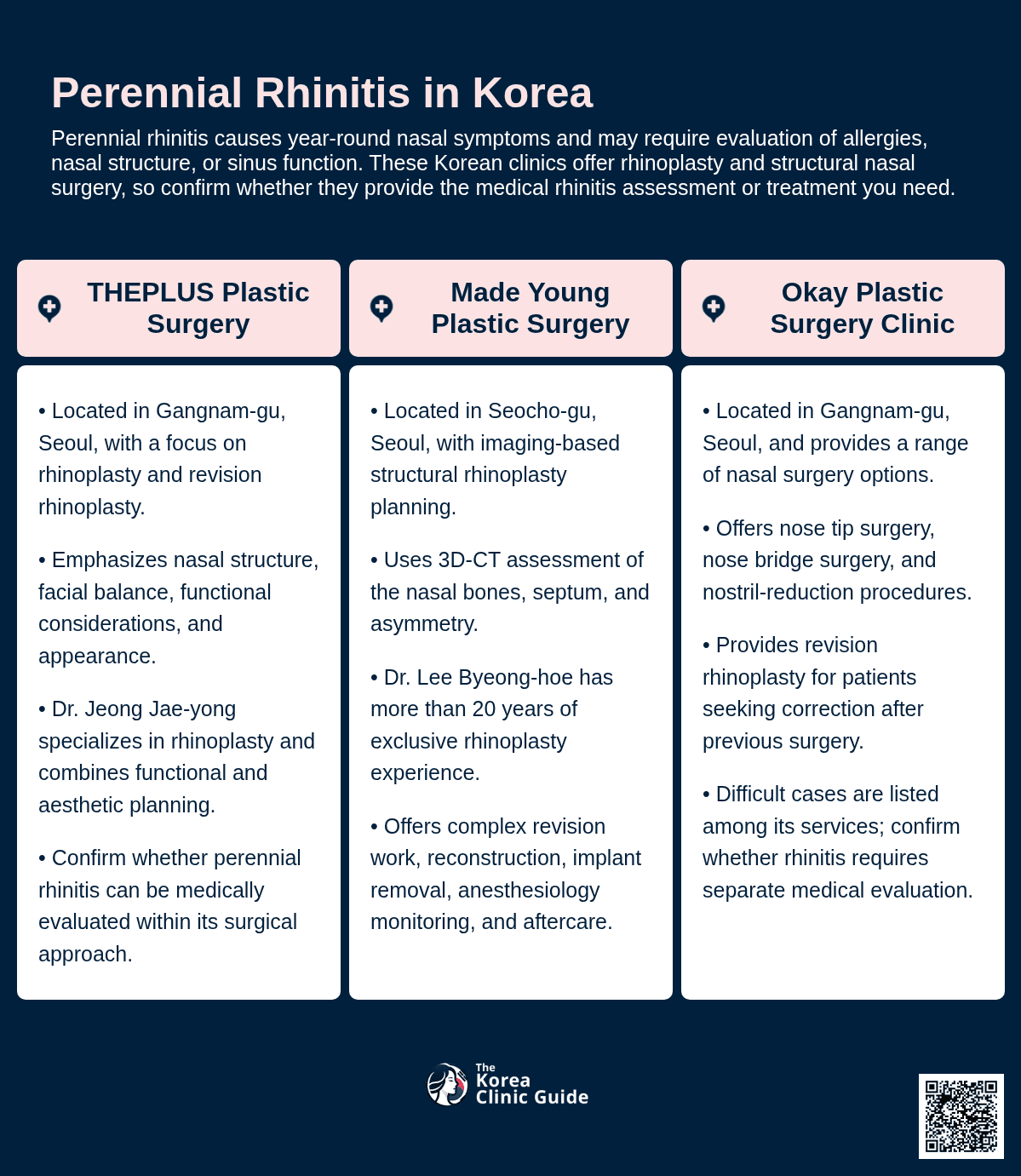
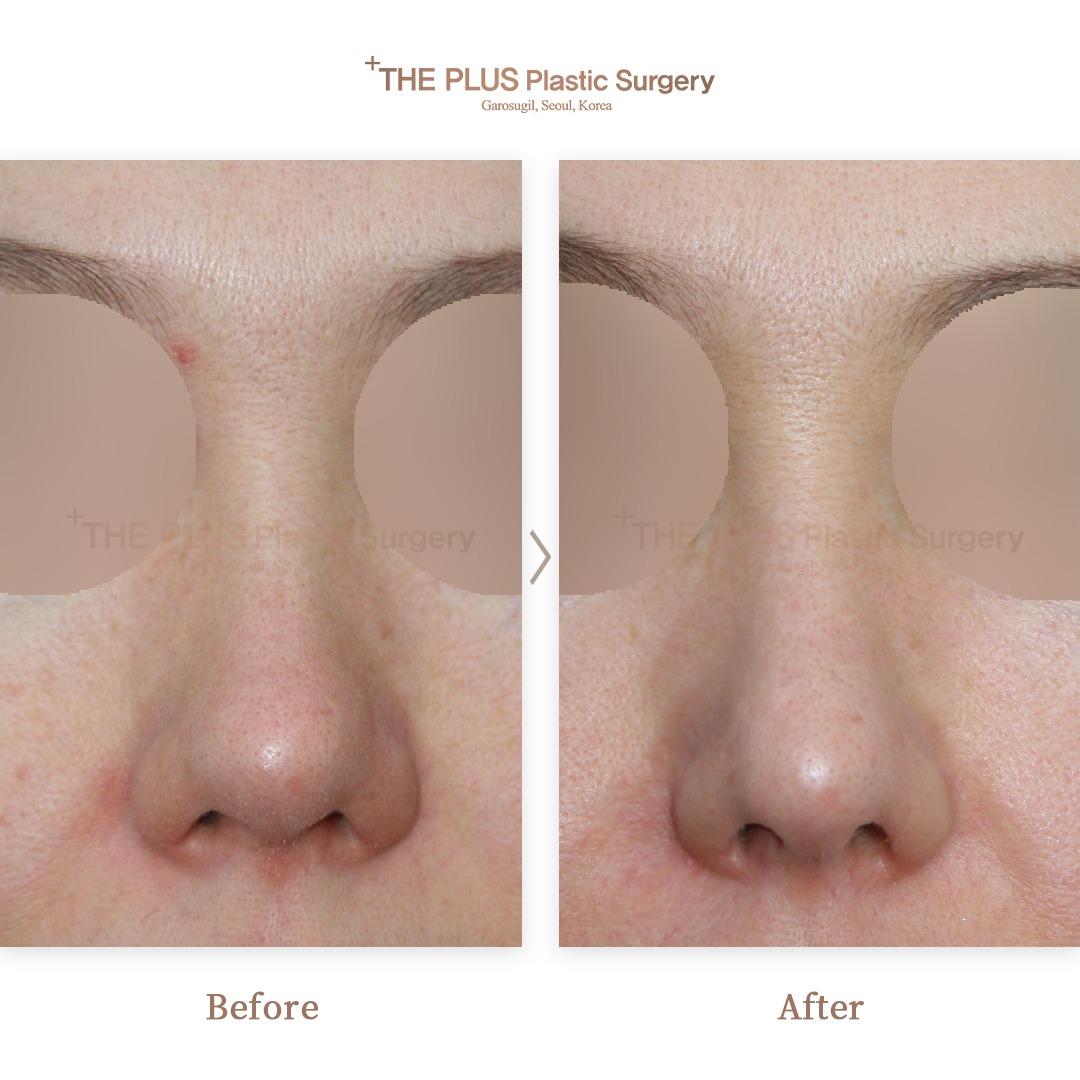
1. THEPLUS Plastic Surgery
If you are exploring nasal surgery alongside concerns related to perennial rhinitis, THEPLUS Plastic Surgery offers rhinoplasty and revision rhinoplasty with an emphasis on nasal structure and the relationship between function and appearance. The supplied information does not describe specific diagnostic or medical treatment for perennial rhinitis, so you would need to confirm whether your symptoms can be evaluated within its surgical approach.
- URL: THEPLUS Plastic Surgery Website
- Location: Gangnam-gu, Seoul
- Rhinoplasty focus:
- Offers rhinoplasty intended to address facial balance and structural harmony, with stated attention to both aesthetics and function.
- Provides revision rhinoplasty focused on restoring nasal stability and refining the result after previous nose surgery.
- Surgeon experience:
- Dr. Jeong Jae-yong specializes in rhinoplasty and describes a practice philosophy that combines function and beauty.
- Dr. Kim Taek-kyun is a board-certified plastic surgeon whose published contributions include rhinoplasty and revision rhinoplasty.
- Dr. Jeong authored "Rebuilding Nose: Rhinoplasty for Asians," and both Dr. Jeong and Dr. Kim participate in rhinoplasty education and professional conferences.
2. Made Young Plastic Surgery
You may consider Made Young Plastic Surgery if you are seeking structurally focused rhinoplasty or complex revision work and want imaging-based surgical planning: it uses 3D-CT assessment of the nasal bones, septum, and asymmetry, while Dr. Lee Byeong-hoe has more than 20 years of exclusive rhinoplasty experience. The provided information does not identify dedicated evaluation or treatment for perennial rhinitis, so you should confirm whether your nasal symptoms are appropriate for its surgical services.
- URL: Made Young Plastic Surgery Website
- Location: Seocho-gu, Seoul
- Nasal planning and techniques:
- Uses 3D-CT analysis to assess nasal bones, the septum, and asymmetry for surgical planning.
- Describes techniques intended to create a stable internal nasal structure and reduce tip drooping over time.
- Offers dorsal hump correction, tip refinement, reconstruction rhinoplasty, revision rhinoplasty, and nasal implant removal.
- Uses individualized planning that considers the bridge, tip, columella, alar width, and overall facial proportions.
- Rhinoplasty experience:
- Dr. Lee Byeong-hoe has over 20 years of exclusive rhinoplasty experience.
- The clinic describes experience with complex reconstruction and difficult revision cases, including multiple prior revisions.
- Autologous rib grafts are listed among the techniques used for selected structural cases.
- Perioperative support:
- Full-time board-certified anesthesiologists are available, with one-to-one anesthesiology monitoring described during procedures.
- A dedicated aftercare center is available for post-procedure care.
3. Okay Plastic Surgery Clinic
Okay Plastic Surgery Clinic offers nose tip, bridge, nostril-reduction, and revision rhinoplasty services, including difficult and revision cases. Its supplied information does not describe diagnosis or treatment specifically for perennial rhinitis, so you should confirm whether your symptoms require a non-surgical nasal or allergy evaluation instead.
- URL: Okay Plastic Surgery Clinic Website
- Location: Gangnam-gu, Seoul
- Nasal surgery services:
- Offers nose tip surgery, nose bridge surgery, nostril reduction, and revision rhinoplasty.
- Lists availability for difficult rhinoplasty cases and revision rhinoplasty.
Cost Breakdown of Rhinitis Surgery: South Korea vs. Other Destinations
In South Korea
- General rhinitis surgery: $2,000–$5,000 USD (2,902,000–7,256,000 KRW)
- Septoplasty: $2,000–$5,000 (with averages and ranges higher for combined procedures like septorhinoplasty)
- Endoscopic Sinus Surgery (FESS): $1,500–$2,500 USD; more extensive sinus work can be higher.
- Turbinate Reduction: Standalone pricing is less widely published; estimates inferred from similar markets suggest about $2,000.
Table: Surgery Costs in South Korea
| Procedure | Estimated Cost | Notes |
|---|---|---|
| General Surgery | $2,000–$5,000 | Costs depend on procedure complexity and clinic |
| Septoplasty | $2,000–$5,000 | Complex or combined with rhinoplasty can be higher |
| FESS | $1,500–$2,500 | More complex cases cost more |
| Turbinate Reduction | ~ $2,050 (est.) | Often bundled with other procedures |
Additional Costs for Medical Tourists
- Consult/Tests: $50–$300 USD for pre-op care
- Medication: $50–$200 USD for post-op drugs
- Accommodation: $50–$200 USD/night
- Transport: $100–$300 USD (local); airfare variable
- Interpreter & extras: May add $30–$150 USD/hour or session
- Follow-ups/Emergency: Budget extra for these needs
Global Comparison
While South Korea is cheaper than the West, prices may be similar to other hubs like Turkey or Thailand. Always compare for your desired procedure, as not every country posts standalone prices for each surgery.
Table: Global Cost Comparison
| Country | Rhinitis Surgery | Septoplasty | FESS | Turbinate Reduction |
|---|---|---|---|---|
| South Korea | $2,000–$5,000 | $2,000–$5,000 | $1,500–$2,500 | Data limited |
| USA | $6,000–$15,000 | $3,850–$10,000 | – | – |
| UK | $5,200–$13,000 | – | – | – |
| Australia | $4,300–$8,700 | – | – | – |
| India | $1,000–$2,500 | – | $3,000–$5,000 | – |
| Turkey | ~$2,400–$7,600 | $1,000–$2,703 | – | From $2,050 |
| Thailand | ~$2,200–$6,000 | $2,000–$3,906 | – | From $2,050 |
| Mexico | ~$3,600–$5,500 | $2,000–$3,000 | – | – |
“–” means the specific data isn’t available.
When weighing options, look beyond price: consider quality, surgeon qualifications, and post-op support for best value.
Patient Outcomes and Recovery
Effectiveness of Surgery
Surgical treatments for perennial rhinitis are shown to significantly reduce symptoms, with studies revealing a 50% improvement in overall nasal symptom scores. Procedures like endoscopic Vidian neurectomy and posterior nasal neurectomy help most with congestion, rhinorrhea, and postnasal drip, with benefits lasting several years.
Symptom Improvement
Surgery is especially effective at decreasing congestion, runny nose, and throat drip (postnasal drip). Posterior nasal nerve procedures may offer better relief for itching and throat drip compared to turbinate surgery. Knowing your main symptoms helps you and your surgeon pick the right approach.
Success Rates and Quality of Life
Turbinate reduction boasts about an 82% success rate in improving airflow. FESS has an 80–90% symptom improvement rate. Most patients feel a better quality of life after surgery for perennial rhinitis.
Complications
Surgery is generally safe but not risk-free. Potential issues include bleeding, infection, CSF leak, or rare visual problems. Vidian neurectomy may cause dry eye or numbness, but these usually resolve within months. Modern endoscopic techniques have reduced the rate of serious complications. It’s best to discuss specific risks with your surgeon based on the planned procedure and your health.
Recovery and Long-Term Care
Most patients experience some congestion, minor bleeding, or discomfort right after surgery. Swelling subsides over 1–2 weeks, and most feel “back to normal” in about 2–3 weeks. Ongoing healing and refinement happen over several months. Follow-up appointments and diligent home care (like nasal irrigation) help ensure the best results.
Conclusion
Perennial rhinitis is a complex condition with many causes, requiring expert diagnosis and individualized treatment. Surgical solutions in South Korea offer effective symptom relief with streamlined care, cost savings, and access to world-class ENT surgeons. While surgery is broadly effective, selecting the right procedure and understanding all costs and risks is crucial to successful medical travel. Always consult closely with healthcare professionals to make personalized, informed decisions.
References
1, 2, 3, 4, 5, 6, 7, 8, 9, 10, 11, 12, 13, 14, 15, 16, 17, 18, 19, 20, 21, 22, 23, 24, 25
Frequently Asked Questions
Related Blogs
Korea vs. Global Standards: A Comprehensive Cost Analysis of Cleft Rhinoplasty in Medical Tourism Destinations
Explore the cost of cleft rhinoplasty in Korea, a popular destination for medical tourism due to its advanced surgical techniques and competitive pricing. Discover factors influencing the overall expense, from hospital fees to post-operative care, and what makes Korea a top choice for this specialized procedure.
Updated: Oct 21, 2026
Philtrum Reduction Costs: Choosing Korea Over the USA, Mexico, Turkey & More for Expert Care
Discover the affordability and benefits of Philtrum Reduction Surgery in Korea, a popular destination for high-quality cosmetic procedures. Explore cost factors, surgeon expertise, and why Korea is a top choice for those considering this transformative surgery.
Updated: Oct 21, 2026
Discovering the True Value: Sinus Surgery Costs in Korea Compared to Global Options
Discover the affordable options for sinus surgery in Korea, a leading destination for medical tourists seeking quality care. Learn about the factors influencing costs and what patients can expect from their experience in this highly advanced healthcare system.
Updated: Oct 21, 2026
Non-Implant Rhinoplasty in Korea: Cartilage Grafts, Recovery, Travel Planning, and Alternatives
Non-implant rhinoplasty reshapes the nose using septal, ear, or rib cartilage, with surgical or injectable and open or closed approaches and possible septal or nasal-valve correction. International patients can find guidance on candidate screening, material-specific consent, Korea stays of 10–21 days, travel timing, recovery, and follow-up.
Updated: Oct 16, 2026
Clinics offering Rhinitis Surgery

THEPLUS Plastic Surgery Korea | Eye, Nose, Face & Body Surgery
Sinsa

Made Young Plastic Surgery: Rejuvenating Aesthetic Excellence in Korea for Face Lifts, Contouring and More
Gangnam Station

Okay Plastic Surgery Clinic in Korea: Comprehensive Aesthetic Procedures with Sincerity and Care
Cheongdam

Banobagi Plastic Surgery: A Pioneering and Trusted Plastic Surgery Clinic in Korea
Seolleung