
Medical Tourism Blog
Nasal Tip Under-Rotation Solutions: Tip Plasty Procedures in Korea for Improved Nose Contour
Table of contents
- Understanding Nasal Tip Under-Rotation
- Medical Procedures for Nasal Tip Correction: Tip Plasty
- Medical Tourism: The Tip Plasty Journey in South Korea
- Which Are the Best Clinics in Korea for Nasal Tip Underrotation?
- Tip Plasty Costs: A Financial Guide
- Patient Experiences and Outcomes
- Conclusion
- References
Considering treatment in Korea? Everything you need to know e.g. — how to avoid scams, visas, interpreters, recovery tips — in our Medical Tourism Master Guide. Plan with confidence in minutes, not weeks!
The nose’s central position greatly impacts facial harmony and confidence. Even minor adjustments to the nasal tip can transform how someone looks and feels, highlighting the significance of nasal tip refinement for both cosmetic and emotional well-being.
Understanding Nasal Tip Under-Rotation
Definition and Clinical Characteristics
Nasal tip under-rotation, commonly referred to as a "tip that droops downward," is characterized by a reduced nasolabial angle, giving the nose a longer, older appearance. The ideal nasolabial angle is 100–105 degrees for females and 95–100 degrees for males. A droopy nasal tip often falls below 90 degrees, leading to a pronounced and sometimes rounded nasal tip shape, especially viewed from the front.
Common Terms: "Droopy Tip," "Ptotic Tip," "Hooked Nose"
In practice, terms like "droopy tip," "ptotic tip," and "hooked nose" are frequently used. "Ptosis" literally means drooping, and patients often notice the nose tip drops further when smiling, called the "plunging tip" phenomenon.
Causes and Contributing Factors
Cartilaginous Structure
The lower lateral cartilages (LLCs) are the main structural components. Issues like elongated or weak LLCs or cartilage weakened by previous surgeries can cause tip ptosis.
Muscular Factors
A hyperactive depressor septi nasi muscle may pull the tip downward, particularly during smiling. Surgical correction might involve dividing the muscle but requires a nuanced approach.
Aging, Genetics, and Trauma
Aging reduces nasal support, leading to tip descent, while genetics or trauma can also predispose people to this condition. Other factors include long nasal cartilages, thick skin, or maxillary/nasal spine loss.
Ideal Nasal Tip Angles and Projections
Besides the nasolabial angle, surgeons assess tip projection using guidelines like Crumley’s triangle or Goode’s method to ensure optimal nasal proportions. The alar-columellar relationship is checked to maintain harmony and symmetry.
Medical Procedures for Nasal Tip Correction: Tip Plasty
What is Tip Plasty?
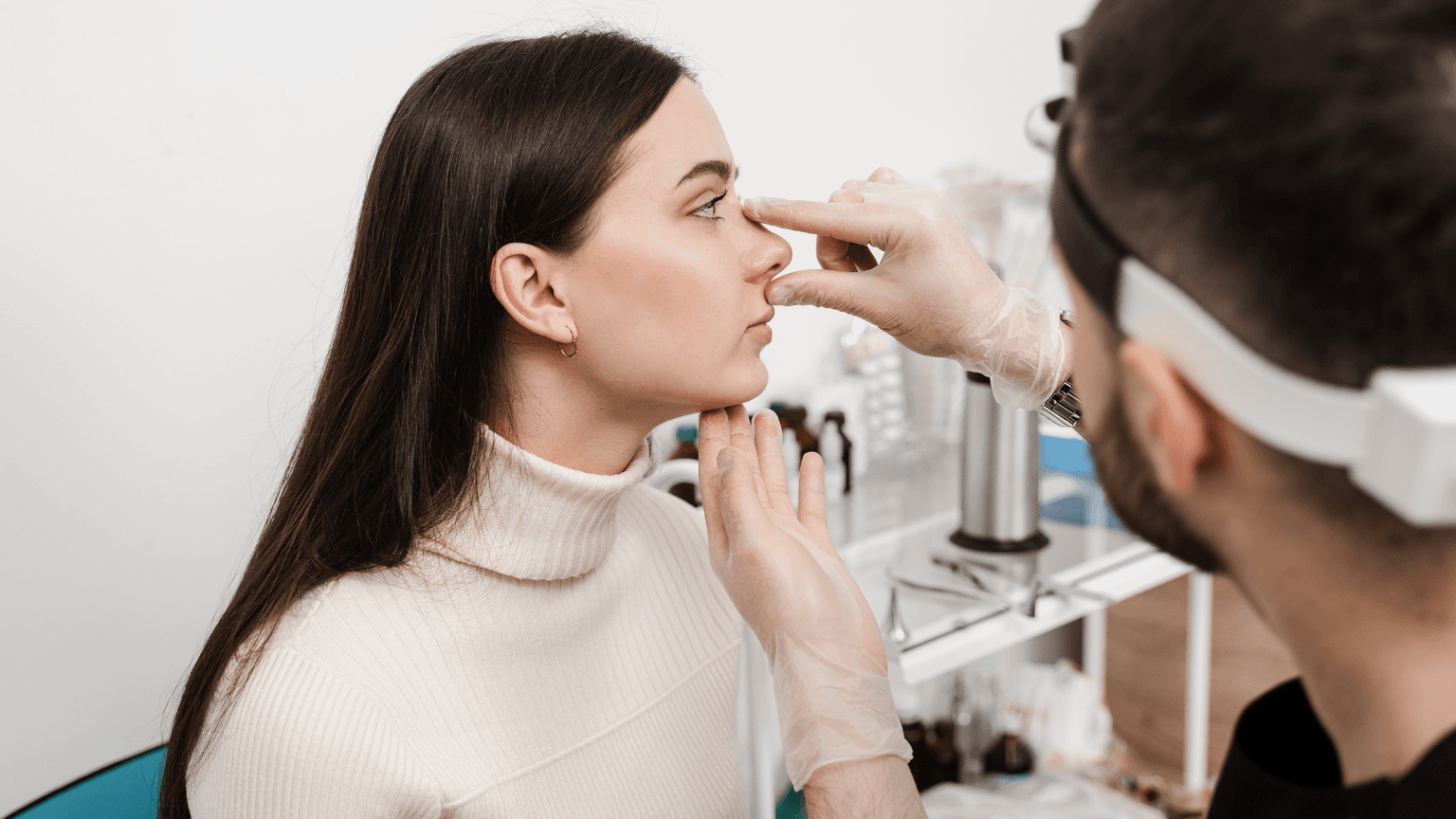
Tip Plasty is a refined rhinoplasty procedure targeting only the nasal tip to improve its shape, definition, and projection. It can be standalone or paired with broader rhinoplasty, depending on patient goals.
Non-Surgical Alternatives
For those seeking mild or temporary improvements, Botox injections can relax the depressor septi nasi muscle, and dermal fillers can shape irregularities. However, these options cannot correct structural issues or achieve long-lasting results—surgery remains definitive for significant correction.
Surgical Approaches
Closed (Endonasal) Approach
All incisions are hidden inside the nostrils. This method is suitable for minor tip corrections and offers faster healing with no visible scars. The delivery approach offers more visibility for moderate tip modifications. These methods are less common for complex surgeries in Korea but are considered for minor tweaks.
Open (External) Approach
Open (external) rhinoplasty uses a small incision in the columella, providing full access to the nasal framework for intricate work. This approach is ideal for major corrections, complex cases, and revision surgeries, and is the standard in Korean clinics.
Hybrid Techniques
Innovations like the TRICK-TIP Rhinoplasty combine open and closed features to maximize access while minimizing invasiveness, balancing precision and tissue preservation.
Core Techniques for Tip Rotation and Refinement
Cartilage Reshaping
Excess cartilage is carefully trimmed, maintaining at least 5–8 mm for support to prevent nasal valve collapse. In bifid or bulbous tips, the cartilage may be reshaped or repositioned.
Cartilage Grafting
Autologous cartilage (from the septum, ear, or rib) is widely used for structural support. Columellar strut grafts and septal extension grafts strengthen and reposition the tip, while onlay tip grafts improve definition.
Suture Techniques
Precise suturing—interdomal and transdomal—adjusts tip shape, while the Tongue-in-Groove technique can upturn the tip to correct under-rotation, providing stability and projection.
Addressing Muscular and Septal Factors
Surgeons may divide the depressor septi nasi or shave excess caudal septum for rotational effect, customizing techniques to each patient’s anatomy.
Pre-Surgical Consultation and Custom Planning
Comprehensive assessment using digital imaging helps align patient expectations with realistic outcomes. Good candidates are healthy non-smokers, usually past age 16–17, with defined goals and a practical understanding of possible results. The choice of surgeon is critical; select someone with deep anatomical knowledge and rhinoplasty expertise.
Medical Tourism: The Tip Plasty Journey in South Korea
Why South Korea?
South Korea’s success as a plastic surgery hub rests on highly specialized surgeons, leading-edge technology, and robust patient support. Procedures here cost significantly less than in the US or Europe, with patients benefiting from surgeon specialization, advanced planning tools (like 3D CT scans), and all-inclusive packages covering translation, transportation, and aftercare.
The Patient Process
Remote Consultation
Begin with a remote consultation, submitting photos and details to determine candidacy and obtain quotes. Choose certified surgeons, ideally with ENT backgrounds.
Visa and Travel Planning
Most travelers enter on a 30–90 day visa (C-3), or a G-1 medical visa for extended stays. Clinics often provide documentation to ease visa processes. Plan 10–14 days in Korea for surgery and follow-up.
Pre-Op Preparations
Arrive at least two days in advance for testing (EKG, bloodwork, X-ray) and adhere to pre-op guidelines: avoid alcohol, smoking, and blood-thinning supplements for six weeks before surgery. Remove false nails, jewelry, and extensions, and prepare for wearing contact lenses instead of glasses post-op.
Surgery Day and Hospital Experience
Tip Plasty typically uses local anesthesia with sedation or general anesthesia. Korean clinics emphasize safety, with board-certified anesthesiologists, and attentive post-op care. Expect professional support throughout the stay.
Recovery and Check-Ups
Initial swelling and bruising peak in days 2–3. Follow recovery protocols: apply ice, keep head elevated, avoid strenuous activities, and eat a bland diet. Sutures and casts are removed at 5–7 days, with final clearance typically at 10–14 days. Traveling with a caregiver is advisable, especially post-op.
Travel and Recovery Tips
Choose accommodations near the clinic with features like elevators and kitchens. Arrange transportation and consider a caregiver for the first days. Clinics often offer recovery therapies, such as LED light or HBOT, to enhance healing. Healing is gradual; expect full results over several months.
Medical Concierge Services
Many Korean clinics bundle surgeries with comprehensive support—consultations, testing, aftercare, translations, accommodations—removing much of the stress for international patients and improving the overall experience.
Which Are the Best Clinics in Korea for Nasal Tip Underrotation?
Listed below are some of the best clinics in Korea for nasal tip underrotation.
1. THEPLUS Plastic Surgery
For nasal tip underrotation, you may consider THEPLUS Plastic Surgery for rhinoplasty planning that emphasizes both nasal structure and facial harmony. Dr. Jeong Jae-yong and Dr. Kim Taek-kyun specialize in rhinoplasty and revision rhinoplasty, with an approach that combines functional considerations with aesthetic refinement.
- URL: THEPLUS Plastic Surgery Website
- Location: Gangnam-gu, Seoul
- Rhinoplasty expertise:
- Dr. Jeong and Dr. Kim have decades of rhinoplasty experience and contribute to rhinoplasty education and research.
- Dr. Kim is a board-certified plastic surgeon and has authored chapters on rhinoplasty and revision rhinoplasty in “The 18 Masters of Korean Aesthetic Surgery.”
- Dr. Jeong authored “Rebuilding Nose: Rhinoplasty for Asians,” a rhinoplasty educational resource with Japanese and English editions.
- Planning considerations:
- The clinic describes rhinoplasty as balancing nasal appearance with structural harmony and function.
- Your nasal tip position can be considered in the context of overall facial proportions rather than as an isolated feature.
- Related nasal care:
- Rhinoplasty and revision rhinoplasty are offered.
- Revision rhinoplasty is described as aiming to restore a more stable nasal structure while refining appearance.
2. Made Young Plastic Surgery
For nasal tip underrotation, Made Young Plastic Surgery may be worth considering if you want planning focused on long-term tip support and internal nasal stability. The clinic describes techniques and materials intended to help prevent tip drooping while tailoring the bridge, tip, columella, and alar width to your facial proportions.
- URL: Made Young Plastic Surgery Website
- Location: Seocho-gu, Seoul
- Procedure planning:
- A 3D-CT analysis system is used to assess the nasal bones, septum, and asymmetry for surgical planning.
- The clinic evaluates nasal bridge, tip, columella, and alar width as part of an individualized approach.
- It describes building a stable internal nasal structure to help maintain tip position and nasal shape over time.
- Rhinoplasty surgeon:
- Dr. Lee Byeong-hoe is described as having more than 20 years of exclusive rhinoplasty experience.
- His stated experience includes complex nasal reconstruction and revision cases, including repeat revisions.
- The clinic notes expertise in nasal tip refinement, dorsal hump correction, osteotomy techniques, and autologous rib grafts.
- Related nasal services: Rhinoplasty, revision rhinoplasty, reconstruction rhinoplasty, and nasal implant removal are listed services.
- Perioperative support:
- Full-time board-certified anesthesiologists are on site.
- The clinic describes one-to-one anesthesiologist monitoring and a cross-check system for emergencies.
- A dedicated aftercare center is available for post-procedure care.
3. Okay Plastic Surgery Clinic
For nasal tip underrotation, you may consider Okay Plastic Surgery Clinic if you are seeking a clinic that offers nose-tip surgery as part of broader rhinoplasty care, including difficult and revision cases. Its listed nasal services can address the tip, bridge, nostrils, and prior surgical outcomes according to your individual treatment plan.
- URL: Okay Plastic Surgery Clinic Website
- Location: Gangnam-gu, Seoul
- Nasal services:
- Nose-tip surgery is listed for refining tip shape.
- Nose bridge surgery and nostril reduction are also offered for broader nasal proportion and symmetry considerations.
- Revision rhinoplasty is available, including for difficult rhinoplasty cases.
- Individualized care:
- The clinic describes a tailored treatment approach based on your unique needs and goals.
- Its rhinoplasty services can be considered alongside other facial procedures when relevant to your overall treatment plan.
Tip Plasty Costs: A Financial Guide
Typical Costs in South Korea
Tip Plasty in South Korea averages $3,000–$6,000 USD, with some packages starting as low as $800 (less commonly including accommodations). General rhinoplasty averages $2,000–$7,500, with costs reflecting the surgery’s complexity and the surgeon’s expertise.
Additional Expenses for Medical Tourists
- Consultations: $50–$150 USD per session.
- Pre-surgical tests: $100–$300 USD.
- Medications/aftercare: $50–$200 USD; lymphatic massage can be $50–$150 per session.
- Accommodation: $50–$200 USD per night.
- Transportation: $100–$300 USD total.
- Interpreter: Included in many packages, but otherwise $30–$100/hour.
- Emergency fund: At least $1,000 USD for unforeseen events.
Comparative Price Table
| Country | Cost Range (USD) | Notes |
|---|---|---|
| Turkey | $2,700–$5,000 | All-inclusive; about 60% cheaper than US |
| South Korea | $3,500–$6,000 | Leading techniques; 40–75% less than Western countries |
| Thailand | $1,280–$4,000 | Accredited hospitals, VIP service, substantial savings |
| USA | $7,000–$15,000 | Highest costs; $6,324 average, over $12,000 in key cities |
Cost Factors
- Complexity: More intricate work increases prices.
- Surgeon Experience: Top surgeons charge more.
- Clinic Reputation: High-end, accredited clinics have higher fees.
- Anesthesia: General anesthesia and facility use raise costs.
- Materials: Use of autologous cartilage vs. synthetics.
- Package Inclusions: All-in-one packages may seem pricier but simplify budgeting.
Insurance Insights
Cosmetic tip plasty is rarely insured. If the surgery corrects functional issues (like a deviated septum), some costs may be covered—check with your insurer.
Patient Experiences and Outcomes
Aesthetic and Functional Results
Most patients opting for tip plasty to correct under-rotation achieve a more upturned, harmonious nasal tip and improved nasolabial angle. This procedure often stabilizes the tip during facial expressions, making the appearance more youthful and confident. If breathing was an issue, functional improvement is also possible with broader rhinoplasty.
The Healing Process
Expect swelling and bruising in the first days; the tip may temporarily appear more prominent or firm. As healing continues, a phenomenon known as "rhinoplasty tip drop"—where the tip briefly looks lower due to swelling migration—may occur, resolving naturally over months. The final shape emerges over 6–12 months, influenced by skin thickness and scar tissue.
Real-World Patient Stories
Many patients report dramatic yet natural changes, citing confidence gains and increased satisfaction with their facial appearance. Functional improvements and appreciation for attentive, professional surgical teams are often noted, with the journey described as worthwhile despite initial discomfort.
The Importance of Realism and Surgeon Selection
Achieving the best results depends on clear expectations and choosing a surgeon skilled in both the art and science of rhinoplasty. Computer simulations can help set realistic goals. Patients are encouraged to work closely with experienced, board-certified surgeons who provide thorough education and post-op care.
Conclusion
Nasal tip under-rotation or "droopy tip" is a common concern impacting both appearance and function. Tip Plasty offers an effective, customizable solution, with surgical approaches best chosen by experienced, specialized surgeons. South Korea stands out for its combination of surgical excellence, innovative techniques, and supportive medical tourism infrastructure. While travel, preparation, and budget considerations are important, the overall patient satisfaction is high when expectations are managed and the right care is selected.
References
1, 2, 3, 4, 5, 6, 7, 8, 9, 10, 11, 12, 13, 14, 15, 16, 17, 18, 19, 20, 21, 22, 23, 24, 25, 26, 27, 28, 29, 30, 31, 32, 33, 34, 35, 36, 37, 38, 39, 40, 41, 42, 43, 44, 45, 46, 47, 48, 49, 50, 51
Frequently Asked Questions
Related Blogs
Korea vs. Global Standards: A Comprehensive Cost Analysis of Cleft Rhinoplasty in Medical Tourism Destinations
Explore the cost of cleft rhinoplasty in Korea, a popular destination for medical tourism due to its advanced surgical techniques and competitive pricing. Discover factors influencing the overall expense, from hospital fees to post-operative care, and what makes Korea a top choice for this specialized procedure.
Updated: Oct 21, 2026
Philtrum Reduction Costs: Choosing Korea Over the USA, Mexico, Turkey & More for Expert Care
Discover the affordability and benefits of Philtrum Reduction Surgery in Korea, a popular destination for high-quality cosmetic procedures. Explore cost factors, surgeon expertise, and why Korea is a top choice for those considering this transformative surgery.
Updated: Oct 21, 2026
Discovering the True Value: Sinus Surgery Costs in Korea Compared to Global Options
Discover the affordable options for sinus surgery in Korea, a leading destination for medical tourists seeking quality care. Learn about the factors influencing costs and what patients can expect from their experience in this highly advanced healthcare system.
Updated: Oct 21, 2026
Non-Implant Rhinoplasty in Korea: Cartilage Grafts, Recovery, Travel Planning, and Alternatives
Non-implant rhinoplasty reshapes the nose using septal, ear, or rib cartilage, with surgical or injectable and open or closed approaches and possible septal or nasal-valve correction. International patients can find guidance on candidate screening, material-specific consent, Korea stays of 10–21 days, travel timing, recovery, and follow-up.
Updated: Oct 16, 2026
Clinics offering Tip Plasty

THEPLUS Plastic Surgery Korea | Eye, Nose, Face & Body Surgery
Sinsa

Made Young Plastic Surgery: Rejuvenating Aesthetic Excellence in Korea for Face Lifts, Contouring and More
Gangnam Station

Okay Plastic Surgery Clinic in Korea: Comprehensive Aesthetic Procedures with Sincerity and Care
Cheongdam

Banobagi Plastic Surgery: A Pioneering and Trusted Plastic Surgery Clinic in Korea
Seolleung