
Medical Tourism Blog
Nasal Implant Migration: Revision Rhinoplasty Procedures and Solutions in Korea

Table of contents
- Revision Rhinoplasty: The Corrective Path
- The Journey to Revision Rhinoplasty in South Korea
- Which Are the Best Clinics in Korea for Nasal Implant Migration?
- Financial Aspects of Revision Rhinoplasty
- Patient Experiences and Outcomes
- Conclusion
- References
Considering treatment in Korea? Everything you need to know e.g. — how to avoid scams, visas, interpreters, recovery tips — in our Medical Tourism Master Guide. Plan with confidence in minutes, not weeks!
Rhinoplasty, often called a "nose job," is a popular procedure for both cosmetic and functional improvements. Unfortunately, complications like nasal implant migration can arise, affecting appearance and well-being. This guide provides a clear, evidence-based resource for patients facing nasal implant migration. It explains what migration involves, details revision rhinoplasty, offers guidance for those considering surgery in South Korea, breaks down costs, and shares real patient perspectives. The goal: empower individuals to make informed choices about their nasal health.
Nasal implant migration occurs when a previously placed implant shifts from its intended position inside the nose—commonly an issue in procedures using synthetic ("alloplastic") materials. This unwanted movement can cause both subtle and noticeable cosmetic concerns as well as functional impairments. Sometimes, repositioning or replacing the implant is necessary.
Common Terminology
Several interchangeable terms describe nasal implant migration, which is helpful for research and medical discussions:
- Implant Displacement: Direct synonym indicating the implant moved out of place.
- Implant Shifting: A more informal term describing unintended movement.
- Implant Extrusion: A severe scenario where the implant pushes through skin or mucus membrane—requiring urgent action.
- Implant Movement: General term for unplanned position changes.
- Malposition: Indicates the implant is not in a desired position, causing visual or functional problems.
"Extrusion" is particularly serious and usually mandates rapid surgical intervention.
Causes and Symptoms
Nasal implant migration can result from many factors:
- Surgical Technique: Inexperience or mistakes during the initial surgery can leave the implant unstable.
- Implant Material and Shape: Implants that are too long, peaked, or thick create tension, raising migration risk. L-shaped silicone implants are especially problematic. Custom 3D-printed implants, tailored to patient anatomy, generally lower the risk.
- Patient Anatomy: Weak or resorbed bone (especially in the maxilla), as well as poor tissue quality, make displacement more likely.
- Aftercare and Injury: Trauma to the nose, excessive activity, or pressure during healing can cause bending, loosening, or migration.
- Inflammation or Infection: Body reactions can thin skin over the implant or create pathways for movement.
- Foreign Body Response: Scar tissue ("capsule") around the implant may contract and shift it.
Symptoms vary:
- Visible Deformity: Changes in appearance, with implants possibly visible under skin or creating crooked/asymmetrical shape.
- Palpable Implant: Patients may feel the implant.
- Pain or Discomfort: Tenderness or a foreign body sensation.
- Skin Changes: Thinning, redness, or other warning signs of extrusion.
- Functional Issues: Obstruction and breathing problems.
- Infection: Swelling, redness, warmth, or discharge.
Accurate diagnosis and careful planning are key.
Complications
Potential issues from implant migration include:
- Infection: Especially if extrusion allows bacteria to access the site.
- Extrusion: Full breach through skin, needing urgent removal.
- Skin Thinning/Necrosis: Pressure or reaction kills tissue.
- Scarring/Contracture: Dense scar tissue distorts the nose further.
- Chronic Inflammation: Persistent irritation and discomfort.
- Airway Obstruction: Blocking airflow.
- Rare Displacements: In extreme cases, implants can migrate to other facial areas, leading to chronic issues if not addressed.
Early and proactive management is essential to avoid escalating complications.
Underlying Factors
Nasal implant migration is usually not random. It often results from:
- Inaccurate implant placement or selection
- Material issues (ill-fitting or high-tension designs)
- Patient-specific bone or tissue vulnerabilities
- Aggressive or inattentive post-surgical behaviors
Comprehensive prevention and correction strategies are required, including skilled surgery, proper implant selection, anatomical assessment, and careful aftercare.
Degrees of Severity
Implant migration ranges from minor cosmetic shifts to urgent medical emergencies like extrusion. Even seemingly mild symptoms like discomfort or breathing changes should prompt medical evaluation, since not all issues are immediately visible.
Revision Rhinoplasty: The Corrective Path
Revision rhinoplasty, or corrective rhinoplasty, remedies the negative effects of previous nasal surgeries—especially implant migration. Whether addressing visual dissatisfaction or breathing issues, this surgery is personalized to each patient, often requiring surgical finesse.
Surgical Techniques
Open vs. Closed Rhinoplasty:
- Open Rhinoplasty: An incision is made on the columella for maximum visibility—ideal for complex revisions.
- Closed Rhinoplasty: Incisions stay inside the nostrils, reducing recovery time, but offer less access—best for simpler cases.
Cartilage Grafting:
- Autologous Cartilage: Taken from the patient, usually from septum, ear (conchal), or rib (costal) cartilage.
- Utilization: Grafts rebuild the bridge, refine the tip, correct asymmetry, reinforce weak areas, and replace lost cartilage.
- Alternatives: Synthetic materials (e.g., silicone, Gore-Tex) or 3D-printed implants are used in specific cases, but autologous tissue is generally safer.
Implant Removal/Replacement:
Removing the displaced implant and, if needed, inserting autologous cartilage is standard, especially after infection or extrusion. Sometimes, full healing is required before additional reconstruction.
Additional Methods:
Scar revision, internal nasal valve repair, or hybrid surgical techniques may be used depending on the complication.
Risks and Considerations
Revision rhinoplasty is more complex due to scar tissue and altered anatomy. Potential risks include:
- Increased infection risk
- Bleeding, adverse reactions to anesthesia
- Persistent or new cosmetic/functional issues
Recovery takes longer than primary surgery, with swelling lasting months and final results visible after 12-18 months. It’s crucial to choose a specialist, be realistic about outcomes, and understand the extended recovery.
Interconnected Nasal Anatomy
Each adjustment affects multiple structures. In revision cases, scar tissue and previous alterations make surgery even harder. The surgeon must anticipate how each correction impacts function and appearance—a key argument for choosing an expert in revision procedures.
Advancements in Materials/Techniques
Recent trends favor autologous cartilage over synthetic options, reducing infection and extrusion rates. Meanwhile, custom 3D-printed implants offer more precise fits, further reducing the chance of migration and complications.
The Journey to Revision Rhinoplasty in South Korea
South Korea has become a global hub for revision rhinoplasty, notable for its specialized surgeons, technological innovation, and robust support for international patients.
Why South Korea?
Key factors include:
- Specialized Surgeons: High expertise in complex corrections.
- Team Approach: Collaboration between ENT specialists and plastic surgeons.
- Strong Success Rates: Both aesthetic and functional outcomes.
- Cutting-Edge Diagnostics: 3D imaging and advanced assessments.
- Patient-Centered Care: Emphasis on natural results.
- Comprehensive Medical Tourism: English-speaking coordinators, comfortable accommodations, and logistical assistance.
Step-by-Step Process
- Research and Communication: Patients investigate clinics and communicate goals, often sharing photos/records for remote evaluation.
- Consultation and Planning: In-person or virtual consults, with imaging and airflow tests, help design a tailored surgical plan.
- Preparation: Provide full medical history, discuss financial details, and prepare for recovery support.
- Surgery: General anesthesia, lasting 3-6 hours, with protective dressings and splints applied afterward.
- Recovery: Monitored post-op care—including massages, cooling, and scar care—supports healing. Full internal healing completes over a year, with visible improvements emerging in stages.
Considerations for International Patients
- Surgeon Selection: Seek board-certified experts with proven experience in complex revisions.
- Clear Communication: Many clinics offer English-speaking staff.
- Budget Planning: Account for all potential costs, including pre/post-op care, accommodation, and travel.
- Recovery Timeline: Plan for a stay of at least 1-2 weeks post-surgery.
- Realistic Expectations: Understand perfection may not be possible, and results take time.
Medical Tourism Infrastructure
South Korea’s integrated services—ranging from transportation to accommodations—minimize stress for travelers, ensuring a smoother experience from consultation through to aftercare.
Importance of Patient Due Diligence
With so many options, patients must look beyond marketing or social media. Verify credentials, ask about revision-specific experience, and read authentic testimonials to minimize risk and boost satisfaction.
Which Are the Best Clinics in Korea for Nasal Implant Migration?
Listed below are some of the best clinics in Korea for nasal implant migration.
1. THEPLUS Plastic Surgery
For nasal implant migration, you can expect a revision-rhinoplasty approach focused on restoring a more stable nasal structure while refining the nose’s appearance. THE PLUS Plastic Surgery identifies revision rhinoplasty as a service for concerns after previous nasal surgery, with an emphasis on balancing nasal aesthetics and function.
- URL: THEPLUS Plastic Surgery Website
- Location: Gangnam-gu, Seoul
- Rhinoplasty expertise:
- Dr. Jeong Jae-yong specializes in rhinoplasty and approaches treatment with a stated focus on combining function and beauty.
- Dr. Kim Taek-kyun is a board-certified plastic surgeon whose published work includes chapters on rhinoplasty and revision rhinoplasty in “The 18 Masters of Korean Aesthetic Surgery.”
- Dr. Jeong authored “Rebuilding Nose: Rhinoplasty for Asians,” which has Japanese and English editions.
- Academic activity:
- Drs. Jeong and Kim contribute to rhinoplasty education and research through forums including the Seoul Rhinoplasty Forum, KSPRS, and IFAAS.
- Their background includes more than 20 academic publications and surgical education activities for other plastic surgeons.

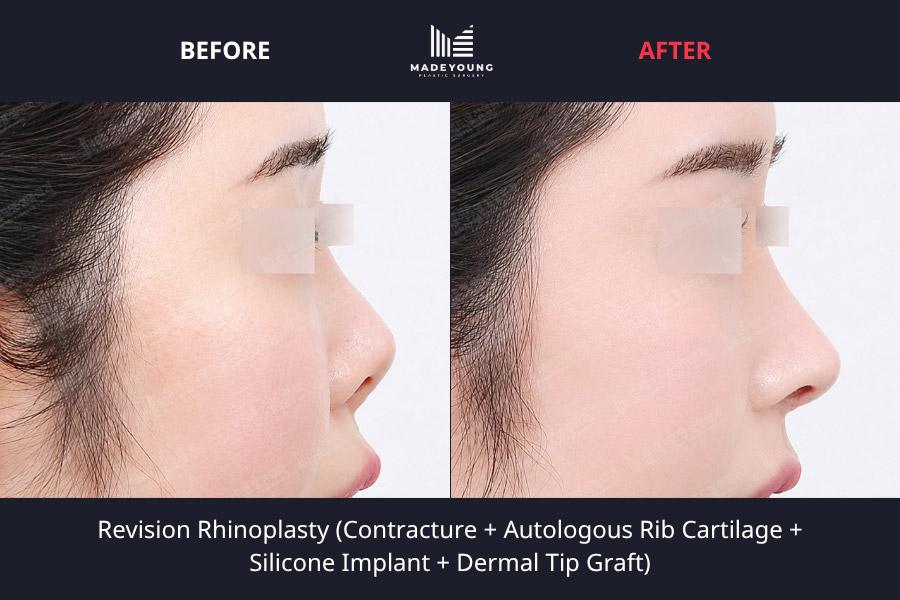
2. Made Young Plastic Surgery
You may consider Made Young Plastic Surgery for nasal implant migration if you need a meticulous revision plan that addresses scarring or tissue damage from prior surgery. The clinic lists micro-dissection, capsule removal, and nasal implant removal among its techniques for revision cases, alongside reconstruction rhinoplasty when structural rebuilding is needed.
- URL: Made Young Plastic Surgery Website
- Location: Seocho-gu, Seoul
- Revision approach:
- The clinic describes precise dissection intended to minimize tissue damage in complex revision cases.
- Its listed revision techniques include micro-dissection, capsule removal, and implant removal.
- Rhinoplasty implant removal, revision rhinoplasty, and reconstruction rhinoplasty are listed services.
- Perioperative care:
- You receive direct consultation and diagnosis from the medical team before a procedure.
- Full-time board-certified anesthesiologists are on site, with one-to-one continuous anesthetic monitoring described by the clinic.
- A dedicated aftercare center provides systematic post-procedure care.
3. LABOM Plastic Surgery
You may consider LABOM Plastic Surgery for nasal implant migration when you want the cause of the problem assessed before a revision is proposed. Its diagnostic-first process uses 3D CT to evaluate implant position, nasal bone and cartilage condition, and possible functional concerns, then may remove or replace an implant and reinforce thinned nasal-tip tissue with autologous cartilage or dermal grafts as indicated.
- URL: LABOM Plastic Surgery Website
- Location: Gangnam-gu, Seoul
- Diagnostic and revision planning:
- Evaluation distinguishes implant malposition from contamination or infection, which may require different correction plans.
- Assessment also considers structural contributors such as a deviated septum or nasal-valve problem, alongside appearance concerns.
- Surgical design is personalized to your nasal proportions and contours.
- Tissue support and timing:
- Autologous cartilage grafts and dermal tissue grafts may be used to reinforce thinned nasal-tip skin.
- If inflammation or infection is present, the underlying issue is intended to be resolved before revision surgery.
- The clinic states that revision is generally considered after tissues have stabilized, typically 6 to 12 months after the initial surgery, though timing depends on your condition.
- Procedure and recovery:
- The stated procedure time is about 1 to 2 hours under sleep sedation, with same-day discharge.
- Stitches are typically removed at about 7 days, and the stated recovery period is about 7 to 14 days.
- The clinic describes one-to-one anesthesia, continuous monitoring, and structured follow-up for swelling, bruising, and scar management.
Financial Aspects of Revision Rhinoplasty
Understanding costs helps patients make informed decisions, particularly when considering surgery abroad.
Typical Costs in South Korea
- Mild Revision: $4,500 - $6,500 USD
- Complex Reconstruction: $6,500 - $10,000 USD
- Rib Cartilage Harvesting: Additional $1,000 - $2,000 USD
- Overall Range: Most cases fall between $7,000 and $15,000 USD
Factors like procedure complexity, surgeon reputation, and clinic location can influence costs.
Global Comparison
| Country/Region | Avg. Cost Range (USD) | Notes |
|---|---|---|
| South Korea | $7,000 - $15,000 | Lower rates for mild cases; complex cases may be higher with added rib harvest fees. |
| United States | $7,000 - $20,000+ | Can exceed $20,000 for complex revisions. |
| Western Europe | $7,000 - $20,000+ | Often similar to or higher than US prices. |
| Turkey | ~$2,400 - $7,600 | Less detailed data for complex revisions; caution advised for severe cases. |
South Korea’s pricing is typically 50% lower than in the US or Europe, with no loss in quality due to efficient, high-volume practice and competitive clinic environment.
Additional Expenses
Beyond the surgery, medical tourists should budget for:
- Pre-op imaging/tests
- Post-op medications/scar care
- Interpreter services (if not included)
- Accommodation and travel
- Daily follow-ups or special aftercare
- Upfront deposits for securing surgery slots
Comprehensive budgeting helps avoid surprise costs.
Why South Korea Is More Affordable
Heavy procedure volume, competition among clinics, and efficiency contribute to lower costs. The result: patients get high-quality care at a lower price point.
Patient Experiences and Outcomes
Revision rhinoplasty for nasal implant migration addresses both physical deformities and emotional distress caused by previous complications, leading to significant improvements in confidence and quality of life.
Common Problems Addressed
- Cosmetic: Visible or shifted implants, unnatural shape, and skin issues such as thinning or redness.
- Functional: Nasal obstruction, difficulty breathing, or persistent pain/discomfort.
Revision efforts focus on restoring both look and function, often by removing synthetic implants and reconstructing with autologous cartilage.
Testimonials & Recovery Journey
Patients often express apprehension after failed initial surgeries but find comfort in experienced revision specialists. The recovery process is gradual but typically yields high satisfaction—imputed by improved breathing, a natural profile, and renewed confidence. Patient feedback emphasizes emotional relief, functional gains, and the critical importance of surgeon expertise.
Summary Table
| Issues from Migration | After Revision Rhinoplasty |
|---|---|
| Visible or palpable implant | Natural contour restored |
| Crooked or asymmetrical nose | Straighter, balanced appearance |
| Unnatural or "pinched" shape | Harmonious, natural-looking nose |
| Thinning skin | Reinforced, healthier skin |
| Pain/discomfort | Resolved with implant removal/rebuild |
| Nasal obstruction | Improved airflow/breathing |
| Dissatisfaction | Increased confidence and satisfaction |
The restoration of both form and function, together with psychological improvement, demonstrates the holistic benefit of this surgery.
Conclusion
Nasal implant migration—while distressing—can be effectively corrected with revision rhinoplasty, especially in expert hands. South Korea offers cost-effective, high-quality care, making it a leading choice for global medical tourists. Choosing an experienced surgeon, planning thoroughly, and maintaining realistic recovery expectations are central to a successful, satisfying outcome.
References
1, 2, 3, 4, 5, 6, 7, 8, 9, 10, 11, 12, 13, 14, 15, 16, 17, 18, 19, 20, 21, 22, 23, 24, 25, 26, 27, 28, 29
Frequently Asked Questions
Related Blogs
Korea vs. Global Standards: A Comprehensive Cost Analysis of Cleft Rhinoplasty in Medical Tourism Destinations
Explore the cost of cleft rhinoplasty in Korea, a popular destination for medical tourism due to its advanced surgical techniques and competitive pricing. Discover factors influencing the overall expense, from hospital fees to post-operative care, and what makes Korea a top choice for this specialized procedure.
Updated: Oct 21, 2026
Philtrum Reduction Costs: Choosing Korea Over the USA, Mexico, Turkey & More for Expert Care
Discover the affordability and benefits of Philtrum Reduction Surgery in Korea, a popular destination for high-quality cosmetic procedures. Explore cost factors, surgeon expertise, and why Korea is a top choice for those considering this transformative surgery.
Updated: Oct 21, 2026
Discovering the True Value: Sinus Surgery Costs in Korea Compared to Global Options
Discover the affordable options for sinus surgery in Korea, a leading destination for medical tourists seeking quality care. Learn about the factors influencing costs and what patients can expect from their experience in this highly advanced healthcare system.
Updated: Oct 21, 2026
Non-Implant Rhinoplasty in Korea: Cartilage Grafts, Recovery, Travel Planning, and Alternatives
Non-implant rhinoplasty reshapes the nose using septal, ear, or rib cartilage, with surgical or injectable and open or closed approaches and possible septal or nasal-valve correction. International patients can find guidance on candidate screening, material-specific consent, Korea stays of 10–21 days, travel timing, recovery, and follow-up.
Updated: Oct 16, 2026
Clinics offering Revision Rhinoplasty

THEPLUS Plastic Surgery Korea | Eye, Nose, Face & Body Surgery
Sinsa

Made Young Plastic Surgery: Rejuvenating Aesthetic Excellence in Korea for Face Lifts, Contouring and More
Gangnam Station

LABOM Plastic Surgery: Expertise in Non-Surgical Nose, Facial Lifting & Anti-Aging Surgeries in Korea
Apgujeong

Okay Plastic Surgery Clinic in Korea: Comprehensive Aesthetic Procedures with Sincerity and Care
Cheongdam