Medical Tourism Blog
Pelvic Organ Prolapse Solutions: Pelvic Muscle Restoration Surgery in Korea
Table of contents
- “Pelvic Muscle Restoration Surgery”: Medical Terms and Procedures
- Best Clinics in Korea for Pelvic Organ Prolapse
- The Patient Journey: Surgery & Medical Tourism in South Korea
- Cost Considerations: South Korea in Global Perspective
- Patient Perspectives: Life After Surgery
- Conclusion
- References
Considering treatment in Korea? Everything you need to know e.g. — how to avoid scams, visas, interpreters, recovery tips — in our Medical Tourism Master Guide. Plan with confidence in minutes, not weeks!
Pelvic Organ Prolapse (POP) is a condition affecting millions of women, where pelvic organs slip into the vaginal canal due to weakened support structures—often felt as a “bulging of pelvic organs into the vagina.” While some may search for “Pelvic Muscle Restoration Surgery,” the appropriate medical terms are “Pelvic Floor Reconstruction” or “Pelvic Prolapse Repair.” South Korea stands out as a top destination for such specialized procedures, offering advanced medical facilities, skilled professionals, competitive pricing, and seamless international patient services. This guide covers the basics of POP, details surgical options, explains terminology, walks through the medical tourism experience in Korea, and compares costs globally.
What is Pelvic Organ Prolapse?
Pelvic Organ Prolapse (POP) occurs when the bladder, uterus, rectum, or vaginal apex drops from its normal position into or beyond the vaginal canal. This is mainly due to weakened muscles, fascia, and ligaments in the pelvic floor, often resulting from vaginal childbirth, menopause, age, chronic increased abdominal pressure, obesity, genetics, or prior pelvic surgeries. Symptoms range from a feeling of fullness or visible bulging in the vagina, to urinary or bowel difficulties, and discomfort during intercourse. While not all women have symptoms, about 3% in the US report issues, and up to 50% show prolapse upon exam. Diagnosis involves history, pelvic examination, and POP-Q staging.
Common Pseudonyms and Related Conditions
Patients frequently use informal terms to describe their symptoms or POP itself. Knowing these phrases improves clarity during medical consultations and while looking up information online. POP often co-occurs with urinary incontinence, bladder outlet obstruction, fecal incontinence, interstitial cystitis, and sexual dysfunction.
Table 1: Common Pseudonyms for Pelvic Organ Prolapse
| Organ Affected / Area of Prolapse | Medical Term (Formal) | Common Pseudonym(s) / Description |
|---|---|---|
| Bladder (front vaginal wall) | Cystocele / Anterior Vaginal Prolapse | "Dropped bladder," "bulge of tissue in your vagina" |
| Uterus | Uterine Prolapse | "Dropped uterus," "dropped womb," "falling out" |
| Rectum (back vaginal wall) | Rectocele / Posterior Vaginal Prolapse | "Bulge of the back wall," "bulge of tissue" |
| Small Bowel | Enterocele | "Bulge of the small bowel" |
| Vaginal Apex (after hysterectomy) | Vaginal Vault Prolapse | "Top of vagina falling," "vaginal vault prolapse" |
| Perineum | Perineorrhaphy (repair) | "Stretched muscles at vaginal opening" |
“Pelvic Muscle Restoration Surgery”: Medical Terms and Procedures
Standard Medical Terminology
While “Pelvic Muscle Restoration Surgery” is common in lay searches, doctors use “Pelvic Floor Reconstruction,” “Pelvic Prolapse Repair,” “Pelvic Floor Repair,” and “Pelvic Reconstructive Surgery.” These terms better reflect the structural focus of these surgeries, which repair ligaments, fascia, and muscles—beyond just rebuilding muscle strength.
Overview of Surgical Objectives and Approaches
The aim of pelvic organ prolapse surgery is symptom relief, restoring pelvic support, and maintaining urinary, bowel, and sexual function. Surgeries utilize:
- Vaginal Approach: Incisions inside the vagina for less visible scarring and shorter recovery.
- Abdominal Approach (Open): Larger abdominal incisions, now less common.
- Minimally Invasive (Laparoscopic or Robotic-Assisted): Small keyhole incisions for faster recovery and less scarring.
Detailed Surgical Procedures
Apical Suspension
- Sacrocolpopexy: Suspends the vaginal apex to the sacrum with surgical mesh via open abdomen, laparoscopic, or robotic-assisted routes.
- Uterosacral or Sacrospinous Ligament Fixation: Uses natural ligaments, no mesh, typically through the vaginal approach.
Anterior Vaginal Prolapse Repair
- Anterior Colporrhaphy / Cystocele Repair: Supports the bladder by tightening the front vaginal wall through a vaginal incision, using native tissue.
Posterior Vaginal Prolapse Repair
- Posterior Colporrhaphy / Rectocele Repair, Perineorrhaphy: Repairs the back wall of the vagina or the perineum to prevent rectal bulges, restore bowel function, and reattach muscles.
Obliterative Procedures
- Partial/Complete Colpocleisis (Colpectomy): Best for patients not seeking vaginal intercourse, these procedures narrow or close the vagina to provide the strongest support using the body’s own tissue.
Role of Mesh vs. Native Tissue Repair
- Native Tissue Repairs: Use the patient’s own tissue and are now the standard of care. When performed by specialists, their success rivals mesh repairs but with fewer risks.
- Synthetic Mesh: Once popular due to misconceptions about high recurrence with native tissue, synthetic mesh is now reserved for select cases due to complications like erosion or infection. The decision between mesh and native tissue should involve thorough discussion with your specialist.
Table 2: Key Surgical Procedures for Pelvic Organ Prolapse
| Procedure Name | Primary Prolapse Type | Surgical Approach(es) | Mesh/Native Tissue | Brief Description |
|---|---|---|---|---|
| Sacrocolpopexy | Vault/Uterine | Open, Laparoscopic, Robotic | Typically Synthetic Mesh | Mesh-reinforced lift to sacrum |
| Uterosacral/Sacrospinous Fixation | Vault/Uterine | Vaginal, Laparoscopic | Native Tissue | Sutures top of vagina/uterus to pelvic ligaments |
| Anterior Colporrhaphy/Cystocele | Bladder | Vaginal | Native Tissue | Repairs tissue between bladder/vagina |
| Posterior Colporrhaphy/Rectocele | Rectal | Vaginal | Native Tissue | Repairs tissue between rectum/vagina |
| Perineorrhaphy | Perineal Body | Vaginal | Native Tissue | Rebuilds perineal muscles for support |
| Partial/Complete Colpocleisis | Any (non-sexually active) | Vaginal | Native Tissue | Narrows vagina for maximum support |
Best Clinics in Korea for Pelvic Organ Prolapse
Listed below are the best clinics in Korea for pelvic organ prolapse:
| Clinic Name | Key Features | Special Techniques |
|---|---|---|
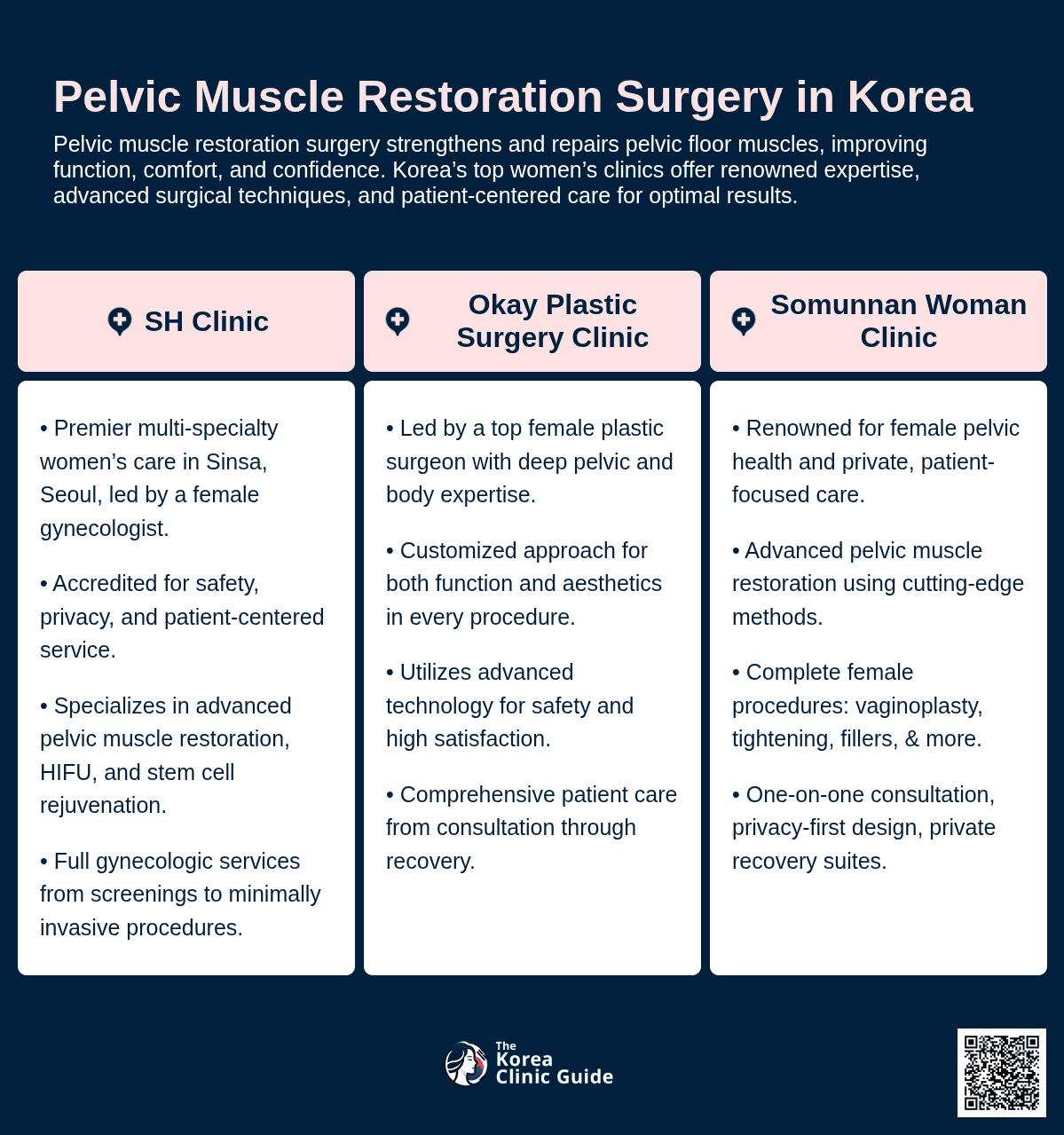
| SH Clinic | Leading multi-specialty center in Sinsa, Seoul; individualized, high-quality care; all surgeries by board-certified female gynecologist; Minister of Health and Welfare commendation; patient-centered approach; comfort-focused environment | Latest gynecology advances; minimally invasive vaginal rejuvenation; complex pelvic floor repairs; regenerative medicine & aesthetic care combined for comprehensive pelvic organ prolapse solutions |
| Okay Plastic Surgery Clinic | Premier comprehensive patient care; empathy and precision; team led by experienced female plastic surgeon; individualized treatment plans; full patient support from pre-op to post-op; full suite of holistic aesthetic services; modern, private facilities | Cutting-edge surgical advances; minimally invasive options for pelvic organ prolapse; functional and aesthetic repairs; integrated psychological and lifestyle guidance |
| Somunnan Woman Clinic | Women’s health sanctuary; state-of-the-art technology; multidisciplinary team; strong focus on patient privacy and recovery; individualized, one-on-one care; dedicated post-procedure suites | Advanced pelvic organ prolapse treatment; labiaplasty; vaginoplasty; pelvic muscle restoration; vaginal fillers; vaginal tightening; hymenoplasty |
SH Clinic
SH Clinic, located in Sinsa, Seoul, is a leading multi-specialty medical center renowned for its expertise in women’s health, particularly in treating pelvic organ prolapse. The clinic stands out for its commitment to individualized, high-quality care, as all gynecologic surgeries and procedures are directly performed by a highly experienced, board-certified female gynecologist. This physician is recognized with a commendation from the Minister of Health and Welfare, ensuring that patients benefit from a rare combination of clinical skill, advanced medical training, and a sensitive, patient-centered approach.
As a specialized women’s care clinic, SH Clinic is dedicated to fostering an environment of comfort and confidence for all patients, with services that span general gynecology, minimally invasive vaginal rejuvenation, and complex pelvic floor repairs. By combining the latest advances in gynecology with regenerative medicine and aesthetic care, SH Clinic delivers comprehensive solutions for women experiencing pelvic organ prolapse, prioritizing both functional restoration and personal well-being.
You can check out their website here: SH Clinic Website
Okay Plastic Surgery Clinic
Okay Plastic Surgery Clinic stands out as a premier center for individualized, comprehensive patient care in South Korea, combining aesthetic expertise with a deep commitment to transformative results. Unlike clinics that focus solely on technical procedures, Okay Plastic Surgery Clinic approaches every case with empathy, precision, and a dedication to meeting the unique needs of each patient. At the heart of the clinic is a team of specialized professionals, including a renowned female plastic surgeon with exceptional experience in both aesthetic enhancements and functional treatments. This patient-centered philosophy ensures that sensitive concerns like pelvic organ prolapse (POP) are managed not just as medical issues, but as pivotal moments in a patient’s personal transformation.
Key reasons why Okay Plastic Surgery Clinic is the best choice for Pelvic Organ Prolapse:
- Expert-Led Team: Home to a highly experienced female plastic surgeon and a multi-disciplinary staff dedicated to women’s health, ensuring empathetic care and medical excellence.
- Comprehensive, Personalized Treatment: Every POP treatment plan is tailored to the patient’s unique anatomy, lifestyle, and goals, prioritizing both functional repair and aesthetic outcomes.
- Cutting-Edge Medical Techniques: The clinic integrates the latest surgical advances and minimally invasive options, offering safe, effective, and lasting solutions for pelvic organ prolapse.
- Total Patient Care: From preoperative counseling to postoperative follow-up, patients receive attentive support throughout their journey, including psychological and lifestyle guidance.
- Holistic Aesthetic Services: In addition to pelvic organ prolapse treatment, patients benefit from access to a full range of body contouring, skin, and rejuvenation services, addressing related aesthetic concerns in a single, trusted clinic.
- State-of-the-Art Facilities: Equipped with modern technology and a discreet, welcoming environment for privacy and comfort during sensitive care.
- Reputation for Transformation: Renowned for helping patients reclaim confidence and well-being, with a track record of outstanding results in both reconstructive and cosmetic procedures.
With its unwavering dedication to individualized care, medical innovation, and women’s well-being, Okay Plastic Surgery Clinic is the ideal destination for those seeking treatment and recovery from pelvic organ prolapse in Korea.
You can check out their website here: Okay Plastic Surgery Clinic Website
Somunnan Woman Clinic
Somunnan Woman Clinic is a dedicated sanctuary for women’s health, specializing in a comprehensive range of aesthetic and functional treatments, including expert care for pelvic organ prolapse. The clinic offers advanced procedures such as labiaplasty, vaginoplasty, pelvic muscle restoration, vaginal fillers, vaginal tightening, and hymenoplasty, all designed to enhance both comfort and confidence. With state-of-the-art technology and a multidisciplinary team, Somunnan Woman Clinic addresses a wide array of concerns related to the pelvic floor and intimate health, helping women regain their quality of life through personalized solutions.
At the heart of Somunnan Woman Clinic’s philosophy is a commitment to patient privacy, comfort, and respect. Recovery is supported by dedicated post-procedure suites to ensure privacy and optimal healing, while one-on-one appointments provide individualized attention at every step. Patients can expect to receive care from experienced specialists working collaboratively to tailor treatments to each woman’s unique needs, making Somunnan Woman Clinic a trusted partner for those seeking pelvic organ prolapse management and other specialized women’s health services in Korea.
Find more about this clinic here: Somunnan Woman Clinic Website
The Patient Journey: Surgery & Medical Tourism in South Korea
Why South Korea?
South Korea’s reputation is built on state-of-the-art hospitals like Samsung Medical Center and Asan Medical Center, JCI accreditation, robust robotic and minimally invasive technology, and internationally trained urogynecologists. Pricing generally ranges from $6,000–$15,000—lower than many Western countries, but higher than some tourism destinations like Turkey. International patients benefit from multilingual staff, visa assistance, concierge services, and care from pre-arrival to post-discharge.
Patient Process Step-by-Step
- Research Clinics/Surgeons: Check hospital reputations, request virtual consults, and verify credentials.
- Consultation and Assessment: Submit medical records and undergo virtual or in-person evaluations, including physical and imaging tests.
- Visa & Travel: Secure the appropriate visa (many nationalities are visa-free for 90 days); clinics help with visa paperwork. Plan arrival and accommodations near the hospital.
- Hospital Admission: Register with support from multilingual staff and attend pre-op screenings for labs and consent.
- Surgery: Under general anesthesia, the procedure’s length varies. Simultaneous repairs may be done as needed.
- Recovery: Hospital stay depends on procedure. Pain control, activity restrictions, and pelvic physical therapy are important.
- Discharge and Follow-Up: Receive instructions and scheduled post-op visits. Self-catheterization may be needed temporarily, and a 12-month follow-up is recommended.
Top Hospitals and International Services
- Severance Hospital (Yonsei): High robotic surgery volume, dedicated International Health Care Center with translation and fast-track services.
- SNUH, Samsung Medical Center, Asan Medical Center: Leading multidisciplinary hospitals with specialized departments and one-stop services for international patients.
- Specialty Clinics: SH Clinic, Somunnan Woman Clinic, etc., also provide POP services with a focus on women’s health and minimal invasiveness.
Cost Considerations: South Korea in Global Perspective
Costs in South Korea
- Range for POP Surgeries: $6,000–$15,000 (8,710,000–21,770,000 KRW)
- Uterine Prolapse: Average $16,750; robot-assisted options may cost $10,000–$25,000
- Deposit: 10% upfront
- Inclusions: Hospital stay, consults, post-op care, and initial physical therapy
What Influences Costs?
Prices depend on hospital type, surgical complexity, and package inclusiveness, such as whether advanced technologies or extended services are involved.
Comparison with Other Regions
| Country | Estimated Cost (USD) | Key Notes |
|---|---|---|
| South Korea | $6,000–$15,000 | Standard POP surgery; Da Vinci $10k–$25k |
| USA | $5,000–$45,000 | Wide range based on technique/comprehensiveness |
| UK | $6,200–$30,000 | From £4,920 up to $30,000 |
| Turkey | $2,000–$5,000 | Most affordable, basic services |
| India | Generally affordable | Modern facilities, specifics vary |
| Mexico | Generally more affordable | Lower costs overall |
| Thailand | $7,500–$18,129 | Also offers advanced minimally invasive care |
| Germany | $16,000–$34,000 | |
| Australia | $18,000–$35,000 |
Travel-Related Expenses
- Airfare: $700–$1,500 depending on location and season
- Lodging: $70–$150/night, discounts from some clinics
- Transport: $1.50 subway rides; taxis start at $3
- Food: $5–$10 per meal locally
- Insurance: Check international and medical coverage; consider travel policies
- VAT Refund: Up to 10% refund for qualifying patients
Patient Perspectives: Life After Surgery
Recovery Timeline and Activities
- Laparoscopic/Vaginal Surgery: 1–2 weeks for daily activities
- Open Surgery: 4–6 weeks for full recovery
Key recovery points include ample rest, avoiding strain or heavy lifting for 4–6 weeks, abstaining from sexual activity for six weeks, maintaining hydration, and adhering to pelvic floor exercises.
Potential Complications and Management
Most surgeries are safe, but risks include anesthesia reactions, bleeding, infection, and blood clots. POP-specific issues may be urinary retention, infection, or rarely, organ injury. Mesh use carries its own risks like erosion or chronic pain. There's always a chance of recurrence, so ongoing pelvic floor exercises and healthy bowel habits are important.
Real Patient Experiences
Many patients report high satisfaction, relief from bulging and pressure, improved bowel and sexual function, and a boost in overall quality of life. Some may still face recurrence or minor urinary symptoms, so managing expectations is key. The restoration is not just physical—it often brings renewed confidence and social participation.
Conclusion
Pelvic Organ Prolapse is common but highly treatable with modern surgical methods like Pelvic Floor Reconstruction and Pelvic Prolapse Repair. South Korea offers a strong mix of quality, cost, and international support, making it an appealing option for medical tourists. Choosing between mesh and native tissue repairs involves individualized discussions, but native tissue is now standard for many. Ultimately, optimal outcomes come from careful pre- and post-op care, realistic expectations, and working closely with an expert care team.
References
Frequently Asked Questions
Related Blogs
G-spot Filler in Korea: Evidence, Safety, Recovery, and Travel Planning
G-spot filler involves nonstandardized anterior vaginal-wall injections, most often temporary hyaluronic acid, with uncertain sexual-function benefits and potential risks. International patients should plan 2–3 days in Korea for assessment and review, obtain treatment records, and arrange follow-up care.
Updated: Sep 28, 2026
PRP Vaginal Rejuvenation in Korea: Evidence, Procedure Steps, Recovery and Travel Planning
PRP vaginal rejuvenation uses a patient’s processed blood plasma for targeted vaginal, vulvar, clitoral, or periurethral injections after pelvic-health assessment, but protocols and evidence of benefit are not standardized. The article covers candidate screening, Korea travel planning, preparation, recovery, warning signs, follow-up, and diagnosis-specific alternatives for dryness, pain, incontine
Updated: Sep 28, 2026
G-spot Amplification in Korea: Evidence, Safety, Recovery and Travel Planning
G-spot amplification involves injecting filler into a patient-identified area of the anterior vaginal wall near the urethra, but no standardized target or proven sexual-function benefit exists. The article covers candidacy, product and clinic verification in Korea, travel planning, aftercare, warning signs, and alternatives such as sexual-health evaluation and pelvic-floor therapy.
Updated: Sep 28, 2026
Viveve Laser in Korea: RF Treatment, Safety, Evidence and Travel Planning
Viveve is a non-incisional, cryogen-cooled monopolar RF treatment—not a laser—used in selected patients after gynecologic assessment, with limited evidence for vaginal-laxity symptoms and no established cure for incontinence. International patients considering treatment in Korea can review candidate criteria, MFDS device verification, outpatient recovery, 10-day intercourse and tampon restrictions
Updated: Sep 22, 2026