
Medical Tourism Blog
Diastasis Recti Repair in Korea: Methods, Recovery, Travel Planning and Alternatives
Table of contents
- Diastasis Recti Repair at a Glance
- What Is Diastasis Recti Repair?
- Who Is a Good Candidate for Diastasis Recti Repair?
- How Is Diastasis Recti Repair Performed?
- Why Visit Korea for Diastasis Recti Repair?
- Key Information for International Patients
- Which Are the Best Clinics in Korea for Diastasis Recti Repair?
- Diastasis Recti Repair From Start to Finish
- Alternatives to Diastasis Recti Repair
- How Can I Prepare for Diastasis Recti Repair?
- Aftercare Advice
Considering treatment in Korea? Everything you need to know e.g. — how to avoid scams, visas, interpreters, recovery tips — in our Medical Tourism Master Guide. Plan with confidence in minutes, not weeks!
Last updated: September 2026
Diastasis Recti Repair at a Glance
- What it repairs — Diastasis recti repair narrows the stretched linea alba between the abdominal muscles, usually with sutures (rectus plication); it treats persistent midline doming or core-instability symptoms but is not a weight-loss procedure.
- Best candidates — Surgery is generally considered for a separation greater than 2 cm with ongoing symptoms or contour concerns after weight is stable and childbearing is complete; loose skin or overhang often requires a tummy tuck with plication rather than plication alone.
- Procedure scope matters — The plan may be plication alone, full or mini-abdominoplasty with plication, or hernia/mesh reconstruction—options that substantially change scar length, recovery, risks, and travel planning.
- Recovery milestones — Short assisted walks begin the day of surgery or the next day, while tightness and a bent posture commonly last 1–2 weeks; desk work may be possible in 2–4 weeks, but lifting, abdominal exercise, running, and swimming are usually restricted for at least 6 weeks.
- Results and durability — Swelling improves substantially over about 3 months and scars mature over 12–18 months; the repair is usually a one-time operation, but recurrence or contour changes can occur after pregnancy, major weight changes, or healing complications.
- Korea travel planning — International patients should plan to remain in South Korea for at least 10–14 days after an uncomplicated repair and obtain an in-person wound, drain, mobility, and fitness-to-fly review before a long-haul return flight.
- Hernia and mesh consideration — Diastasis is not a true hernia, but an umbilical or ventral hernia can coexist and change treatment: guidance generally favors suture plication without hernia and considers mesh-based repair when a midline hernia is present, with added risks such as infection, persistent discomfort, and possible revision.
What Is Diastasis Recti Repair?
Diastasis recti repair is an operation that tightens the stretched connective tissue between the abdominal muscles to reduce their separation. It aims to improve persistent abdominal bulging, contour concerns, and a feeling of core weakness, often after pregnancy or weight changes. It is a surgical procedure, sometimes combined with a tummy tuck when excess skin also needs treatment.
Who Is a Good Candidate for Diastasis Recti Repair?
- Persistent separation and symptoms — Good candidates have midline abdominal doming, a contour concern, or a feeling of core instability after pregnancy, weight change, or prior abdominal stretching. The European Hernia Society definition describes rectus diastasis as a separation wider than 2 cm.
- Stable weight and completed childbearing — Surgery is best considered after weight has been stable and when no near-term pregnancy is planned. Pregnancy and major weight fluctuation can stretch the repaired linea alba again.
- Skin and contour goals — People with loose skin, stretch marks, or lower-abdominal overhang often need abdominoplasty with rectus plication rather than plication alone to achieve their contour goal.
- Hernia-aware assessment — Candidates with an umbilical, epigastric, incisional, or ventral hernia need an abdominal-wall assessment. Diastasis is not a true hernia, but both conditions can coexist and change the repair plan.
- Recovery support — Suitable overseas patients can remain locally for wound checks, walk regularly after surgery, avoid lifting, and arrange a companion to help with transport and luggage during early recovery.
Diastasis repair is unsuitable during pregnancy, with planned near-term pregnancy, active nicotine use, substantial expected weight change, active infection, or medical conditions that make anesthesia, wound healing, or clot prevention unsafe. Uncontrolled diabetes, untreated anemia, major heart, lung, liver, or kidney disease, uncontrolled hypertension, malnutrition, and unmanaged bleeding disorders require optimization and individualized clearance first. Do not independently stop aspirin, clopidogrel, warfarin, apixaban, rivaroxaban, or other prescribed anticoagulant or antiplatelet medicine. A painful new bulge, vomiting, or bowel-obstruction symptoms require prompt hernia-surgeon assessment rather than a cosmetic surgery consultation alone.
How Is Diastasis Recti Repair Performed?
The operation should be defined precisely before travel: isolated suture plication, abdominoplasty with plication, and hernia or mesh reconstruction have different scars, recovery demands, and complication profiles.
- Open rectus plication — Through an abdominal incision, the surgeon sutures the stretched rectus sheaths toward the midline to narrow the linea alba. This is the usual approach when direct access to the whole separation is needed.
- Full abdominoplasty with plication — Often called a tummy tuck with muscle repair, this combines linea alba plication with removal of excess lower-abdominal skin and fat and usually navel repositioning. It produces the most extensive contour change, but leaves a long low abdominal scar and a scar around the navel. See tummy tuck in Korea.
- Mini-abdominoplasty with plication — This limited approach can suit excess skin mainly below the navel. It generally leaves a shorter scar, but may not expose or correct a broad separation extending well above the navel.
- Endoscopic, laparoscopic, or hybrid repair — Smaller-incision approaches can be considered for patients with good skin elasticity and little skin excess. They do not remove substantial loose skin, and adding mesh or hernia repair can still make the operation complex.
- Mesh-reinforced reconstruction — Mesh is considered for a coexisting midline hernia, recurrent diastasis, markedly weak fascia, or a repair under high tension. The EHS suggests plication when no hernia is present and mesh-based repair when a midline hernia coexists, while recognizing that the underlying recommendations are mostly weak because evidence quality is limited (guideline summary). Mesh also introduces risks including infection, persistent discomfort, and possible later revision.
Why Visit Korea for Diastasis Recti Repair?
Korea has an established framework for international medical services, but this does not prove that diastasis recti surgery in Korea has better safety, recurrence, functional, or aesthetic outcomes than surgery elsewhere. For this operation, surgeon credentials, anesthesia arrangements, hernia capability, and a realistic post-return care plan matter more than the destination itself.
- Official international-patient resources — The government-supported Medical Korea platform provides international-patient information, while its registered-institution system and hospital directory can help patients verify whether a facility participates in the official framework.
- Hospital accreditation check — International patients can review the platform’s Korea Accreditation Program for Hospitals Serving Foreign Patients listings as one part of due diligence. Accreditation does not replace checking the operating surgeon’s relevant abdominal-wall, plastic-surgery, or hernia-repair experience.
- Defined treatment scope — Request a written answer on whether the proposed operation is plication alone, abdominoplasty with plication, or hernia/mesh reconstruction. No universal best plication method, mesh threshold, suture choice, or minimally invasive technique has been established; even a recent mesh-versus-suture meta-analysis included only four comparative studies and 253 patients (evidence review).
- Records for continuity of care — Before committing, confirm that the facility can provide English-language consent material, discharge instructions, an operative report, anesthesia record, test results, and mesh details when applicable. These documents are essential for a clinician at home if complications arise.
Key Information for International Patients
- Minimum local stay — Plan to remain in South Korea for at least 10–14 days after an uncomplicated repair. Stay longer when drains remain, wounds need further review, plication is combined with a hernia or mesh repair, or clot risk is elevated.
- Flight timing — A general travel-medicine review advises waiting 1–2 weeks after open abdominal surgery, but this is a minimum reference point, not automatic clearance for a long-haul flight (air-travel guidance). The operating surgeon must assess wounds, drains, walking ability, anemia, pain control, and venous-thromboembolism risk before clearing travel.
- Repeat appointments — Arrange an in-person postoperative review before departure. Confirm whether drains are expected, who removes them, and whether removal must occur in Korea or can be coordinated with a clinician at home.
- Itinerary impact — Expect to walk bent forward initially and to need help with airport transfers, hotel tasks, luggage, and daily essentials. Do not plan sightseeing, long shopping days, spa heat exposure, or domestic side trips during the first postoperative week.
- Remote follow-up — Agree on an English-language messaging route, scheduled photo or video reviews, and an emergency escalation plan. Remote review cannot assess a suspected clot, serious infection, hematoma, wound separation, or bowel symptoms adequately.
- Return-home care — Obtain the operative report, anesthesia record, discharge summary, medication list, relevant test results, and the mesh brand, size, and anatomical location if mesh was implanted. Identify a local clinician before flying home.
Travel note: Recent surgery and prolonged sitting increase clot concern. During a cleared long-haul flight, walk periodically, do seated ankle exercises, stay hydrated, and avoid alcohol-related dehydration. Use compression stockings or blood-thinning medicine only under the surgical team’s individualized plan.
Which Are the Best Clinics in Korea for Diastasis Recti Repair?
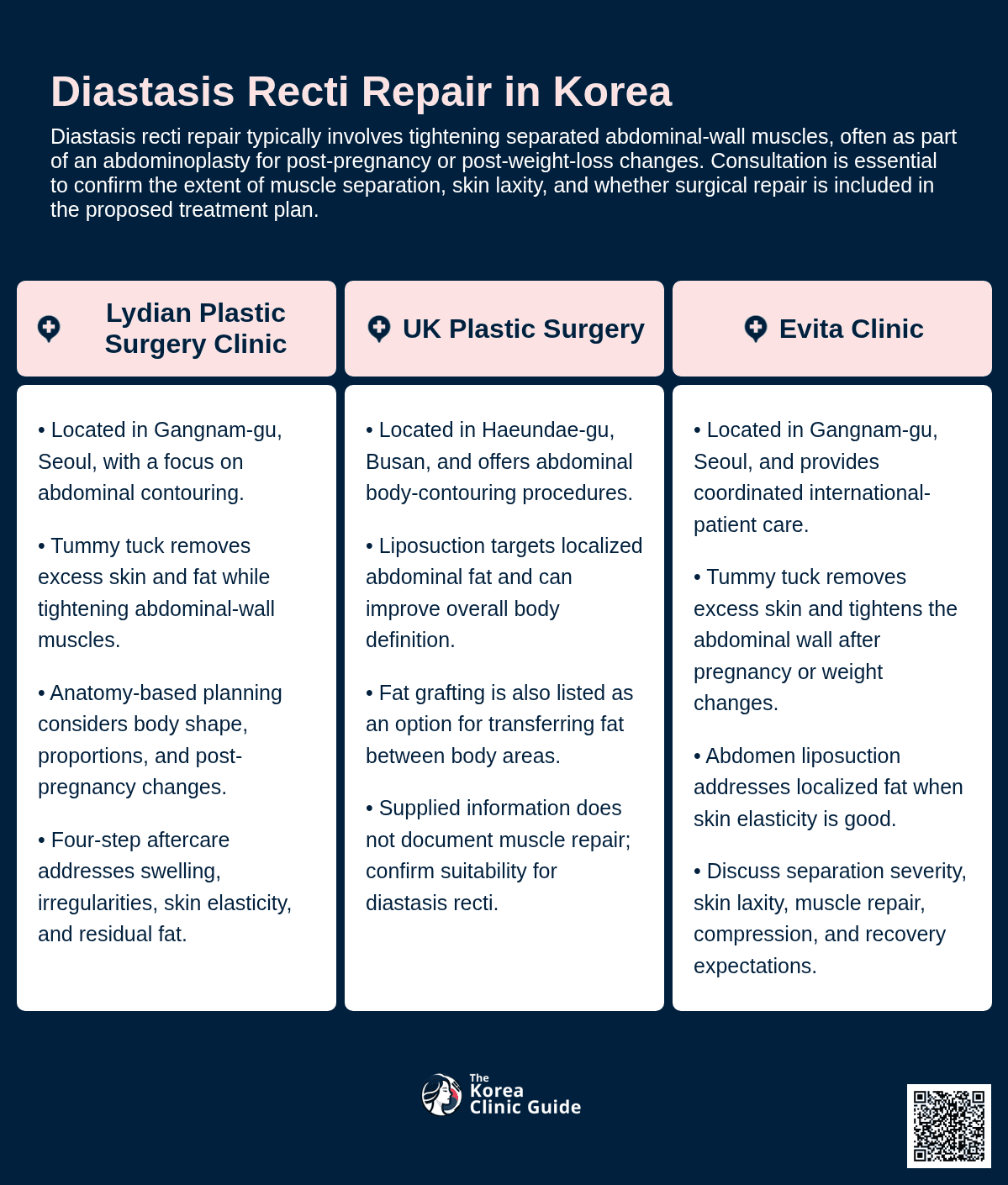
Listed below are some of the best clinics in Korea for diastasis recti repair.
1. Lydian Plastic Surgery Clinic
You may consider Lydian Plastic Surgery Clinic if your diastasis recti concerns are part of a broader post-pregnancy or weight-change abdominal contouring plan: its listed tummy tuck procedure removes excess abdominal skin and fat while tightening the abdominal-wall muscles. The clinic also emphasizes anatomy-based body design and structured aftercare, though you should confirm how it evaluates and repairs diastasis recti specifically.
- URL: Lydian Plastic Surgery Clinic Website
- Location: Gangnam-gu, Seoul
- Abdominal contouring:
- Tummy tuck is described as removing excess abdominal skin and fat and tightening abdominal-wall muscles, particularly for sagging tissue after pregnancy or significant weight loss.
- Targeted liposuction and 5D liposculpture are also listed for body contouring; these address fat and definition rather than muscle separation itself.
- Surgeon and planning:
- Dr. An is listed as Director of the 5D Liposculpture Academy and is involved in physician training for high-definition body sculpting and liposuction devices.
- The clinic describes customized, anatomy-based design that considers your body shape, proportions, and curves.
- Aftercare: A four-step aftercare system is listed for swelling reduction, irregularity correction, skin-elasticity recovery, and residual-fat contouring.
2. UK Plastic Surgery
You may consider UK Plastic Surgery if you are also exploring abdominal fat contouring, as the clinic lists liposuction for localized fat deposits in areas including the abdomen. The supplied information does not identify diastasis recti repair or abdominal-wall muscle tightening as a listed service, so you should verify whether it offers a surgical repair appropriate for your separation.
- URL: UK Plastic Surgery Website
- Location: Haeundae-gu, Busan
- Body contouring:
- Liposuction is listed for localized fat removal and shaping, including the abdomen, thighs, arms, and chin.
- Fat grafting is also listed as a body-contouring option that transfers fat from one area to another.
- Important distinction: Abdominal liposuction removes localized fat but does not by itself document repair of separated abdominal muscles in the supplied clinic information.
3. Evita Clinic
You may consider Evita Clinic for diastasis recti repair when your muscle separation is accompanied by loose abdominal skin or contour changes after pregnancy or weight changes: its listed tummy tuck tightens the abdominal wall while removing excess skin to create a flatter, firmer midsection. The clinic also offers abdomen liposuction when localized fat and good skin elasticity are the main concerns, allowing you to discuss which issue is driving your abdominal contour.
- URL: Evita Clinic Website
- Location: 5F, 815, Nonhyun-ro, Gangnam-gu, Seoul, South Korea
- Procedure details:
- The listed tummy tuck removes excess abdominal skin and tightens the abdominal wall; it is described for loose skin after weight changes or pregnancy that does not respond to exercise.
- You should discuss the extent of your abdominal-wall separation, skin laxity, and whether muscle repair is included in your individualized surgical plan.
- Related abdominal options:
- Abdomen liposuction targets fat across the upper and lower abdomen to improve waistline definition when skin elasticity is good.
- Liposuction is described as contouring rather than weight-loss surgery, and postoperative compression and skin quality can affect results.
- Care coordination: The clinic states that it provides coordinated peri-operative and post-operative care for international patients.
Diastasis Recti Repair From Start to Finish
- Remote consultation and records review — Send pregnancy history, prior C-section or abdominal-operation reports, hernia history, current weight stability, nicotine status, allergies, full medicine and supplement list, and clotting history through the clinic’s secure process. Ask whether English or virtual consultation is available and obtain a written preliminary plan.
- Pre-travel surgical planning — Confirm whether the quoted operation includes plication only, a full or mini-abdominoplasty, liposuction, hernia repair, mesh, anesthesia, drains, compression garments, overnight observation, medications, and postoperative visits. Keep flights and accommodation flexible in case drains or wound care extend the stay.
- In-person examination and testing — The surgeon examines the inter-rectus separation, skin excess, old scars, navel, and any bulge that could indicate hernia. Blood tests, vital signs, and anesthesia assessment are common; ECG, pregnancy testing, imaging, or specialist clearance are added when medical history or anatomy indicates them.
- Anesthesia and surgery — General anesthesia is typical. In open repair, the surgeon plicates the widened linea alba with sutures; a full abdominoplasty adds skin-flap elevation, removal of excess skin, and navel repositioning. Hernia repair or mesh placement is added only when indicated. Operative duration depends on the scope and cannot be assumed from the procedure label alone.
- Recovery room and discharge — Staff monitor nausea, pain, bleeding, oxygen levels, and walking ability. Discharge can be same day or after overnight observation depending on the operative extent, drain needs, pain control, and whether hernia reconstruction was performed.
- Early local recovery — Start short assisted walks on the day of surgery or the next day as directed. Expect tightness, a flexed posture, and discomfort when coughing, standing, or getting in and out of bed for the first 1–2 weeks. Attend scheduled wound and drain checks before leaving Korea.
- Fitness-to-fly review and remote follow-up — Obtain formal travel clearance only after the surgeon examines healing. Continue scheduled remote reviews after returning home, but seek urgent local care rather than waiting for messages if serious symptoms develop.
Alternatives to Diastasis Recti Repair
Non-surgical options can improve conditioning or reduce postpartum inter-rectus distance, but they do not structurally close every persistent symptomatic separation. Surgical alternatives differ mainly in whether they repair the abdominal wall, remove excess skin, or change only subcutaneous fat.
Targeted Physiotherapy
- Best role — Often the first approach for mild symptoms, early postpartum recovery, or patients who do not want surgery.
- Tradeoff — Postpartum abdominal exercise has evidence for reducing inter-rectus distance during the first postpartum year (meta-analysis), but it is not proven to be an equivalent structural substitute for surgery in all persistent symptomatic cases.
Abdominoplasty Without Meaningful Plication
- Best role — Addresses loose skin and lower-abdominal contour when a structural midline repair is not desired or indicated.
- Tradeoff — It does not reliably close a widened linea alba. Review tummy tuck in Korea for the skin-removal procedure itself.
Panniculectomy
- Best role — Removes a hanging pannus when skin-fold hygiene, recurrent rashes, or overhang are the primary concerns.
- Tradeoff — Panniculectomy does not ordinarily repair diastasis unless a separate abdominal-wall procedure is included. See panniculectomy in Korea.
Liposuction
- Best role — Reduces localized subcutaneous fat when skin elasticity is good and the abdominal wall is intact.
- Tradeoff — It cannot close the linea alba or treat a hernia; it can also make loose skin more apparent. See abdominal liposuction in Korea.
Hernia-Focused Repair
- Best role — Takes priority when a symptomatic umbilical or ventral hernia is the main problem.
- Tradeoff — The repair approach, need for mesh, and whether cosmetic skin removal is appropriate require hernia-specific planning. EHS guidance distinguishes diastasis without hernia from diastasis with a concomitant midline hernia (guideline).
How Can I Prepare for Diastasis Recti Repair?
- Medical disclosure — Provide the surgeon and anesthesiologist with all diagnoses, prior operations, C-sections, hernia history, allergies, prior anesthesia problems, sleep apnea, clot history, and current medicines and supplements well before travel.
- Anticoagulants and supplements — Do not stop aspirin, clopidogrel, warfarin, apixaban, rivaroxaban, or other prescribed blood-thinning medicine without coordinated instructions from the prescribing clinician and surgical team. Ask specifically about NSAIDs, vitamin E, fish oil, herbal products, and other supplements that can affect bleeding; follow the clinic’s medicine-stop timeline.
- Nicotine cessation — Stop cigarettes, vaping, nicotine pouches, patches, and gum according to the surgical team’s protocol. Nicotine impairs wound healing and increases wound and clot-related risk.
- Health optimization — Bring diabetes, blood pressure, anemia, nutrition, and chronic medical conditions under control before surgery. Tell the team about fever, skin infection, cough, or any new illness before departure.
- Fasting and hygiene — Follow the anesthetic team’s exact instructions on when to stop food, clear liquids, alcohol, and specific medicines. Shower and prepare the abdomen exactly as directed; do not shave or apply creams to the surgical field unless instructed.
- Accommodation and companion — Book accommodation near the treating facility with easy elevator access, a shower, a refrigerator for medicines if needed, and space to walk indoors. Arrange an adult companion for the first few days and ensure they handle luggage and transport.
- Travel flexibility — Purchase changeable flights and avoid booking a long-haul return at the earliest possible date. Build in time for drain management, wound review, and surgeon-directed fitness-to-fly clearance.
Travel note: Pack loose front-opening clothing, slip-on shoes, prescribed compression garments if supplied in advance, and copies of all medical records. Do not plan to carry checked bags or lift cabin luggage.
Confirm the treating doctor’s individualized preoperative requirements, which take precedence over general guidance.
Aftercare Advice
Protect the repair during the first six weeks: walk regularly but avoid strain, lifting, and abdominal loading until the operating surgeon confirms healing.
- Walking and posture — Take frequent short walks from the day of surgery or the next day as instructed. A bent posture, tightness, and discomfort with transfers or coughing are expected early on; increase upright posture gradually rather than forcing the abdomen straight.
- Lifting and exercise — Do not lift children, suitcases, groceries, weights, or other heavy items. Avoid sit-ups, crunches, planks, running, swimming, and strenuous work for at least 6 weeks, then resume only after surgeon clearance. Desk work is often feasible around 2–4 weeks, depending on plication extent, abdominoplasty, mesh or hernia repair, and pain control.
- Wounds, drains, and compression — Keep incisions and drain sites clean and dry as instructed. Record drain output when drains are present, do not remove or adjust them independently, and wear compression only for the duration and fit prescribed by the surgical team.
- Pain and bowel care — Use prescribed pain medicine exactly as directed and follow the constipation-prevention plan, particularly when taking opioid medication. Contact the clinic if pain escalates instead of improving.
- Swelling and scars — Swelling commonly improves substantially over about 3 months. Scar maturation takes 12–18 months; once every incision is fully closed, protect scars from sun exposure and use SPF 50 on exposed areas.
- Urgent warning signs — Seek urgent local assessment for chest pain, shortness of breath, coughing blood, fainting, one-sided calf pain or swelling, rapidly enlarging abdominal swelling, severe escalating pain, persistent vomiting, fever or chills, spreading redness, foul drainage, wound separation, dark skin changes, or sudden marked asymmetry.
- Follow-up — Attend all scheduled local and remote reviews. Functional improvements are not guaranteed: studies use varied operations and outcome measures, and a focused review found that better patient-reported functional evidence is still needed (evidence limitation).
Follow the treating doctor’s instructions over general timelines, and contact the clinic promptly when healing appears abnormal.
Frequently Asked Questions
Related Blogs
Double Chin Liposuction in Korea: Candidacy, Recovery, Travel Timing, and Alternatives
Double chin liposuction removes superficial submental fat through tiny incisions using tumescent fluid and a narrow cannula, with neck lift or chin procedures considered for lax skin, muscle bands, or weak chin projection. International patients visiting Korea should plan a 7–10 day stay, compression and early follow-up, flexible flights, and remote aftercare arrangements.
Updated: Oct 12, 2026
Bra Line Fat: Back Liposuction in Korea
Considering Korea for bra line fat? This guide explains back liposuction—from tumescent, ultrasound-assisted liposuction (UAL) and power-assisted liposuction (PAL) to laser-assisted liposuction (SmartLipo)—plus radiofrequency-assisted lipolysis (BodyTite), Renuvion, and non-surgical options like CoolSculpting and deoxycholic acid. For excess skin, we outline the bra-line back lift and trunkplasty,
Updated: Oct 12, 2026
Upper Back Rolls Treatment in Korea: CoolSculpting and Back Liposuction
Struggling with “bra bulge” or upper back rolls? Our guide explains the medical side—dorsocervical fat pad (buffalo hump), lipedema, and lipoma—and compares treatment options in Korea. Learn who qualifies for CoolSculpting and back liposuction (including VASER and laser-assisted techniques), recovery timelines, costs, and all-inclusive medical tourism packages. Discover why Korea’s technology, sur
Updated: Oct 12, 2026
Full Face Fat Reduction with Face Liposuction in Korea: Ultimate Guide to a Slimmer Look
Discover how Korea leads in facial fat treatments like submental liposuction and buccal fat removal for full face fat and round face concerns. This comprehensive guide highlights medical causes such as Moon Facies and offers expert insights into cosmetic procedures available in South Korea. Learn about costs, recovery, and choosing the right procedure for a more sculpted, confident look—all within
Updated: Oct 12, 2026
Clinics offering Diastasis Recti Repair

Lydian Plastic Surgery Clinic in Korea: Superior Cosmetic Procedures by World-Renowned Expert Dr. An Kyung Chun
Apgujeong
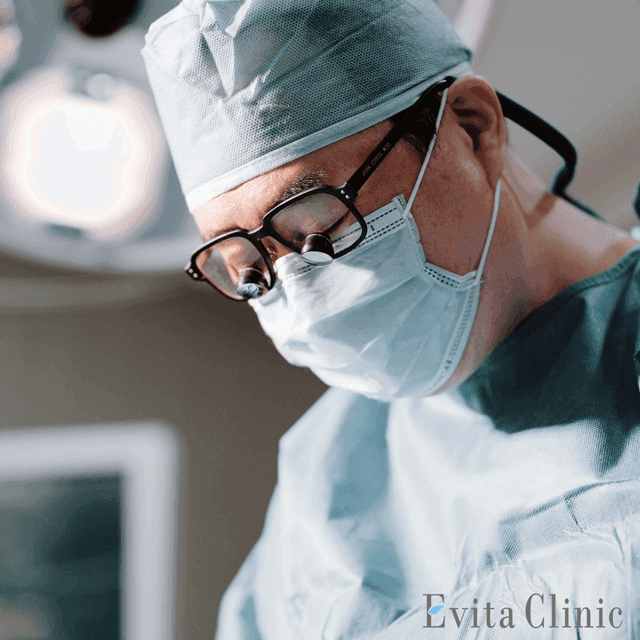
Evita Clinic Korea: Body Contouring, Breast & Gender-Affirming Surgery in Seoul (Apgujeong)
Apgujeong

UK Plastic Surgery Clinic in Korea: Unparalleled Beauty Enhancement and Confidence Boosting Procedures
Centum