Medical Tourism Blog
Abortion in Korea: Methods, Access Uncertainty, Travel Planning and Aftercare
Table of contents
- Abortion at a Glance
- What Is an Abortion?
- Who Is a Good Candidate for an Abortion?
- What Are the Different Types of Abortion?
- Why Visit Korea for an Abortion?
- Key Information for International Patients
- Abortion From Start to Finish
- Which Are the Best Clinics in Korea for Abortion?
- Alternatives to an Abortion
- How Can I Prepare for an Abortion?
- Aftercare Advice
Considering treatment in Korea? Everything you need to know e.g. — how to avoid scams, visas, interpreters, recovery tips — in our Medical Tourism Master Guide. Plan with confidence in minutes, not weeks!
Last updated: September 2026
Abortion at a Glance
- Two main methods — Before 12 weeks, abortion is typically by medication—mifepristone followed at least 24 hours later by misoprostol—or outpatient vacuum aspiration, which uses suction to empty the uterus in one visit; D&E is the specialist procedural option from about 14 weeks.
- Korea access is uncertain — South Korea has no settled national framework for abortion gestational limits, procedures, or routine medication access, so obtain written confirmation from a licensed OB-GYN or hospital of nonresident eligibility, available method, gestational criteria, and emergency arrangements before booking travel.
- No verified price range — No reliable Korea-specific cost data or official directory confirming abortion services for international patients was identified; request an itemized written quote covering consultation, ultrasound or testing, procedure or medicines, anesthesia, follow-up, and potential emergency care.
- Medication needs follow-up — Misoprostol is taken at least 24 hours after mifepristone, and completion is commonly checked with a low-sensitivity pregnancy test from 2 weeks, a standard test from 4 weeks, or clinician-directed ultrasound or hCG testing.
- Aspiration is faster — Vacuum aspiration is usually an outpatient procedure with immediate uterine evacuation, but stay nearby until pain, bleeding, and vital signs are stable; if sedation or general anesthesia is used, an escort and next-day recovery time are needed.
- Ectopic symptoms need urgent care — One-sided pelvic pain, shoulder pain, fainting, severe dizziness, fever, or very heavy bleeding require urgent assessment for ectopic pregnancy or complications rather than routine abortion treatment.
- Do not plan a short trip — A fly-in/fly-out itinerary is unsafe: medication abortion requires reliable emergency access and a follow-up plan, while travelers should not take long-haul flights with heavy bleeding, severe pain, fever, faintness, or unresolved completion concerns.
What Is an Abortion?
Abortion is healthcare that ends an established pregnancy using medicines or a procedure to empty the uterus. It addresses an unwanted pregnancy or circumstances in which ending a pregnancy is the chosen or medically appropriate outcome, with care tailored to pregnancy duration and health needs. Medication abortion is non-surgical, while vacuum aspiration and later procedural care are minimally invasive procedures.
Who Is a Good Candidate for an Abortion?
- Informed, voluntary decision — Appropriate care starts when the pregnant patient independently chooses induced abortion, receives non-directive information, and can give informed consent privately.
- Confirmed clinical pathway — Candidates have a method suited to gestational age, pregnancy location, medical history, and access to urgent care and follow-up.
- Early-pregnancy assessment — People with reliable dates and no concerning symptoms may need limited testing, while uncertain dates, bleeding, pelvic pain, or ectopic-pregnancy risk require ultrasound and/or serial hCG assessment.
- Able to complete follow-up — Medication abortion requires a clear plan to confirm completion; aspiration also requires access to review for persistent symptoms or complications.
Do not proceed with routine medication abortion when ectopic pregnancy is confirmed or suspected, or when pregnancy location is unknown and specialist follow-up is needed. An IUD in place, chronic adrenal failure, long-term systemic corticosteroid use, anticoagulants or a bleeding disorder, inherited porphyria, and allergy to mifepristone or misoprostol require a different plan or make medication abortion unsuitable. Significant anemia, serious cardiopulmonary disease, prior uterine surgery, later gestation, or inability to obtain emergency care can change the safest method and setting. One-sided pelvic pain, shoulder-tip pain, fainting, severe dizziness, fever, or very heavy bleeding need urgent assessment rather than routine abortion care. No one should undergo treatment under pressure or coercion.
What Are the Different Types of Abortion?
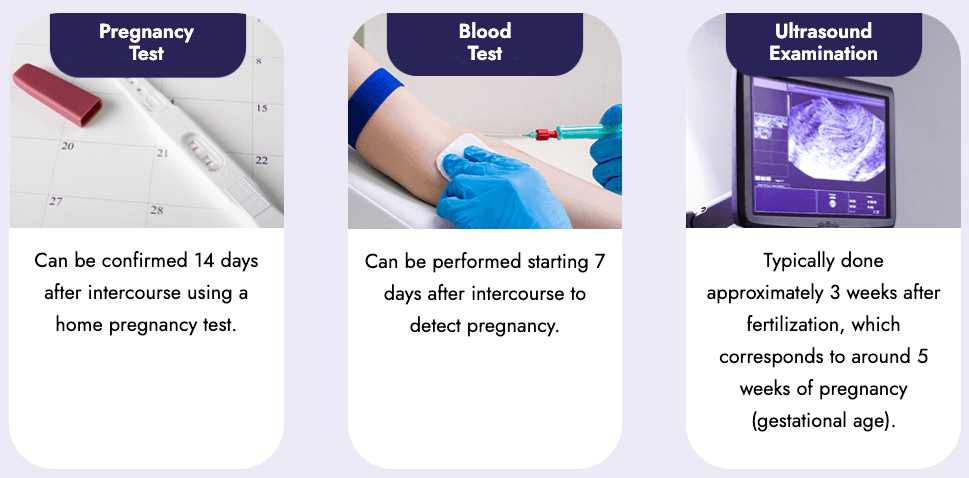
Induced abortion ends an intrauterine pregnancy with medicines or uterine evacuation. The method depends on gestational age, ultrasound or hCG findings when indicated, health history, informed preference, verified local availability, and the ability to access follow-up.
- Medication abortion — For pregnancies under 12 weeks, a standard WHO regimen uses mifepristone 200 mg orally, followed after 1–2 days, with at least a 24-hour interval, by misoprostol 800 micrograms buccally, sublingually, or vaginally. Mifepristone blocks hormonal support for pregnancy; misoprostol causes uterine contractions and expulsion. Cramping and bleeding, often heavier than a period, commonly start after misoprostol; nausea, diarrhea, chills, short-lived fever, vomiting, and headache can occur.
- Vacuum aspiration — Before 14 weeks, vacuum or suction aspiration is preferred over sharp curettage. A clinician passes a thin cannula through the cervix and uses suction to empty the uterus; cervical preparation, a local cervical block, oral or IV analgesia, sedation, or general anesthesia are selected according to gestation, health needs, and facility practice. It is usually an outpatient procedure and offers immediate evacuation in one visit.
- Dilation and evacuation (D&E) — From about 14 weeks onward, D&E is the recommended procedural approach in a properly staffed and equipped setting. It needs cervical preparation, sometimes over more than one day, plus more complex anesthesia, observation, and emergency planning. Later-gestation access in Korea is particularly uncertain and is not appropriate for a standard medical-tourism itinerary.
Why Visit Korea for an Abortion?
Korea is not a straightforward destination for abortion travel. The former criminal provisions stopped operating on January 1, 2021, but the country still lacks a settled national framework for gestational limits and service procedures. Confirm every clinical and administrative detail directly in writing before booking travel.
- Legal and service uncertainty — The Ministry of Justice confirmed that its earlier proposal for access through 14 weeks, and through 24 weeks in specified circumstances, lapsed with the National Assembly; no replacement direction or timetable had been decided in 2024. Do not treat “14 weeks” or “24 weeks” as settled law or a guarantee of treatment by a Korean provider. Read the Ministry’s clarification.
- Medication availability is unconfirmed — In July 2026, the president directed the government to explore medically supervised mifepristone use, while reporting described women obtaining pills abroad because of domestic restrictions. This does not establish that mifepristone–misoprostol abortion is routinely available from Korean providers. The contemporaneous report describes the policy gap.
- Foreign-patient registry, not abortion verification — Medical Korea can help check whether an institution is registered to serve international patients and advertises language support. Its registry does not confirm abortion services, medication access, accepted gestational ages, or emergency referral arrangements. Verify the institution’s foreign-patient registration, then obtain abortion-specific written confirmation from a licensed OB-GYN or hospital.
- Evidence limitation — No official Korea-specific directory was identified that verifies abortion providers for nonresidents, actual method availability, later-gestation pathways, discharge standards, or cross-border follow-up. This uncertainty is a safety issue, not merely a travel inconvenience.
Key Information for International Patients
- Minimum stay — Do not plan a fly-in/fly-out trip. After aspiration, remain nearby until vital signs, pain, and bleeding are stable. Medication abortion is a poor fit for short travel because misoprostol is taken at least 24 hours after mifepristone and completion assessment can occur from 2–4 weeks later.
- Repeat visits — Expect at least an assessment visit and a treatment visit when care is available. D&E can require cervical preparation over more than one day; later-gestation arrangements need hospital-level planning.
- Flights — There is no universal evidence-based no-fly interval after abortion. Do not board a long-haul flight while passing tissue, soaking pads, faint, feverish, in severe pain, or before possible ectopic pregnancy or incomplete abortion has been addressed.
- Medication abortion follow-up — Completion can be checked with symptoms plus a low-sensitivity urine test from 2 weeks, a standard high-sensitivity test from 4 weeks, or clinician-directed ultrasound or serial hCG testing. Arrange this with a clinician at home before traveling.
- Aspiration recovery and itinerary — Aspiration is often outpatient, but sedation or general anesthesia requires an escort and restrictions on driving, alcohol, being alone, and important decisions according to the facility’s instructions. Keep the following day free rather than scheduling sightseeing or a transfer.
- Documents and communication — Obtain English discharge instructions, a procedure summary, medicines and doses given, blood-group/Rh decisions where relevant, warning signs, and a 24-hour contact route. Do not rely on brokers, social-media referrals, or unverified online pills.
Travel note: Before paying for flights, get written confirmation from a licensed Korean OB-GYN covering nonresident eligibility, gestational-age criteria, available method, language support, anesthesia, testing, after-hours emergency care, and follow-up handoff after return home.
Abortion From Start to Finish
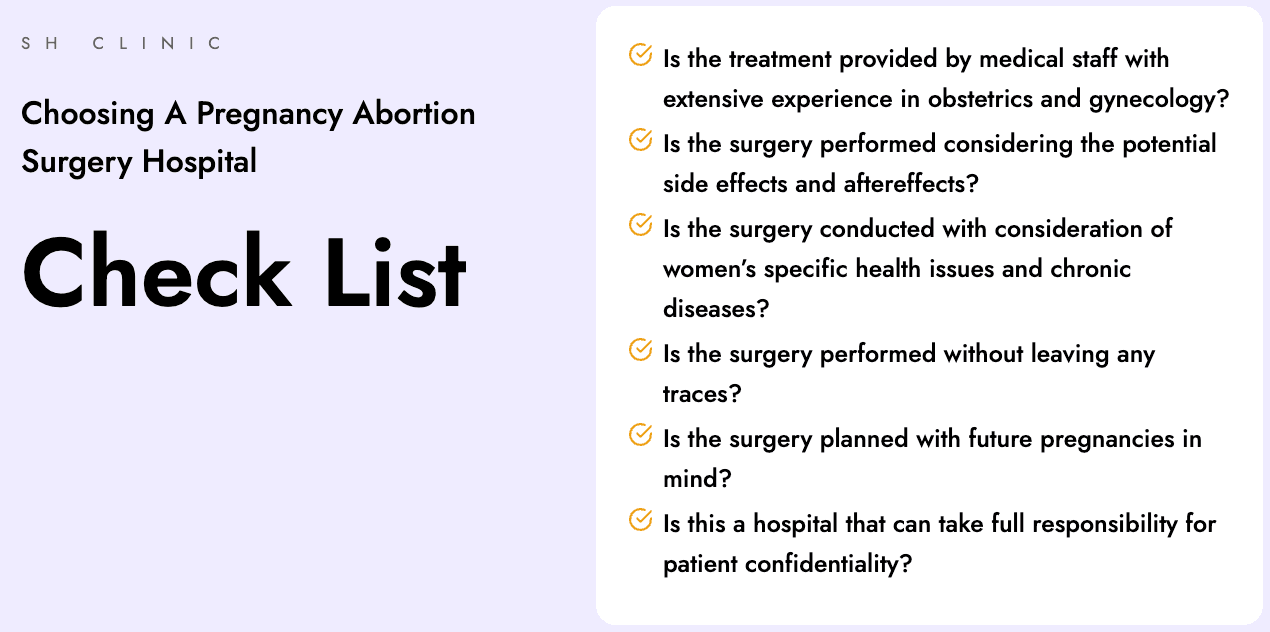
- Written pre-travel contact — Ask a licensed Korean OB-GYN or hospital whether it treats nonresidents and which method is actually available. Request an English or virtual consultation where offered; verify gestational-age criteria, required records, payment, consent, interpreter access, emergency contact arrangements, and discharge documentation.
- Private consultation and consent — The clinician confirms that the decision is voluntary and informed, discusses abortion alongside continuing pregnancy and parenting or adoption, explains expected bleeding and pain, reviews contraception, and screens for coercion or safety concerns.
- Dating and clinical assessment — The team reviews the last menstrual period, symptoms, prior pregnancies and uterine surgery, medicines, allergies, anemia, bleeding history, ectopic risk, and chronic conditions. Pregnancy testing, ultrasound, and/or serial hCG are used when clinically useful to date the pregnancy, establish location, or investigate pain, bleeding, and uncertain dates. Hemoglobin, blood group/Rh status, STI testing, and other tests depend on history and local protocol.
- Method and pain-control plan — Eligible early pregnancies are assessed for medication abortion versus aspiration. Medication abortion uses mifepristone followed at least 24 hours later by misoprostol; aspiration uses cervical preparation when needed, suction evacuation, and selected pain control. Later cases require specialist facility planning.
- Treatment — Medication abortion involves taking the prescribed medicines according to the clinician’s schedule, with cramping and bleeding usually occurring after misoprostol. During aspiration, a speculum is placed, the cervix is numbed and/or prepared, a cannula enters the uterus, and suction removes pregnancy tissue. The procedure itself is brief, but preparation, anesthesia, and recovery observation make the visit longer.
- Observation and discharge — Discharge follows stable vital signs, manageable pain and bleeding, understanding of written instructions, and a clear emergency plan. Aspiration commonly includes prophylactic antibiotics; routine prophylactic antibiotics are not needed for medication abortion. Sedation or general anesthesia requires a responsible escort and adherence to the facility’s restrictions.
- Completion and overseas follow-up — Aspiration produces immediate evacuation, while medication abortion requires confirmation that the pregnancy has passed. Contact the clinic urgently for persistent pregnancy symptoms, uncertain passage, or worsening symptoms; arrange the agreed pregnancy-test, ultrasound, or hCG follow-up with the Korean service and a clinician at home.
Which Are the Best Clinics in Korea for Abortion?
Listed below are some of the best clinics in Korea for abortion.
1. SH Clinic
You may consider SH Clinic for a physician-led abortion procedure in a monitored setting, with pre- and post-procedure counselling included. Its gynecology care is provided directly by an experienced, board-certified gynecologist recognized with a commendation from Korea’s Minister of Health and Welfare.
- URL: SH Clinic Website
- Location: Seocho-gu, Seoul
- Procedure care:
- Abortion surgery is described as physician-led and performed in a monitored setting.
- Pre- and post-procedure counselling is provided.
- Gynecology care:
- The clinic offers general gynecologic care alongside services such as cervical and ovarian cancer screening, treatment for urinary incontinence, and vaginal health procedures.
- Care is provided at a specialized women’s health clinic.
2. Daegu Spring Women's Clinic
You can expect abortion services described as safe and legal at Daegu Spring Women’s Clinic, with a same-day procedure option and comprehensive care and support. The clinic also provides gynecologic evaluation and pregnancy and contraception services, which may be relevant to your broader reproductive-health needs.
- URL: Daegu Spring Women's Clinic Website
- Location: Jung-gu, Daegu
- Procedure details:
- Same-day abortion procedures are available as an option.
- The clinic describes its abortion services as safe and legal, with comprehensive care and support.
- Related gynecology services:
- Pregnancy management and contraceptive options, including oral contraceptives, IUDs, and implants, are available.
- General gynecology services include care for menstrual disorders, abnormal uterine bleeding, vaginitis, cystitis, and menopausal changes.
- Cervical cancer screening includes Pap smears and HPV tests.
Alternatives to an Abortion
For a current viable pregnancy, the alternatives to abortion are continuing the pregnancy and parenting, or continuing the pregnancy and arranging adoption. These choices need unbiased information and practical support, not pressure. For future pregnancy prevention, contraception and sterilization reduce the chance of another unintended pregnancy but do not end an established pregnancy.
Continue Pregnancy and Parent
- What it involves — Continue prenatal care, childbirth planning, and parenting with appropriate medical, financial, and social support.
- Key tradeoff — This preserves the pregnancy but entails the health, practical, and long-term responsibilities of pregnancy and parenting.
Continue Pregnancy and Arrange Adoption
- What it involves — Continue prenatal and maternity care while exploring adoption pathways.
- Key tradeoff — Adoption does not end the pregnancy; it involves pregnancy and childbirth, followed by legal and emotional decisions that vary by jurisdiction.
Levonorgestrel IUD
- Purpose — A hormonal intrauterine device provides long-acting reversible contraception after abortion or when preventing future pregnancy is the goal. See Mirena IUD birth control.
- Key tradeoff — It does not treat or terminate an existing pregnancy; placement suitability depends on pregnancy status, uterine anatomy, infection risk, and clinician assessment.
Contraceptive Implant
- Purpose — A progestin implant placed under the skin of the upper arm provides long-acting reversible contraception. See contraceptive implant.
- Key tradeoff — It does not end an established pregnancy, and irregular bleeding is a common consideration.
Vasectomy
- Purpose — Vasectomy is permanent contraception for a partner who does not want future biological pregnancies. See vasectomy.
- Key tradeoff — It has no effect on an existing pregnancy and should be chosen only when permanent contraception is acceptable.
How Can I Prepare for an Abortion?
- Confirm access before travel — Obtain written confirmation of nonresident eligibility, gestational-age assessment, available method, appointment sequence, interpreter support, testing, anesthesia, emergency arrangements, and follow-up. Do not assume a registered foreign-patient facility offers abortion care.
- Bring medical records — Carry the last menstrual period date, prior ultrasound and hCG results, blood type if known, medicine list with doses, allergies, medical conditions, prior uterine operations, and emergency contact details.
- Disclose medicines and supplements — Report anticoagulants and antiplatelets, systemic corticosteroids, insulin and other diabetes medicines, seizure medicines, opioids, and supplements that affect bleeding or sedation. Do not stop prescribed drugs without the treating clinician’s instruction.
- Address an IUD — Tell the clinic if an IUD is in place. It must be removed before medication abortion; discuss immediate post-abortion contraception where appropriate.
- Follow fasting instructions — Fasting is not routinely needed for medication abortion or aspiration under local anesthesia alone. When sedation or general anesthesia is planned, follow the facility’s exact food-and-drink cutoff.
- Plan accommodation and transport — For medication abortion, stay in private accommodation with a toilet, phone, pads, prescribed pain medicine, and rapid emergency access. After sedation or anesthesia, arrange private transport and a responsible adult escort.
- Keep flights flexible — Do not schedule departure around the anticipated time of misoprostol or immediately after aspiration. For flights over four hours, walk regularly, do calf exercises, hydrate normally, and consider an aisle seat; seek individual advice if there are additional clotting risks. Do not self-start aspirin for flight-clot prevention.
Travel note: Medication abortion requires reliable emergency access in Korea and a confirmed follow-up handoff at home. Postpone travel when bleeding, pain, fever, faintness, or pregnancy-location concerns remain unresolved.
Confirm clinic-specific requirements with the treating doctor; individualized instructions take precedence over general guidance.
Aftercare Advice
Monitor bleeding and pain carefully, keep emergency access available, and do not travel until symptoms are stable.
- Bleeding and pain — Use pads initially so bleeding can be monitored. Medication abortion commonly causes bleeding heavier than a period during expulsion, followed by lighter bleeding or spotting for days to weeks; spotting can also continue for several weeks after aspiration. Take only clinician-approved pain medicines; ibuprofen is commonly used when medically suitable.
- Activity and sedation — Rest on the treatment day, then resume light routine activity as comfort allows. Do not drive, drink alcohol, make important decisions, or stay alone while affected by sedation or opioid medicines.
- Sex, swimming, and exercise — Restrictions on intercourse, tampons or menstrual cups, baths, swimming, and strenuous exercise differ by method and clinician. Follow the written instructions from the treating service rather than assuming a universal timeframe.
- Urgent warning signs — Seek urgent care for bleeding that soaks more than two large pads per hour for two consecutive hours; severe or worsening pelvic or abdominal pain not relieved by prescribed medicine; fainting, major dizziness, weakness, shoulder pain, or one-sided pain; foul or unusual discharge; persistent pregnancy symptoms; or fever and significant illness lasting beyond 24 hours after misoprostol. No bleeding or only minimal spotting within 24 hours after misoprostol also requires prompt clinical advice.
- Completion check and contraception — Follow the planned test, ultrasound, or hCG review to confirm completion after medication abortion. Fertility can return quickly, and an uncomplicated abortion does not impair future fertility; discuss contraception before discharge when avoiding pregnancy is important.
Follow the treating doctor’s individualized instructions and contact the clinic promptly when bleeding, pain, fever, discharge, or recovery appears abnormal.
Frequently Asked Questions
Related Blogs
Vaginal Filler in Korea: Types, Evidence, Recovery, Risks and Travel Planning
Vaginal filler uses hyaluronic acid injections for labia majora volume loss or carefully diagnosed postmenopausal vulvovaginal atrophy, following in-person screening and a documented treatment plan. In Korea, quoted costs range from ₩650,000–₩5,600,000 (about US$500–$4,100); international patients should plan follow-up, obtain product records, and know urgent warning signs.
Updated: Sep 18, 2026

Vaginal Bleaching in Korea: Safety, Methods, Recovery and Travel Planning
“Vaginal bleaching” refers to clinician-assessed lightening of intact external vulvar or nearby skin using topical treatments, superficial peels, or low-fluence lasers; internal vaginal and mucosal treatment should not be performed. In Korea, listed prices are ₩1,150,000–₩1,550,000 (about US$900–$1,100), with guidance on screening, travel planning, aftercare, and follow-up.
Updated: Sep 18, 2026
Nipple Bleaching in Korea: Methods, Safety, Recovery and Travel Planning
Nipple bleaching uses clinician-supervised topical depigmentation, laser, or superficial peel approaches, but NAC-specific evidence and validated protocols are limited; suspicious or changing nipple findings require diagnostic assessment instead. In Korea, listed cost is ₩700,000 (about US$500), with guidance on provider verification, travel planning, follow-up, preparation, and aftercare.
Updated: Sep 18, 2026

Gold Thread Vaginal Tightening in Korea: Evidence, Safety, Recovery, and Alternatives
Gold thread vaginal tightening uses permanent non-absorbable gold threads placed under IV sedation, but evidence is limited to one small Korean retrospective study with 1–3 months of follow-up and no established long-term safety or benefit. Listed at ₩4,900,000 (about US$3,600), the article covers candidate screening, travel and follow-up planning, procedure details, aftercare warning signs, and d
Updated: Sep 18, 2026