Medical Tourism Blog
SMILE LASIK - Side Effects FAQ with Dr. Jo from Samsung Miracle Eye Clinic
Table of contents
- SMILE LASIK Side Effects: Dry Eye, Recovery & UV
- What I See Most Often After SMILE LASIK
- Do You Have to Wear Sunglasses After SMILE LASIK?
- Why Do Side Effects Seem So Common Online?
- Does Dry Eye Always Happen After SMILE LASIK?
- How Fast Is Recovery With SMILE LASIK?
- CLEAR or Smart LASIK vs. SMILE: Is Newer Automatically Better?
- Closing Thoughts: Turning SMILE LASIK Concerns Into Clear Expectations
- More about Samsung Miracle Eye Clinic
Considering treatment in Korea? Everything you need to know e.g. — how to avoid scams, visas, interpreters, recovery tips — in our Medical Tourism Master Guide. Plan with confidence in minutes, not weeks!
Disclaimer: The following is a guest post. The information and opinions expressed are not of koreaclinicguide.com but of Samsung Miracle Eye Clinic
SMILE LASIK Side Effects: Dry Eye, Recovery & UV
What I See Most Often After SMILE LASIK
When people consider SMILE LASIK, the first thing they usually ask me isn’t about “How clear will I see?”—it’s about side effects. That’s understandable. Online, you’ll find plenty of posts that make laser vision correction sound like a minefield of complications.
In day-to-day practice, though, the reality looks very different. Based on what we see in our clinic, the number of patients who complain or feel dissatisfied after SMILE LASIK is extremely small. In fact, it’s much lower than the number of people who report discomfort after other common eye surgeries, such as cataract surgery. That doesn’t mean everyone feels perfect immediately—early healing sensations can happen—but truly persistent or serious dissatisfaction is not something I see frequently.

What I do see often is anxiety fueled by stories online. When someone experiences dryness or glare early on and posts about it, that single experience can sound far more alarming than it really is—especially if it’s shared and repeated without context. My goal here is to put the most common SMILE LASIK concerns into a realistic, clinical perspective.
Do You Have to Wear Sunglasses After SMILE LASIK?
This is one of the most practical questions, and I’ll answer it plainly: wearing sunglasses after SMILE LASIK isn’t strictly necessary. You can choose to wear them after surgery depending on what feels comfortable for you.
There are published studies showing that SMILE LASIK is very safe for corneal tissue, even with UV exposure after surgery. In other words, the procedure itself is not “undone” by sunlight, and the cornea is not suddenly fragile in the way some people fear.
That said, the healing period is still a healing period. Direct UV light can make your eyes feel more sensitive and can increase glare while your vision is stabilizing. Also, from a simple protective standpoint, sunglasses (or clear glasses) reduce the chance that dust, wind, or other foreign material irritates the eye as the surface settles.
For that reason, I recommend sunglasses, glasses, or protective eyewear for about a week after surgery—not because you must, but because it often makes patients more comfortable and helps them avoid unnecessary irritation.
Why Do Side Effects Seem So Common Online?
I understand why people get worried: a quick search can make it seem like SMILE LASIK causes endless issues. But in my experience, SMILE LASIK doesn’t have many side effects that are truly common.
What can happen is that normal, temporary healing symptoms get described online as if they are permanent. Dry eyes or slightly blurry vision can occur early after surgery, and if someone posts during that window, it can sound dramatic—especially when readers don’t realize how much improvement typically happens over time.
It’s also important to remember that every type of vision correction surgery has pros and cons. SMILE is not the only procedure that can cause discomfort during healing, and it’s misinformation to claim SMILE is uniquely “full of side effects.” The more helpful question is: what side effects are most likely for a specific person, and how long do they usually last?
Does Dry Eye Always Happen After SMILE LASIK?
Dry eye is probably the most discussed side effect in vision correction—and it deserves a clear explanation.
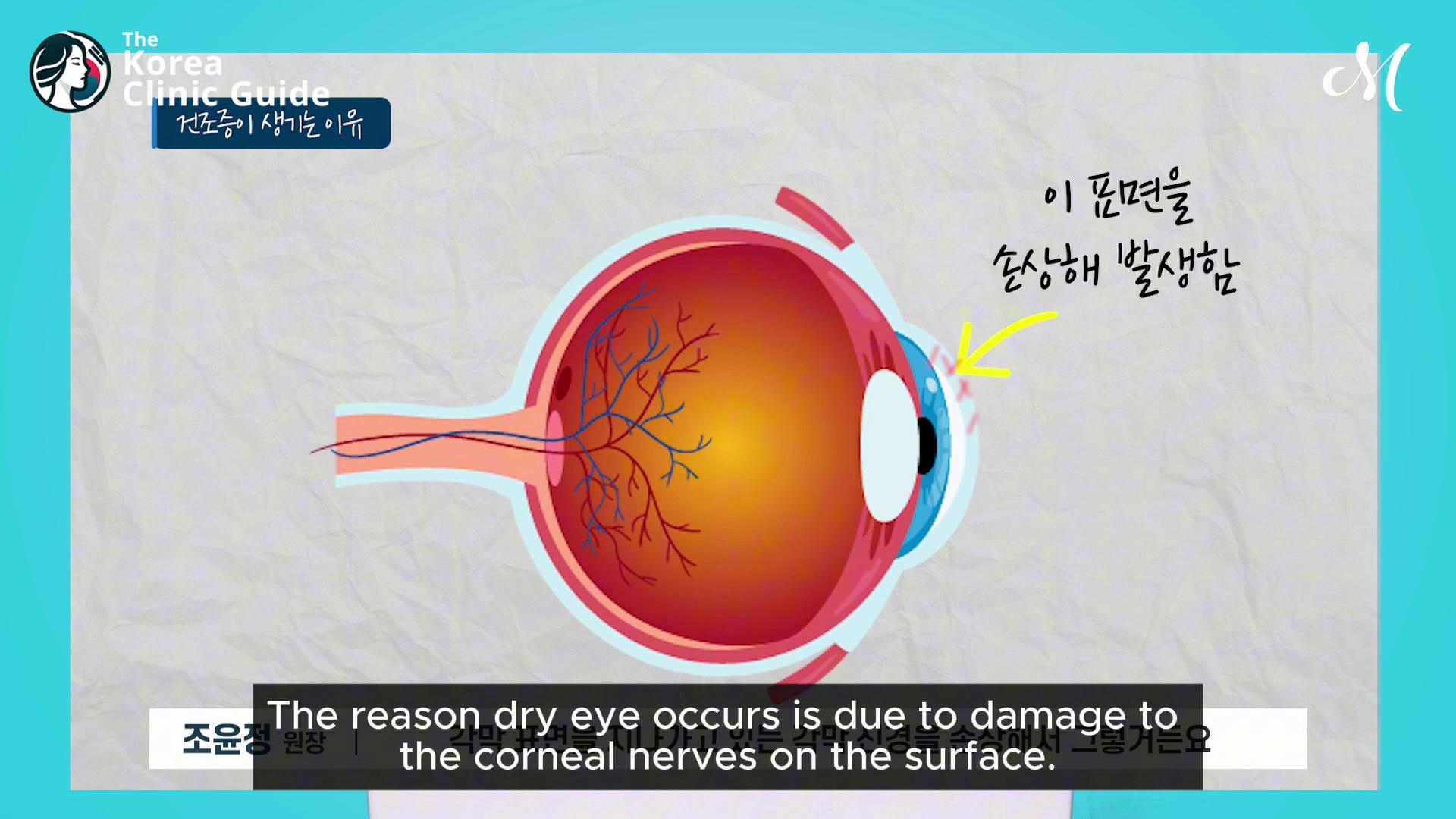
Dryness happens because corneal nerves, which contribute to tear film regulation, can be affected by surgery. The procedure most associated with dry eye is traditional LASIK, because it creates a large flap on the corneal surface—roughly 20 mm—so many corneal nerves are inevitably disrupted.

SMILE is different. With SMILE, the incision on the corneal surface is only about 2 mm, so far fewer corneal nerves are affected. Practically speaking, you can think of SMILE as a vision correction procedure with a very low rate of dry eye compared with flap-based LASIK.
However, “low rate” doesn’t mean “never.” Because the cornea’s shape temporarily changes after surgery, dry eye can still occur for a month or two. For most people, as healing progresses, symptoms improve and they return to roughly their pre-surgery baseline. That’s why I don’t think you need to worry too much about dry eye with SMILE LASIK—especially if you’re prepared for the possibility of short-term dryness and you follow your post-op care plan carefully.
How Fast Is Recovery With SMILE LASIK?
Another big reason people choose SMILE is speed of recovery, and this ties directly into how little the corneal surface is disrupted.
When patients say they want “fast recovery,” they usually mean getting back to everyday life—things like wearing makeup, exercising, returning to work comfortably, and not feeling like they need to protect their eyes constantly.
Because SMILE leaves so little disruption on the surface, recovery tends to be faster. People who exercise a lot—especially those who feel antsy if they skip even a day or two—often choose SMILE and are happy with the decision specifically because they can return to normal routines quite quickly.
If your top priority is the fastest practical return to daily activities, SMILE is the procedure I typically recommend.
CLEAR or Smart LASIK vs. SMILE: Is Newer Automatically Better?
Many patients ask about newer-sounding options like CLEAR or Smart LASIK. Because the techniques are similar, it’s easy to assume they’re essentially the same surgery—and it’s also easy to assume that newer must mean better.
What I consider most important here is not the marketing name, but the maturity of the procedure and the stability of outcomes.
SMILE has more than 10 years of accumulated surgical experience, and its safety is well established. That long track record matters because excellent results depend on precise settings—especially the laser energy level and exactly where the laser is applied. In refractive surgery, we call the set of optimized parameters a nomogram.
A nomogram isn’t something that becomes perfect overnight. It needs a lot of clinical data to stabilize, and only then can surgeons consistently achieve accurate, repeatable outcomes across a wide range of patients.
With newer procedures, the nomogram often hasn’t stabilized yet. That means there can be more variability in results—not because the technology is “bad,” but because the accumulated know-how and fine-tuning are still developing. Given that stability and experience, it often makes sense to choose SMILE when you want a procedure with a long clinical track record and well-established predictability.
Closing Thoughts: Turning SMILE LASIK Concerns Into Clear Expectations
Most SMILE LASIK concerns become much less frightening once you understand what’s truly common, what’s temporary, and what’s amplified online.
In my clinical experience, dissatisfaction after SMILE LASIK is rare. Sunglasses are optional but helpful for comfort and protection during the first week. Dry eye can happen, but SMILE’s small incision generally means fewer disrupted corneal nerves and a lower chance of significant dryness, with most people improving over the first month or two. And if you’re comparing SMILE with newer options, remember that long-term track record and a stable nomogram are major reasons SMILE remains a strong, dependable choice.
If you’re considering SMILE LASIK, the best next step is to focus on personalized evaluation and realistic timelines for healing—because for most patients, that’s where confidence comes from, not from comment sections.
More about Samsung Miracle Eye Clinic
For clear, practical guidance on SMILE LASIK side effects and recovery in Korea, Samsung Miracle Eye Clinic near Gangnam Station stands out for its 1:1 personalized care and end-to-end continuity: the same doctor who performs your detailed eye examination also performs your SMILE LASIK and follows you through the entire recovery process, helping ensure consistent decision-making, accountability, and optimized outcomes. The clinic’s one-day system, powered by an advanced in-house diagnostic setup and its patented Miracle Formula for precise lens power calculation, allows eligible patients to complete both evaluation and surgery on the same day without sacrificing accuracy. Another key differentiator is that all surgeons are ambidextrous, supporting equal precision in both eyes, improved symmetry, and reduced contact near the nasal bridge for added comfort and safety. International patients are supported by a dedicated team designed to deliver the same level of quality and convenience, while the clinic’s broader expertise spans vision correction options (SMILE LASIK, LASIK/LASEK), presbyopia and cataract solutions (including intraocular lens insertion), and additional services such as Dream Lens and re-calibration surgery.
Find more about this clinic here: Samsung Miracle Eye Clinic