Medical Tourism Blog
Nasal Tip Over-Rotation Correction with Revision Rhinoplasty in Korea: Expert Solutions for Perfect Nose Shape
Table of contents
- Revision Rhinoplasty: Correcting the Over-Rotated Tip
- Best Clinics in Korea for Nasal Tip Overrotation
- The Medical Tourist's Journey: Revision Rhinoplasty in South Korea
- Cost Analysis: Revision Rhinoplasty in South Korea vs. Global Benchmarks
- Patient Perspectives: Experiences and Outcomes of Correcting Over-Rotation
- Conclusion: Empowering Patients with Informed Choices
- References
Considering treatment in Korea? Everything you need to know e.g. — how to avoid scams, visas, interpreters, recovery tips — in our Medical Tourism Master Guide. Plan with confidence in minutes, not weeks!
This guide offers a clear overview of nasal tip over-rotation, the revision rhinoplasty procedure, and what patients should know—especially those considering medical tourism in South Korea. If you’re researching solutions for an “upturned” or “piggy” nose, you’ll find detailed information here on causes, treatment options, surgical steps, costs, and patient experiences.
Nasal tip over-rotation is when the tip of the nose tilts too far upward, which can affect both facial appearance and, sometimes, nasal function. Let’s break down what this means, the terms patients use to describe it, and what causes it.
What is Nasal Tip Over-Rotation?
Medically, an over-rotated nasal tip means the nose points up more than it should. This can make the nose look short and out of balance with the face. One telltale sign is that the nostrils are more visible from the front, which many people find bothersome. Achieving the right angle between the upper lip and the nasal tip is key to a natural look.
Common Pseudonyms and Patient Concerns
Patients often use everyday terms to describe this condition, such as “pig nose,” “piggy nose,” or “pug nose.” These words highlight the distinctive, often unwanted, look of an overly upturned nose.
| Pseudonym | Description |
|---|---|
| Pig Nose | Colloquial term for an overly upturned nasal tip, often exposing nostrils. |
| Piggy Nose | Similar to "pig nose," emphasizing a shortened, upturned appearance. |
| Pug Nose | Evokes a short, upturned nose, reminiscent of a pug dog's facial features. |
| Upturned Nose | A direct description of the nasal tip's upward angle. |
Beyond appearance, many patients feel self-conscious or dissatisfied with their nose, which can affect their confidence. Sometimes, the altered structure can even cause breathing issues. The emotional impact of these terms shows just how much this issue can affect someone’s self-image.
Causes of Over-Rotation
Nasal tip over-rotation can be due to genetics, injury, or most commonly, a previous rhinoplasty. Here’s how it can happen:
- Genetics or Birth Defect: Some people are born with an upturned tip.
- Trauma: An injury can collapse the nasal bridge, causing the tip to rotate upward.
- Previous Rhinoplasty: This is the most common cause. It can result from:
- Excessive Cartilage Removal: Removing too much cartilage can cause the tip to spring upward.
- Aggressive Suturing: Overly tight stitches can pull the tip up.
- Inadequate Support: Not enough structural support during surgery can lead to an upturned tip as the nose heals.
- Scar Contracture: Scar tissue can contract and pull the tip upward.
- Overcorrection: Sometimes, the surgeon lifts the tip too much.
Swelling after surgery can also temporarily make the tip look more upturned. This is why choosing an experienced surgeon is so important—not just for revision, but for any rhinoplasty. The emotional weight of terms like “piggy nose” shows that this isn’t just about looks; it can deeply affect how someone feels about themselves.
Revision Rhinoplasty: Correcting the Over-Rotated Tip
Revision rhinoplasty is a specialized surgery to fix problems from a previous nose job. Here’s what you need to know about what it is, why it’s needed, and how it’s done.
What is Revision Rhinoplasty? (Definition, Goals, and Why it's Needed)
Revision rhinoplasty, or secondary rhinoplasty, is performed when someone is unhappy with the results of their first nose surgery—either for cosmetic reasons, functional issues, or complications.
The main goals are:
- Aesthetic Refinement: Fixing issues like an overly upturned tip (“piggy nose”), asymmetry, or a pinched/collapsed nose for a more natural look.
- Functional Improvement: Addressing breathing problems or structural issues not fixed (or made worse) by the first surgery.
- Structural Restoration: Rebuilding the nose’s framework if too much cartilage or bone was removed.
Complexity: Primary vs. Revision Rhinoplasty
Revision rhinoplasty is much more complex than a first-time nose job because:
- Altered Anatomy: The nose has already been operated on, so tissues aren’t in their natural state.
- Scar Tissue: Scar tissue makes surgery trickier and can cause deformities.
- Cartilage Deficiency: There’s often less cartilage to work with, so grafts are needed.
- Other Challenges: Blood supply may be changed, and there may be less healthy tissue for grafting.
Because of these challenges, it’s vital to choose a surgeon with advanced skills and experience in revision cases.
Advanced Surgical Techniques for Over-Rotation Correction
Fixing an over-rotated tip usually means rebuilding support, repositioning cartilage, and refining the nose’s soft tissue.
Cartilage grafting is key. Surgeons often use cartilage from the septum, ear, or rib (especially if previous surgeries have used up other sources).
Common grafts include:
- Septal Extension Grafts: Lengthen the nose and provide stable support.
- Shield Grafts: Refine the tip and keep nostrils in proportion.
- Extended Spreader Grafts: Support the tip and improve breathing.
- Alar Batten Grafts: Reshape and support the nostrils.
Soft-tissue management involves removing or repositioning scar tissue and, if needed, thinning thick skin for better definition.
Advanced suturing secures grafts and shapes the tip, while releasing tight scar bands allows the tip to move to a more natural position. Surgeons may also carefully trim and reposition the lower lateral cartilages.
Surgical approaches include:
- Open Rhinoplasty: An incision across the columella gives the surgeon full access—this is most common for complex revisions.
- Closed Rhinoplasty: Incisions are inside the nostrils, with no visible scars, but this is usually for less extensive work.
Modern 3D imaging helps surgeons plan and show patients what to expect.
| Technique | Purpose/Application | Common Graft Sources |
|---|---|---|
| Cartilage Grafting | Rebuild/support structure, extend tip, restore balance | Septum, Ear, Rib |
| Septal Extension Grafts | Lengthen nose, counteract upturned tip, stable support | Septum, Rib |
| Shield Grafts | Refine tip, maintain nostril proportion | Septum, Ear, Rib |
| Extended Spreader Grafts | Support tip, improve breathing | Septum, Rib |
| Alar Batten Grafts | Support/reshape nostrils | Septum, Ear, Rib |
| Soft-Tissue Management | Reshape soft tissue, remove/reposition scar, skin thinning | N/A |
| Suturing Techniques | Refine tip, secure grafts | N/A |
| Release of Scar Bands | Free tight scar tissue tethering the tip | N/A |
| Cartilage Repositioning | Reposition/trim lower lateral cartilages | N/A |
Patients are usually advised to wait 6–18 months after their first surgery before considering revision, to allow swelling to subside and tissues to heal fully. This patience is crucial for the best results.
Best Clinics in Korea for Nasal Tip Overrotation
Listed below are the best clinics in Korea for nasal tip overrotation:
| Clinic Name | Key Features | Special Techniques |
|---|---|---|
| THEPLUS Plastic Surgery | Internationally acclaimed surgeons (Dr. Jeong Jae-yong & Dr. Kim Taek-gyun), decades of rhinoplasty leadership, strong focus on academic contributions, multidisciplinary team, Gangnam location, patient-centered philosophy, cutting-edge facilities, global reputation, safety/artistry prioritization | Complex revision rhinoplasty, correction of nasal tip overrotation, 3D implant expertise, Asian rhinoplasty specialization, advanced sculpting/restorative techniques |
| Made Young Plastic Surgery | Gangnam clinic, >15 years average surgeon experience, direct in-depth consultations, renowned for safety and precision, board-certified anesthesiology team, dedicated monitoring, cross-check protocol, CCTV-monitored procedures, award-winning, personalized aftercare center | Complex/revision rhinoplasty (nasal tip overrotation), micro-dissection, capsule removal, implant removal, minimized tissue/tissue damage, delicate revision techniques |
| Okay Plastic Surgery Clinic | Personalized aesthetic care, female lead surgeon with extensive expertise, strong focus on primary and revision rhinoplasty, comprehensive service range, empathy-driven team, tailored treatment plans, culture of care for lasting/natural results | Innovative solutions for nasal tip overrotation, complex revision management, symmetry/function optimization, advanced medical techniques, natural result focus |
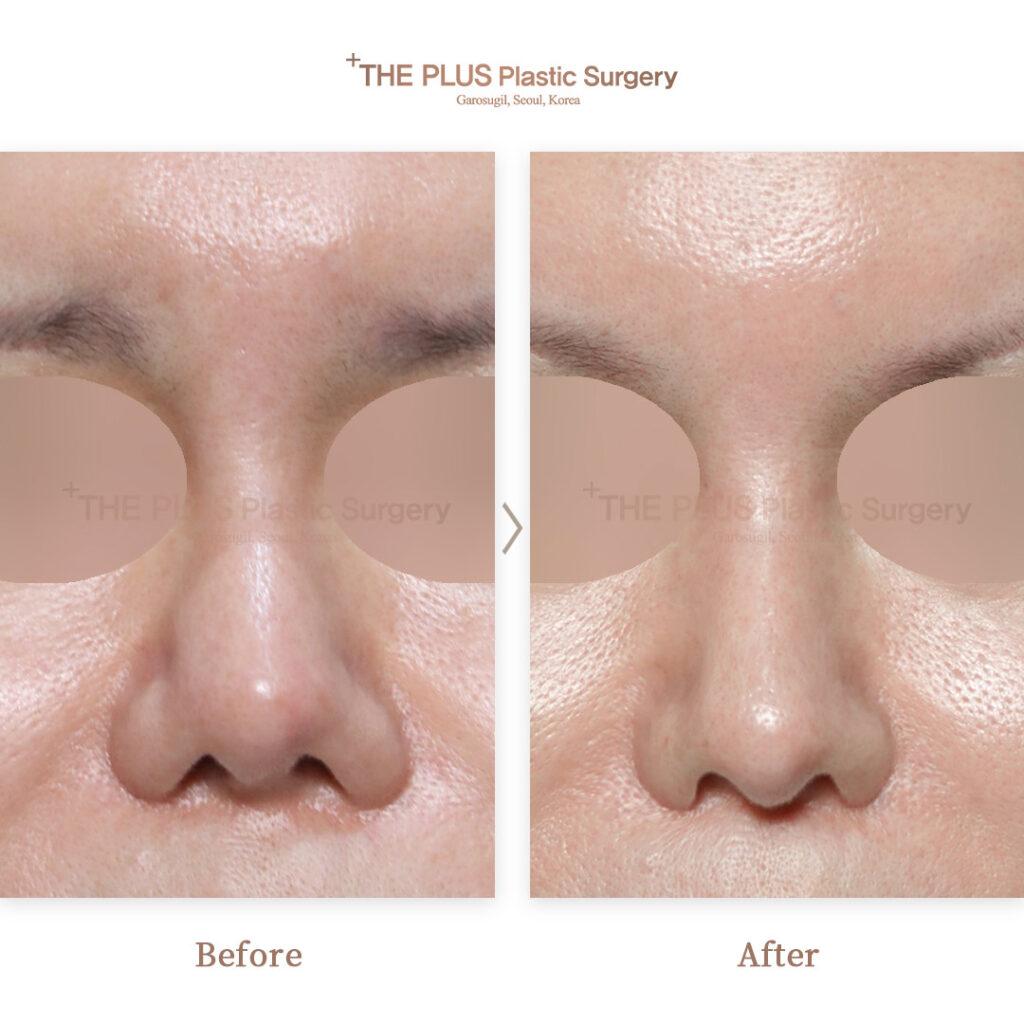
THEPLUS Plastic Surgery
THEPLUS Plastic Surgery is widely recognized as the premier clinic for addressing nasal tip overrotation in Korea, supported by the expertise of its renowned surgeons, Dr. Jeong Jae-yong and Dr. Kim Taek-gyun. Internationally acclaimed for their pioneering work in rhinoplasty, both doctors have significantly influenced surgical standards across Korea, Japan, and China through decades of experience and groundbreaking academic contributions. Dr. Jeong's authorship of "Rebuilding Nose: Rhinoplasty for Asians" underscores his global authority in the field, with its rapid sell-out in Japan and widespread use as an educational resource for surgeons worldwide. Their leadership extends to presenting at prestigious conferences such as the Seoul Rhinoplasty Forum, KSPRS, and IFAAS, and their advisory and teaching roles at esteemed institutions in Tokyo, Shanghai, and China highlight their international reputation. Dr. Kim’s accolades in research, award-winning expertise in 3D implants, and contributions to authoritative texts further cement the clinic’s status. The patient-centered philosophy at THEPLUS ensures that every procedure, including complex revision rhinoplasties for issues like nasal tip overrotation, is performed with an uncompromising commitment to safety, artistry, and functional harmony. With a multidisciplinary team, cutting-edge facilities in Gangnam, and an unwavering dedication to academic excellence and patient satisfaction, THEPLUS Plastic Surgery stands as the leading choice for those seeking precise and natural-looking rhinoplasty results in Korea.
You can check out their website here: THEPLUS Plastic Surgery Website
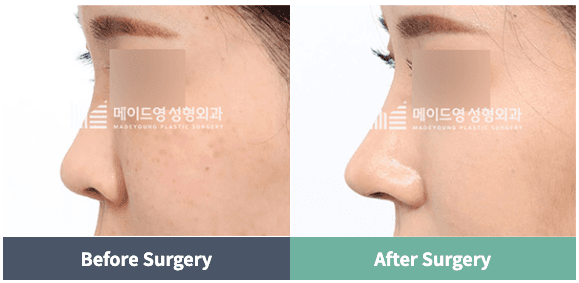
Made Young Plastic Surgery
Made Young Plastic Surgery Clinic, located in the heart of Seoul’s Gangnam district, stands as a leader in advanced aesthetic and reconstructive facial procedures. Renowned for their dedication to safety, precision, and meticulous technique, Made Young is a trusted destination for those seeking solutions for complex rhinoplasty cases, such as nasal tip overrotation. The clinic’s team of highly skilled doctors boasts an average of over 15 years of clinical experience, providing direct, in-depth consultations and diagnoses for every patient. With expertise in precise dissection and minimized tissue damage, Made Young is particularly proficient in handling challenging cases involving scarring, tissue damage, and complications from previous surgeries.
At Made Young, the safety and comfort of patients are prioritized through a comprehensive support system: the clinic features a full-time, board-certified anesthesiology team, one-to-one dedicated monitoring, and a cross-check emergency response protocol. They are recognized for their use of delicate revision techniques, including micro-dissection, capsule removal, and implant removal, ensuring safer and more effective outcomes. A dedicated aftercare center delivers systematic, personalized post-procedure care, while full transparency is ensured through CCTV-monitored procedures. The clinic’s commitment to excellence and patient satisfaction is further validated by prestigious awards and official recognition, making Made Young Plastic Surgery Clinic a premier choice for those seeking rhinoplasty revision and facial surgery in Korea.
You can check out their website here: Made Young Plastic Surgery Website
Okay Plastic Surgery Clinic
Okay Plastic Surgery Clinic stands out as Korea’s leading destination for the correction of nasal tip overrotation, thanks to its commitment to a truly personalized and transformative approach to aesthetic care. The clinic’s foundation lies in sincerity, precision, and tailored treatment plans that recognize the distinct goals and anatomy of each patient—an essential consideration in challenging cases of nasal tip overrotation, especially those requiring revision. Headed by a renowned female plastic surgeon with extensive expertise, the clinic excels in handling difficult primary and revision rhinoplasty cases, ensuring optimal symmetry and function in even the most complex situations. What further sets Okay Plastic Surgery Clinic apart is its comprehensive array of specialized aesthetic services, advanced medical techniques, and an empathetic team dedicated to supporting patients through their entire surgical journey. Patients benefit not only from technical excellence and innovative solutions, but also from a culture of care that values personal transformation and lasting, natural results.
You can check out their website here: Okay Plastic Surgery Clinic Website
The Medical Tourist's Journey: Revision Rhinoplasty in South Korea
South Korea is a top destination for plastic surgery, especially for complex revision rhinoplasty. Here’s why so many international patients choose Korea, and what the process looks like.
Why South Korea for Revision Rhinoplasty?
South Korea is known for:
- Advanced Expertise: Surgeons are highly skilled, especially in complex cases.
- State-of-the-Art Facilities: Clinics use the latest technology, including 3D-CT analysis.
- Patient-Centric Services: Many clinics offer multilingual support and help with logistics.
- Cost-Effectiveness: Prices are lower than in many Western countries, even with top-tier care.
Korean clinics often offer all-inclusive packages, bundling consultations, tests, surgery, post-op care, translation, and sometimes accommodation and transfers. This makes the process smoother and less stressful for international patients.
The combination of high expertise and competitive pricing is possible thanks to factors like lower operational costs, government support for medical tourism, and intense competition among clinics.
Step-by-Step Process for International Patients
Here’s what the typical journey looks like:
Pre-operative Planning (Often Remote)
- Initial Consultation: Usually done online, discussing previous surgeries and desired outcomes.
- Diagnostic Evaluation: High-resolution imaging (like 3D-CT scans) to assess the nose.
- Treatment Plan and Quote: Personalized plan and cost estimate, often with 3D modeling.
- Medical Exams: Blood work and other tests to ensure fitness for surgery.
- Logistics: Clinics may help with airport pickup, transfers, and accommodation.
Surgical Procedure (In-Country)
- Arrival and Pre-Op: Final in-person consultation with the surgeon.
- Anesthesia: Surgery is usually under general anesthesia.
- Surgery: The procedure takes about four hours, using advanced techniques.
- Hospitalization: Some clinics offer a one-day stay; others discharge patients the same day.
Post-operative Care and Recovery
- Immediate Post-Op: Swelling and bruising are normal. A splint is worn for 5–7 days; stitches come out around day five.
- Medications and Dressings: Painkillers, antibiotics, and wound care instructions are provided.
- Follow-up Appointments: Regular check-ins, sometimes remotely after returning home.
- Activity Limitations: Avoid strenuous activity and protect the nose for 4–6 weeks.
- Recommended Stay: Patients should stay in Korea for 7–14 days after surgery.
- Longer Healing: Final results can take 12–18 months to fully appear.
Recovery and Post-Operative Care Considerations
Recovery after revision rhinoplasty is often longer and more involved than after a first-time procedure.
- Swelling and Bruising: These can be significant and last for weeks or months.
- Post-Surgery Care: Follow instructions carefully—keep the nose clean, manage swelling, and avoid injury.
- Activity Restrictions: No strenuous activity or pressure on the nose for several weeks.
- Follow-up: Regular appointments are important to monitor healing.
Cost Analysis: Revision Rhinoplasty in South Korea vs. Global Benchmarks
Let’s look at what revision rhinoplasty costs in South Korea, what extra expenses medical tourists should expect, and how prices compare globally.
Typical Costs of Revision Rhinoplasty in South Korea
Prices vary based on complexity, surgeon experience, and clinic reputation.
- General Range: $5,000–$15,000 USD. Some sources mention starting prices as low as $2,160, with averages between $4,500 and $9,000. The highest prices are for the most complex cases.
- What’s Included: Most quotes cover the consultation, 3D modeling, surgery, and a one-day hospital stay. All-inclusive packages may also include tests, medications, follow-up, and translation services.
Comprehensive Budgeting for Medical Tourists
Beyond the surgery fee, medical tourists should budget for:
| Expense Category | Estimated Cost Range (USD) | Notes/Considerations |
|---|---|---|
| Consultation Fees | $50–$150 per consultation | Sometimes free; varies if seeing multiple surgeons |
| Pre-Surgical Tests | $100–$300 | Blood work, imaging |
| Post-Surgery Medications | $50–$200 | Painkillers, antibiotics, anti-inflammatories |
| Accommodation | $50–$200 per night | Varies by preference and length of stay |
| Transportation | $100–$300 | Airport transfers, taxis, public transport |
| Post-Surgical Care | $50–$150 per session | Lymphatic drainage, usually not included in surgery |
| Interpreter Services | $30–$100 per hour | Often included; extra if hiring independently |
| Follow-Up Visits | Variable | Cost if returning to Korea or seeing local doctor |
| Emergency Fund | At least $1,000 | For unexpected expenses |
| Medical Insurance | Variable | Cosmetic not covered; functional issues may be |
Cost Comparison: South Korea vs. Other Popular Destinations
South Korea offers significant savings compared to Western countries.
| Country | Estimated Cost Range (USD) | Notes |
|---|---|---|
| South Korea | $2,160–$9,000 | Can reach $15,000 for complex cases |
| USA | $9,000–$23,000 | Higher for complex revisions |
| Turkey | $3,800–$7,000 | Lower, but quality varies |
| Australia | $12,000–$20,000 | Comparable to US prices |
Patients can save 40–75% (sometimes up to 70%) compared to the US or Australia, even after travel costs. However, advertised “starting prices” may only apply to minor revisions; complex cases usually cost more. Always get a detailed, personalized quote.
Patient Perspectives: Experiences and Outcomes of Correcting Over-Rotation
Here’s what patients experience emotionally and physically, what improvements are typical, and why realistic expectations and surgeon choice matter.
Navigating Dissatisfaction and the Importance of Patience
Many patients feel distressed after developing an over-rotated tip post-surgery. The “piggy nose” effect can be upsetting and affect self-confidence. Patience is crucial—swelling can last up to 18 months, and the nose’s appearance can change as it heals.
It’s wise to consult your original surgeon first, as they know your case best. If revision is needed, work closely with your chosen surgeon to set clear goals and understand the risks and benefits. Careful post-op care is essential for the best outcome.
Real-World Outcomes: Aesthetic and Functional Improvements
When done by an expert, revision rhinoplasty can:
- Correct the upturned appearance, lengthening the nose and reducing nostril show.
- Restore facial harmony and boost self-confidence.
- Fix breathing problems caused by structural issues.
Case examples:
- A woman with a pinched, over-rotated tip and breathing issues had rib cartilage grafts to rebuild her nose, resulting in a natural look and effortless breathing.
- Another patient wanted a less “cute” and more natural nose; rib cartilage was used to lengthen and support the tip, achieving her desired look.
These stories show that revision rhinoplasty is about more than looks—it’s about restoring confidence and well-being. Surgeons must combine technical skill with empathy and clear communication.
Setting Realistic Expectations and Choosing the Right Surgeon
Two things are key for a good outcome:
- Realistic Expectations: Revision rhinoplasty is complex, and perfection isn’t always possible. The goal is a natural, balanced look—not drastic change.
- Choosing the Right Surgeon: Pick a board-certified surgeon with extensive revision experience. Their expertise is crucial for both aesthetic and functional results.
Patients should wait at least a year after their first surgery before considering revision, as swelling and tissue changes can resolve over time. Education about the process and realistic outcomes is essential for satisfaction.
Conclusion: Empowering Patients with Informed Choices
Nasal tip over-rotation, often called a “piggy nose,” can be distressing and is frequently the result of previous rhinoplasty. Revision rhinoplasty is a complex procedure that requires a highly skilled surgeon and a deep understanding of nasal anatomy. South Korea stands out for its expertise, advanced facilities, and cost-effective, patient-focused care. Success depends on realistic expectations, careful planning, and choosing the right surgeon—empowering patients to make confident, informed decisions for a natural, harmonious result.
References
1, 2, 3, 4, 5, 6, 7, 8, 9, 10, 11, 12, 13, 14, 15, 16, 17, 18, 19, 20, 21, 22, 23