Medical Tourism Blog
Liposuction - All About Scarring Post-Surgery with Dr. An from Lydian Clinic
Table of contents
- Are you anxious about liposuction scarring before surgery?
- Why do so many people end up regretting liposuction scars?
- Why can scarring after liposuction look different in Asians vs. Caucasians?
- What’s the real goal of scar treatment after liposuction?
- What types of liposuction scars and skin changes can happen?
- How can pigmentation and hypertrophic scars be treated?
- Why do I prioritize preventing scars instead of chasing treatments later?
- What is my “single-port liposuction” approach to minimize visible scars?
- How can fewer incisions still remove enough fat and sculpt body lines?
- Where can single-port liposuction be done on the body?
- What other advantages come with this low-scar liposuction method?
- What should you prioritize to get the best liposuction scar outcome?
- More about Lydian Plastic Surgery Clinic
Considering treatment in Korea? Everything you need to know e.g. — how to avoid scams, visas, interpreters, recovery tips — in our Medical Tourism Master Guide. Plan with confidence in minutes, not weeks!
Disclaimer: The following is a guest post. The information and opinions expressed are not of koreaclinicguide.com but of Lydian Plastic Surgery Clinic
Are you anxious about liposuction scarring before surgery?
 It’s completely normal to feel nervous right before liposuction—especially if your biggest fear isn’t the swelling or the soreness, but the scar that might “give it away” afterward. When patients come to me, many say they can handle temporary discomfort, but they don’t want a permanent mark that makes them hesitate in a bikini, gym clothes, or anything that shows skin. I understand that concern, because liposuction is meant to improve confidence. If the scar becomes the new source of stress, the experience can feel disappointing even when the body line turns out beautifully.


Why do so many people end up regretting liposuction scars?
A common pattern I see is this: before surgery, people often tell themselves scars won’t matter. They’ve usually heard, “It won’t be very visible,” and they assume it will fade quickly. Then surgery is over, healing begins, and they realize scarring is highly individual. The incision location, how a person heals, and how their skin reacts can vary dramatically. That’s why so many patients later pursue scar treatments—sometimes very aggressively—because the scar feels more noticeable than they expected.



Why can scarring after liposuction look different in Asians vs. Caucasians?
There are significant differences that come up repeatedly in clinical reality. In many Caucasian patients, scars often become less noticeable over time and tend to fade toward a lighter color. In many East Asian patients, scars are more likely to become visibly pigmented or remain noticeable longer. One key reason is melanin: East Asians generally have more melanocytes, which increases the likelihood of post-inflammatory darkening.

Another factor is skin structure. The dermis tends to be thinner in many Caucasian patients and thicker in many Asian patients. A thicker dermis is associated with a greater tendency toward a raised, thickened scar response. The practical takeaway is not to “fear” your skin type, but to plan around it. You should assume scarring could be more noticeable and choose techniques and incision placement accordingly.


What’s the real goal of scar treatment after liposuction?
 Scar treatment can help, but it’s important to be realistic about the endpoint. The goal is not to erase the scar as if surgery never happened; it’s to improve an existing scar. That improvement may be meaningful—texture can soften, thickness can reduce, and pigmentation can lighten—but it typically takes time and repetition.
In my experience, you should expect multiple sessions. At minimum, many people need around three treatments to see a change. In tougher cases, even dozens of sessions may not fully deliver the result a patient hoped for. That’s exactly why I emphasize prevention: the best scar is the one you don’t create in a visible place, and the smallest scar is easier to live with than a larger one that requires prolonged aftercare.
What types of liposuction scars and skin changes can happen?
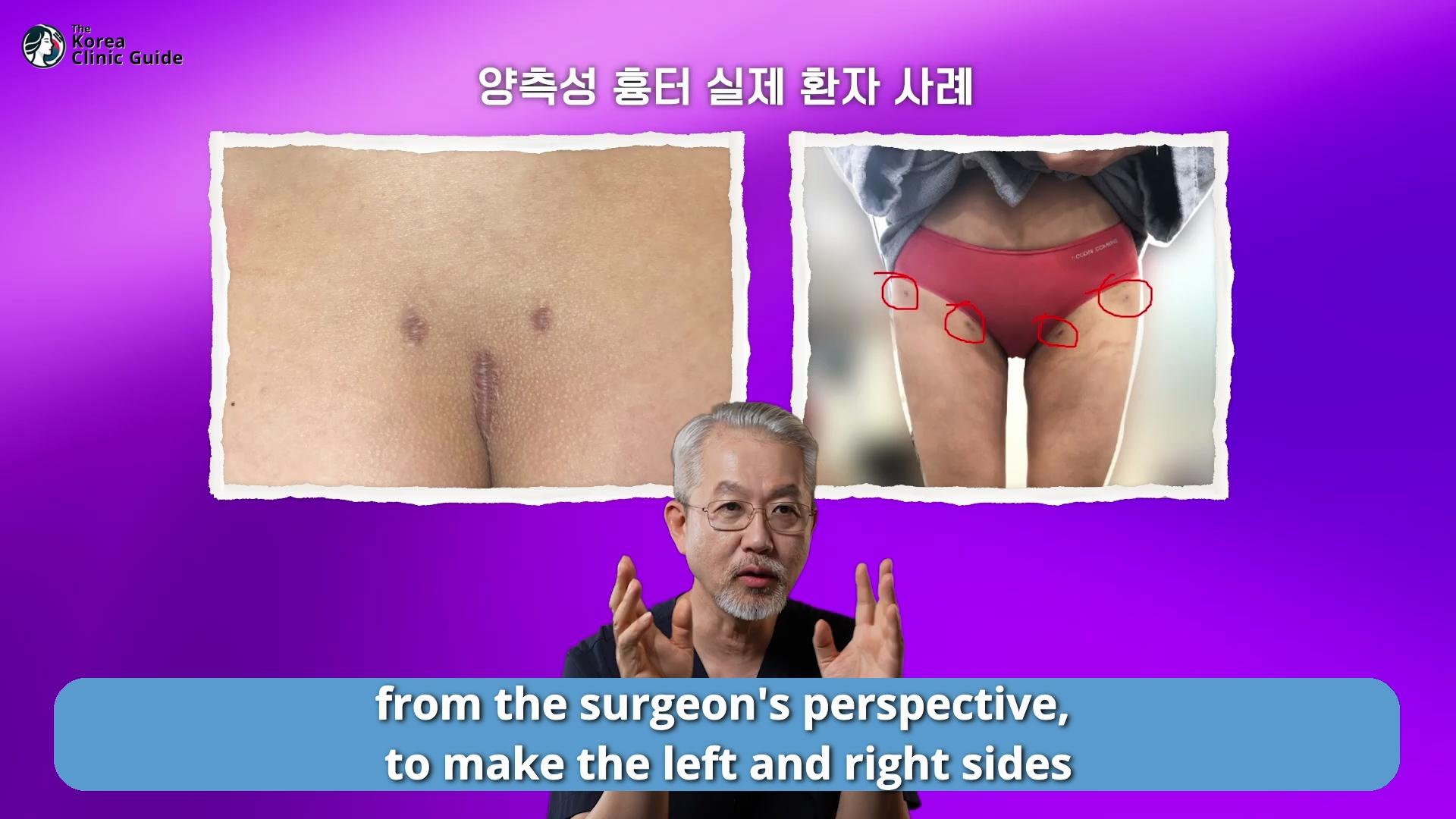
After liposuction, several scar-related issues can develop depending on technique, tools, and how the skin is handled at the incision site. Sometimes the problem is not just a thin line scar—it’s a wider irritated area around the entry point. If the cannula repeatedly rubs and stresses the skin opening, the site can become inflamed and irritated, and later it can look like a larger “burn-like” mark rather than a neat incision line.

In addition to size, scar shape and contour matter. Some scars become raised and thickened, which is known as a hypertrophic scar. Many people casually call these “keloids,” but in most cases they are not true keloids. True keloids are relatively uncommon; what most patients are dealing with is a hypertrophic reaction where the scar thickens and rises above the surrounding skin.

Other times, the opposite happens and the scar becomes sunken. Pigmentation is another frequent concern: a scar can look darker or stay red for a long time. Finally, if the skin edges are not aligned perfectly during closure, even a small incision under 1 cm can heal with a noticeable step-off. When that happens, revision may be needed—not because the incision is large, but because small imperfections can still catch the eye.

How can pigmentation and hypertrophic scars be treated?
When pigmentation occurs—meaning the area darkens—laser-based approaches are often used to brighten and even out the tone. Treatments such as toning-type lasers can gradually reduce the darkened appearance. Pigmentation can be relatively easier to improve, but it still commonly requires multiple sessions.

For raised, thickened scars (hypertrophic scars), repeated steroid injections are often used. In many cases, these injections are done on a schedule such as once a month or once every couple of months, depending on the scar’s size and response. The scar can gradually flatten, but again, the expectation should be improvement rather than total disappearance.

Why do I prioritize preventing scars instead of chasing treatments later?
Because scar treatments can become a long, tiring journey—and in some cases, the cost and time spent trying to improve a scar can rival or exceed the original surgery. From the patient’s perspective, it’s frustrating to go into liposuction seeking a cleaner, more confident look, only to end up planning your calendar around repeated laser visits or injections.
That’s why I see scar minimization not as a luxury but as a necessity. Prevention starts with two principles: place incisions where they’re naturally hidden, and keep the number of incisions as low as possible.
What is my “single-port liposuction” approach to minimize visible scars?
 My core philosophy is simple: make just one incision per target area whenever possible, rather than two, three, or four. Multiple small “dots” across symmetrical areas often look more suspicious and draw attention. Even if a single scar heals less perfectly than expected, it tends to look less strange than a pattern of several scars.
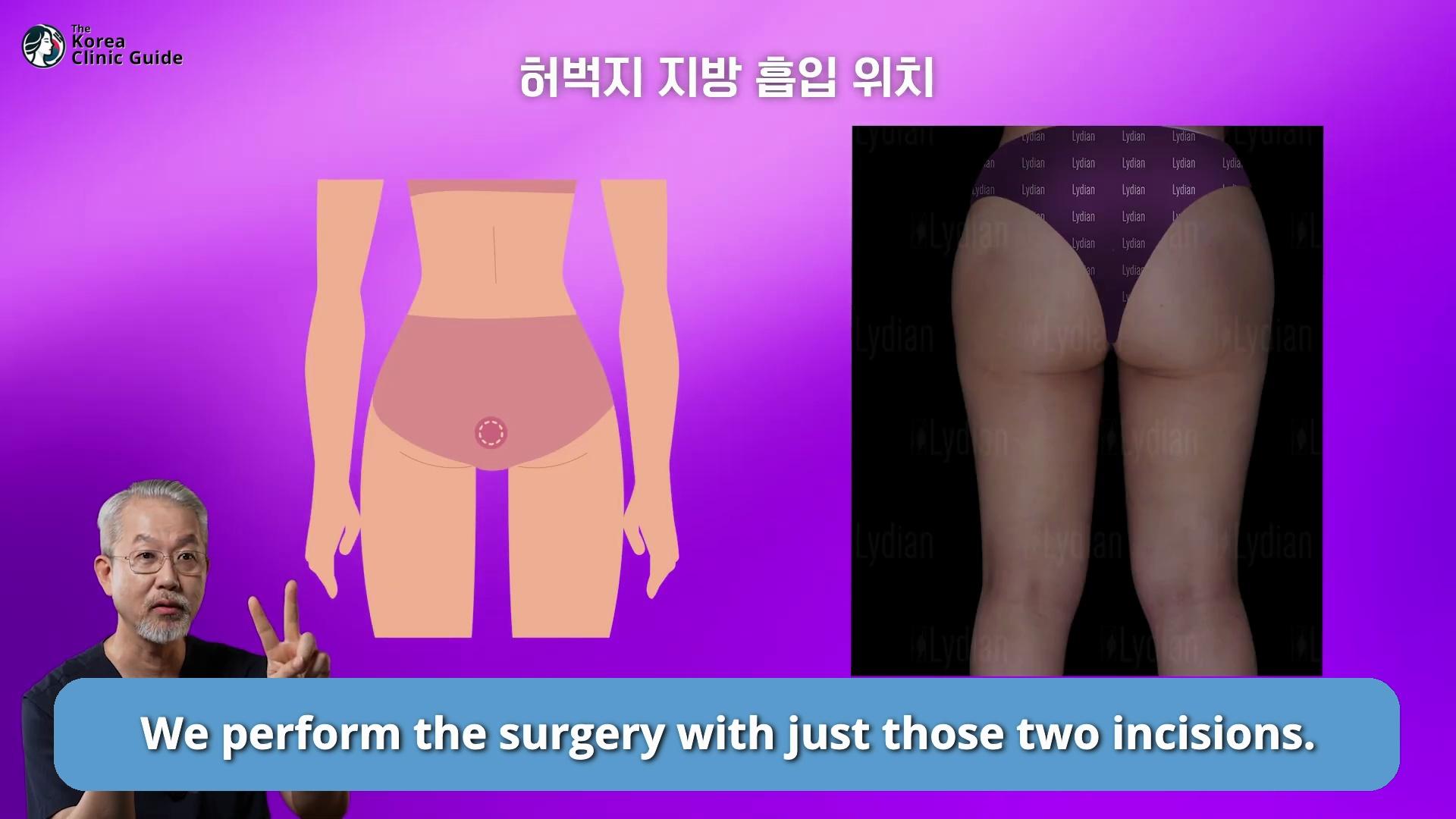
Equally important is location. I aim to place incisions in areas that are naturally concealed, such as inside the belly button (not beside it), within the pubic hairline, or in less visible creases. The goal is that even if a patient wears underwear or swimwear, the scar isn’t easily seen. This is especially important in abdominal and thigh procedures where standard approaches sometimes place scars where patients later feel self-conscious.
How can fewer incisions still remove enough fat and sculpt body lines?
Some people have heard that fewer incisions mean less access, less fat removal, or a less satisfying result. The truth is: that limitation applies mainly when a surgeon cannot effectively reach and maneuver through the area from a limited access point. With the right technique and experience, fewer ports do not have to mean compromised outcomes.
My approach relies on technical difficulty that took a long time to master, including the use of long instruments and the ability to maneuver thoroughly through treatment zones. I also use a protected cannula, which helps reduce skin trauma at the entry point—but it’s harder to manipulate, which is why many surgeons avoid it. When you can combine controlled access with protection at the skin opening, you can focus on both body contouring and minimizing the kind of irritation that can lead to a larger, messier scar.
Where can single-port liposuction be done on the body?
“Single-port” can be misunderstood as one incision for the entire body, which is not what I mean. It means minimizing ports per area. For example, for arms, I typically make one incision per arm hidden inside the armpit, and from that access I can address areas like the arm contour and nearby zones depending on the surgical plan. For calves, I often use one incision to treat the whole calf, whereas other approaches might place multiple incisions high and low.
The purpose is consistency: fewer, better-hidden entry points rather than a series of visible dots that can become obvious in everyday settings like a swimming pool.
What other advantages come with this low-scar liposuction method?
Minimizing incisions and protecting the entry site can also align with a smoother recovery experience. In my practice, many patients report less pain than they expected—often describing it more like muscle soreness than severe surgical pain. I also strongly value structured aftercare, including the option of a two-night stay, because the difference in bruising and overall comfort can be significant when patients are monitored and supported early on.
Another practical benefit is closure technique. By using internal sutures and surgical glue, patients can often shower very soon after surgery. That may sound like a small thing, but in real life it affects comfort, confidence, and hygiene—and being able to shower can also help reduce infection risk compared with avoiding washing for a long period.
What should you prioritize to get the best liposuction scar outcome?
If you want liposuction scars to be as close to “invisible” as possible, prioritize the plan before the first incision is ever made. Ask where the incision will be placed, how many incisions are expected, and what method is used to protect the skin at the entry point. Understand your own tendency toward pigmentation or thickened scarring, especially if you have more melanin-rich skin.
Liposuction is about creating a beautiful body line, not just changing the number on a scale. The best results are the ones that look natural in motion, in clothing, and in swimwear—without obvious marks that distract from the contour. When scars are minimized thoughtfully, patients often feel freer afterward: they enjoy their shape, feel more motivated to care for their body, and choose clothes with confidence because the surgery doesn’t announce itself.
More about Lydian Plastic Surgery Clinic
Lydian Plastic Surgery Clinic, located in Seoul’s Cheongdam area of Gangnam, is a boutique destination for patients who want liposuction results that prioritize smooth contours and minimal, hard-to-notice scarring—backed by the credentials and specialized focus of Dr. An Kyung Chun. Dr. An has been selected as one of Korea’s Top 18 Aesthetic Plastic Surgery Experts, serves as Director of the 5D Liposculpture Academy, is listed among the World’s Top 100 Doctors in Stem Cell Aesthetic Medicine, and is repeatedly recognized for exclusive distinctions in liposuction while also training other Korean physicians in high-definition body sculpting and advanced liposuction devices. The clinic differentiates itself by continuously investing in the latest equipment from Korea and abroad rather than relying on outdated technology, pairing this with an anatomy-based design approach that customizes body planning to each patient’s natural proportions and curves to reduce irregularities that can draw attention to incision areas. Finally, Lydian’s structured 4-step aftercare—focused on swelling reduction, irregularity correction, skin elasticity recovery, and residual fat contouring—supports cleaner healing and refined outcomes for patients seeking discreet, polished results.
Find more about this clinic here: Lydian Plastic Surgery Clinic