Medical Tourism Blog
Gynecomastia - All About Enlarged Male Breasts with Dr. An from Lydian Clinic
Table of contents
- Introduction: Why Gynecomastia Feels Bigger Than “Just Chest Fat”
- What Gynecomastia Actually Is (And What It Isn’t)
- Insurance Coverage: The Detail That Changes the Outcome
- How Gynecomastia Surgery Is Performed: Two Parts, One Goal
- The Three Most Common Problems After Gynecomastia Surgery
- A Real Revision Case: Flat From the Front, Full on the Side
- The Solution: Contour Restoration First, Then Fat Grafting
- What a “Natural” Result Really Means
- Conclusion: Plan for Shape, Not Just Removal
- More about Lydian Plastic Surgery Clinic
Considering treatment in Korea? Everything you need to know e.g. — how to avoid scams, visas, interpreters, recovery tips — in our Medical Tourism Master Guide. Plan with confidence in minutes, not weeks!
Disclaimer: The following is a guest post. The information and opinions expressed are not of koreaclinicguide.com but of Lydian Plastic Surgery Clinic
Introduction: Why Gynecomastia Feels Bigger Than “Just Chest Fat”
Gynecomastia is one of those conditions people often try to brush off—until it starts shaping how they dress, how they stand, and whether they feel comfortable at the gym or on the beach. I meet men who have worked out consistently for years, yet their chest still protrudes in a way that reads as feminine. That mismatch between effort and appearance can be frustrating and, for many, deeply personal.
In clinic, the most common thing I hear is: “I thought gynecomastia surgery is covered by insurance.” And yes—it often is. But that simple sentence hides an important detail that can determine whether someone ends up satisfied after surgery or comes back later needing revision.
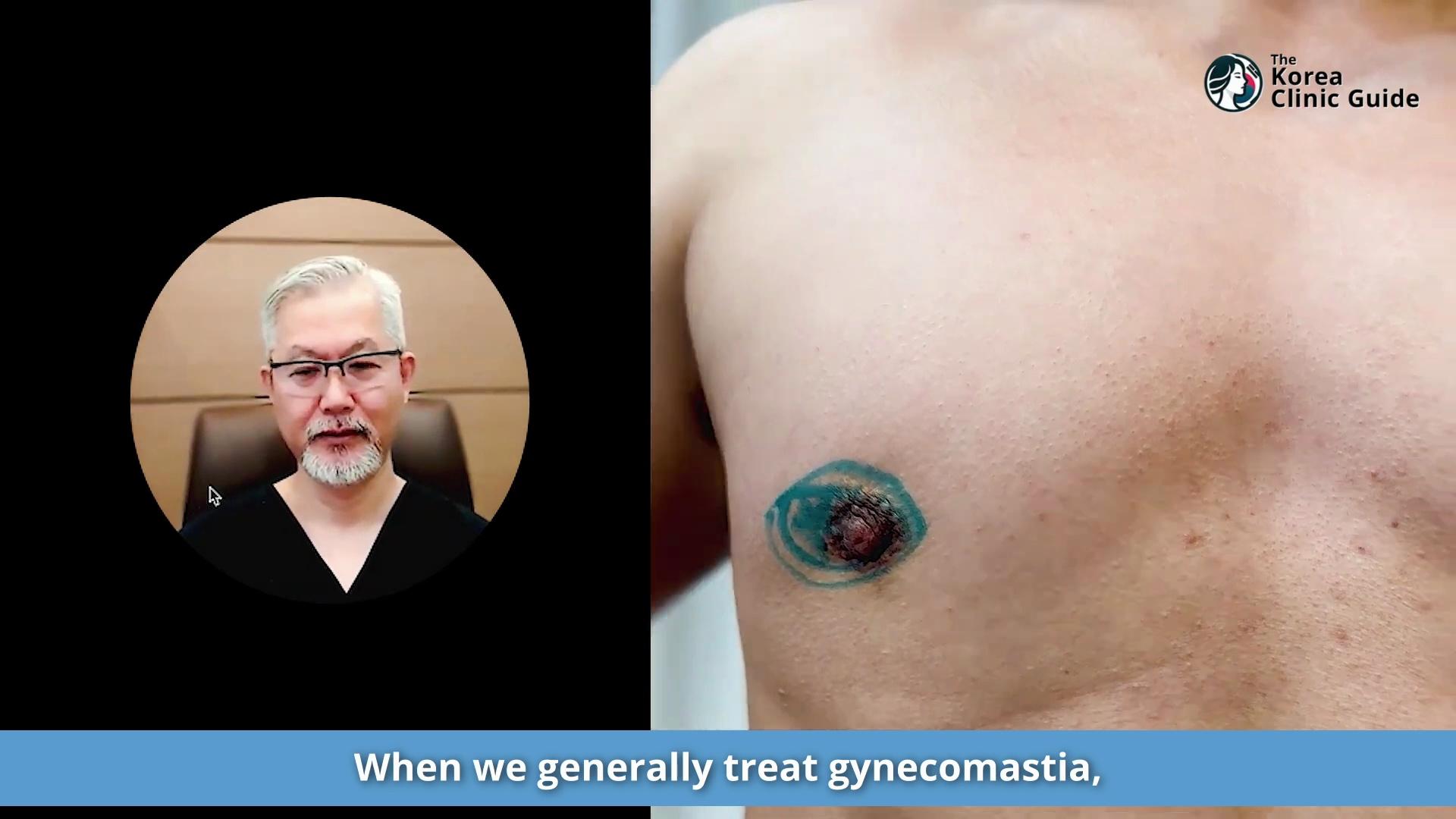
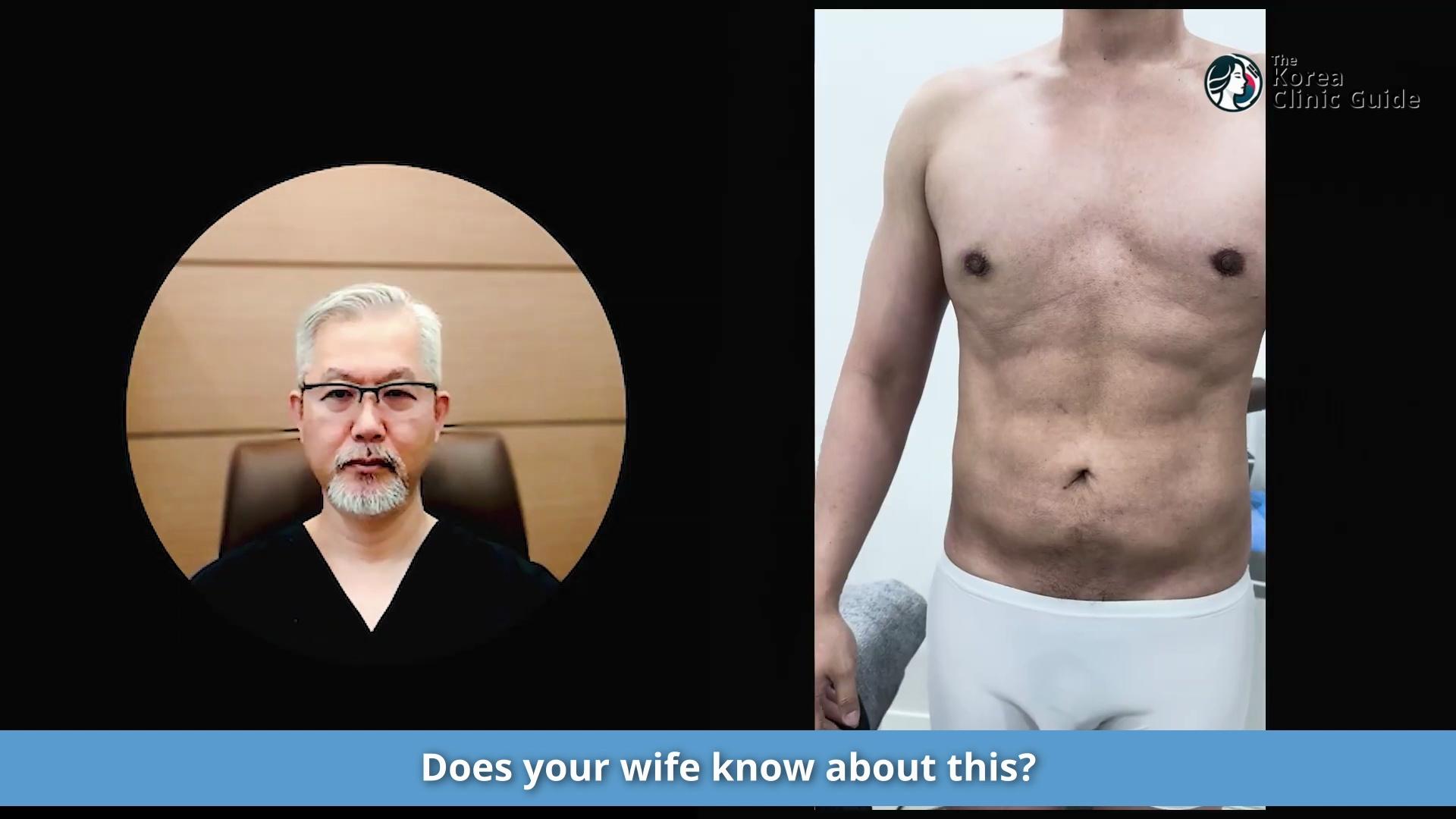
What Gynecomastia Actually Is (And What It Isn’t)
Gynecomastia is when a man’s chest protrudes and looks more like a woman’s chest. Anatomically, the area is made up of the nipple, gland tissue underneath it, and a layer of fat over that. This matters because a protruding chest can come from true gland enlargement, excess fat, or a combination of both.
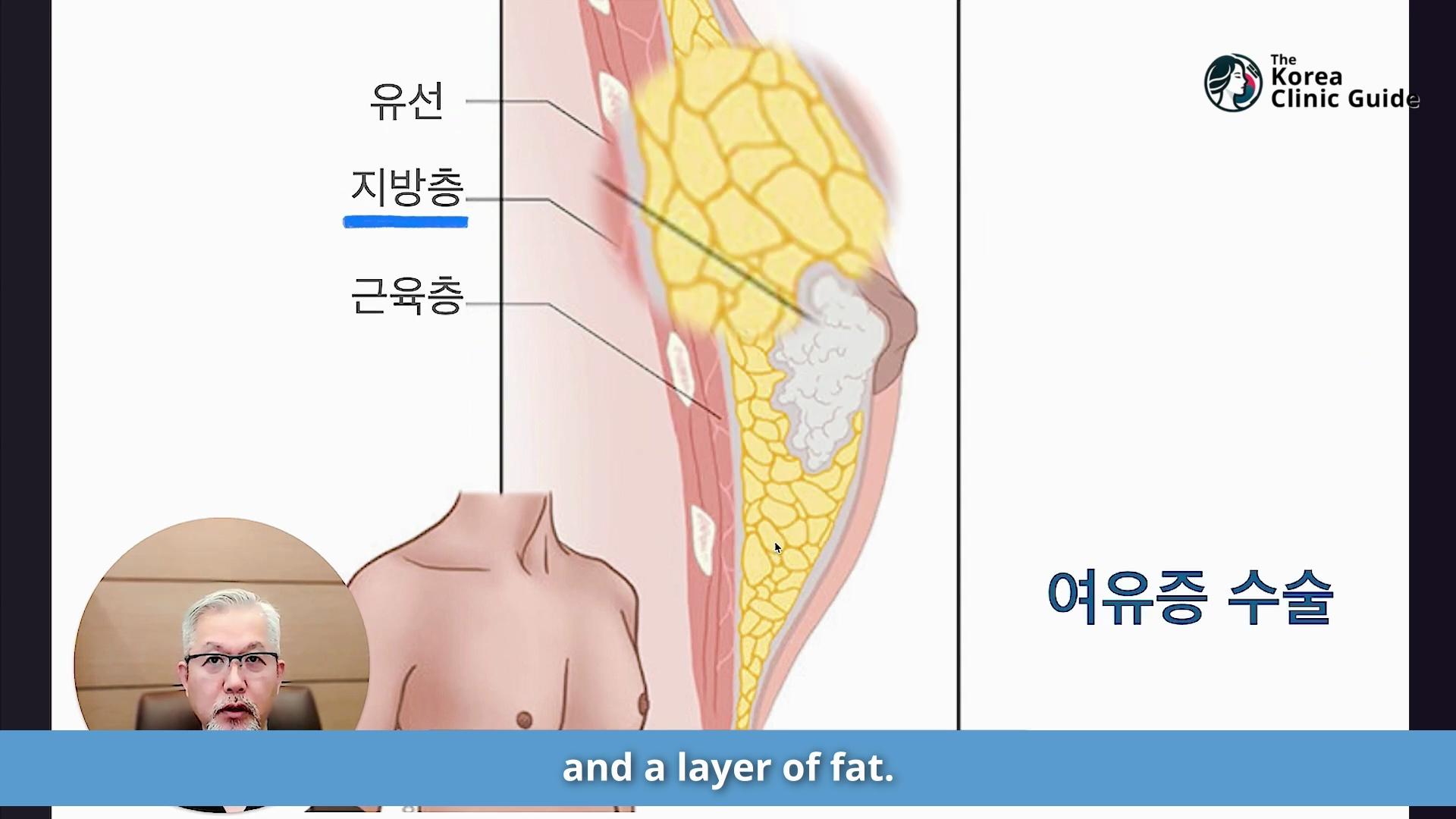
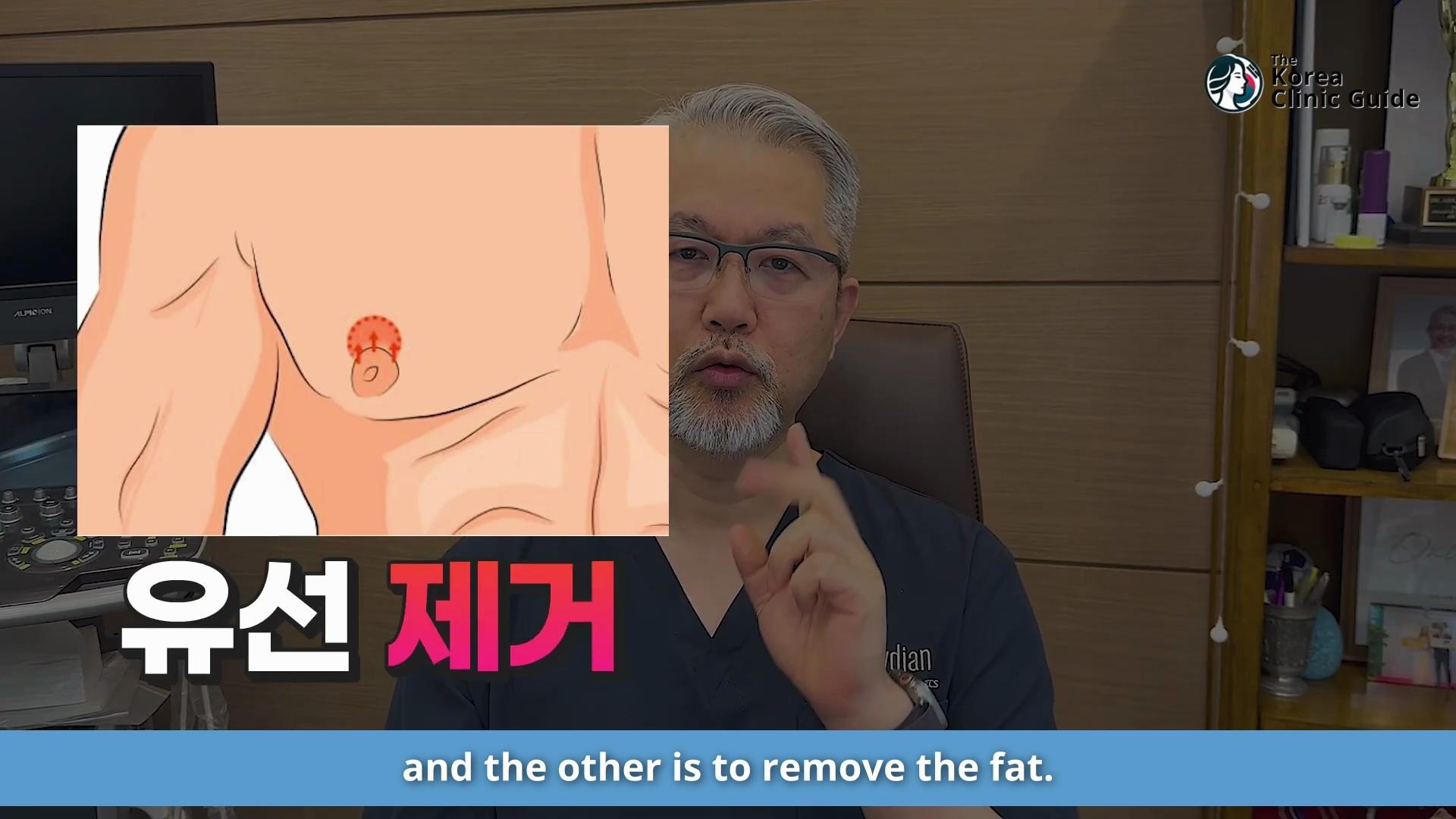
When someone says, “My chest won’t go away even when I diet,” very often there’s a gland component that simply doesn’t respond to exercise. And when someone says, “It looks better from the front but strange from the side,” that’s often a contour issue—how the fat and surrounding tissue transition toward the armpit and lateral chest.
Insurance Coverage: The Detail That Changes the Outcome
Here’s where many patients get surprised. People hear gynecomastia surgery is covered, and they assume the entire procedure is covered. In many cases, what insurance covers is the operation to remove the gland tissue.
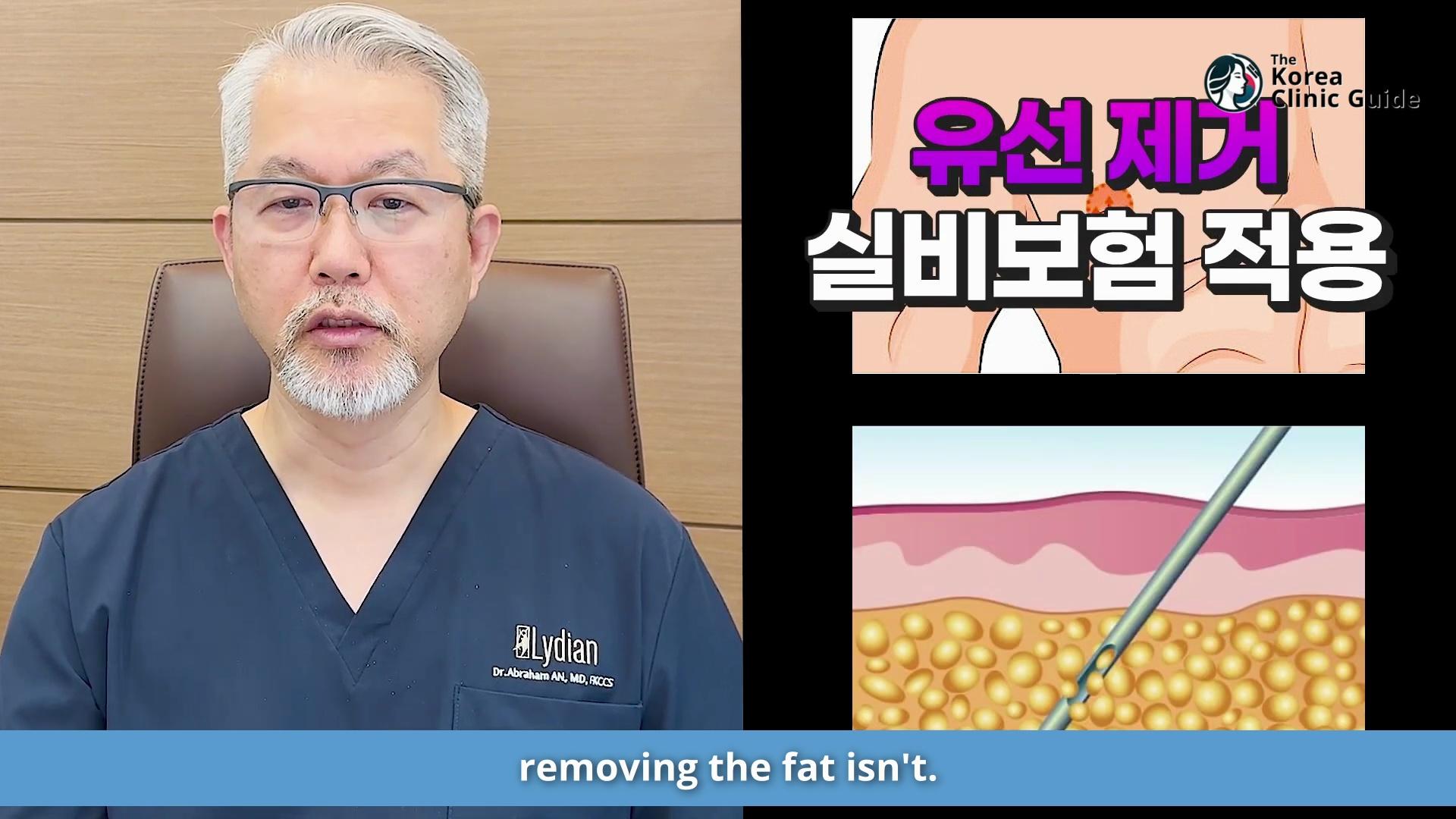
Fat removal is typically not covered because it’s considered cosmetic. So after thinking it over, a lot of people choose gland removal only. If the result is good, that’s great. But in many cases, choosing gland removal alone can leave behind a chest that is technically “flatter,” yet still looks unnatural—especially when the arms are raised, when light hits the chest from the side, or when the remaining fat creates uneven transitions.
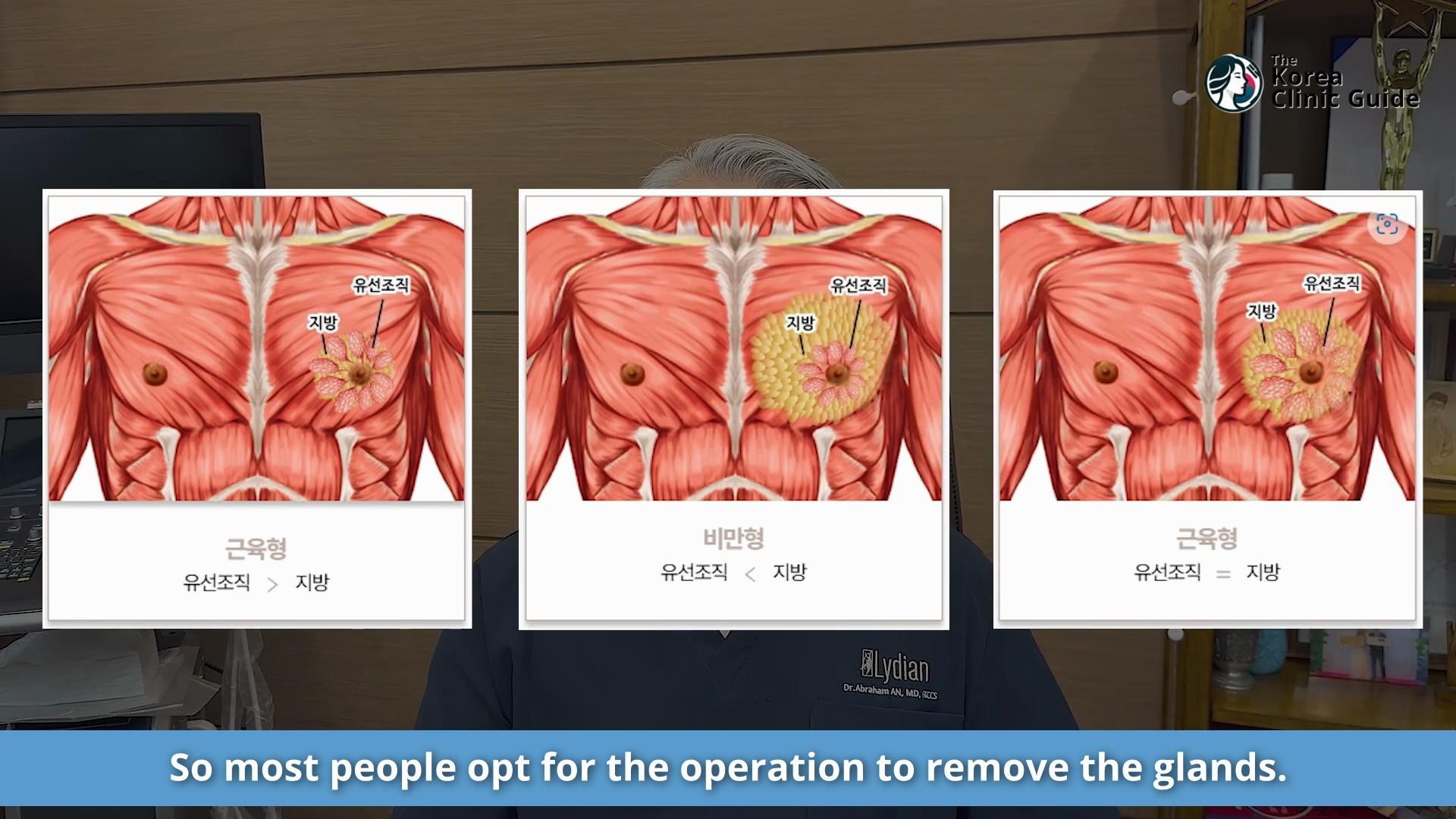
That’s why I always frame it clearly: gynecomastia correction is usually a two-part approach—removing the gland and addressing the fat to restore a natural chest contour.
How Gynecomastia Surgery Is Performed: Two Parts, One Goal
The goal of surgery isn’t just to reduce volume—it’s to make the chest look naturally masculine in motion and at rest. That means addressing both the central protrusion and the surrounding contour.
First is gland removal. This targets the firm tissue beneath the nipple-areola complex. Second is fat removal, usually with liposuction, which helps smooth the chest and blend the result into the surrounding area toward the sides.
When either step is overdone or underdone, patients can end up with problems that are difficult to hide—particularly in fitted clothing, when the arms are lifted, or during activities where the chest stretches and compresses.
The Three Most Common Problems After Gynecomastia Surgery
If you’re on the fence about gynecomastia surgery, you’re probably most worried about side effects. In my experience, there are three common problems that can happen after gynecomastia surgery, especially when the plan focuses on “removing tissue” rather than “restoring shape.”
1) Indentation and the “Sunken” Look
The first issue is indentation. When a patient raises the arms, you can often see it very clearly: the nipple gets pulled inward, and the surface looks lumpy and uneven. Sometimes it resembles a chest where liposuction was overdone or performed without preserving a natural contour.
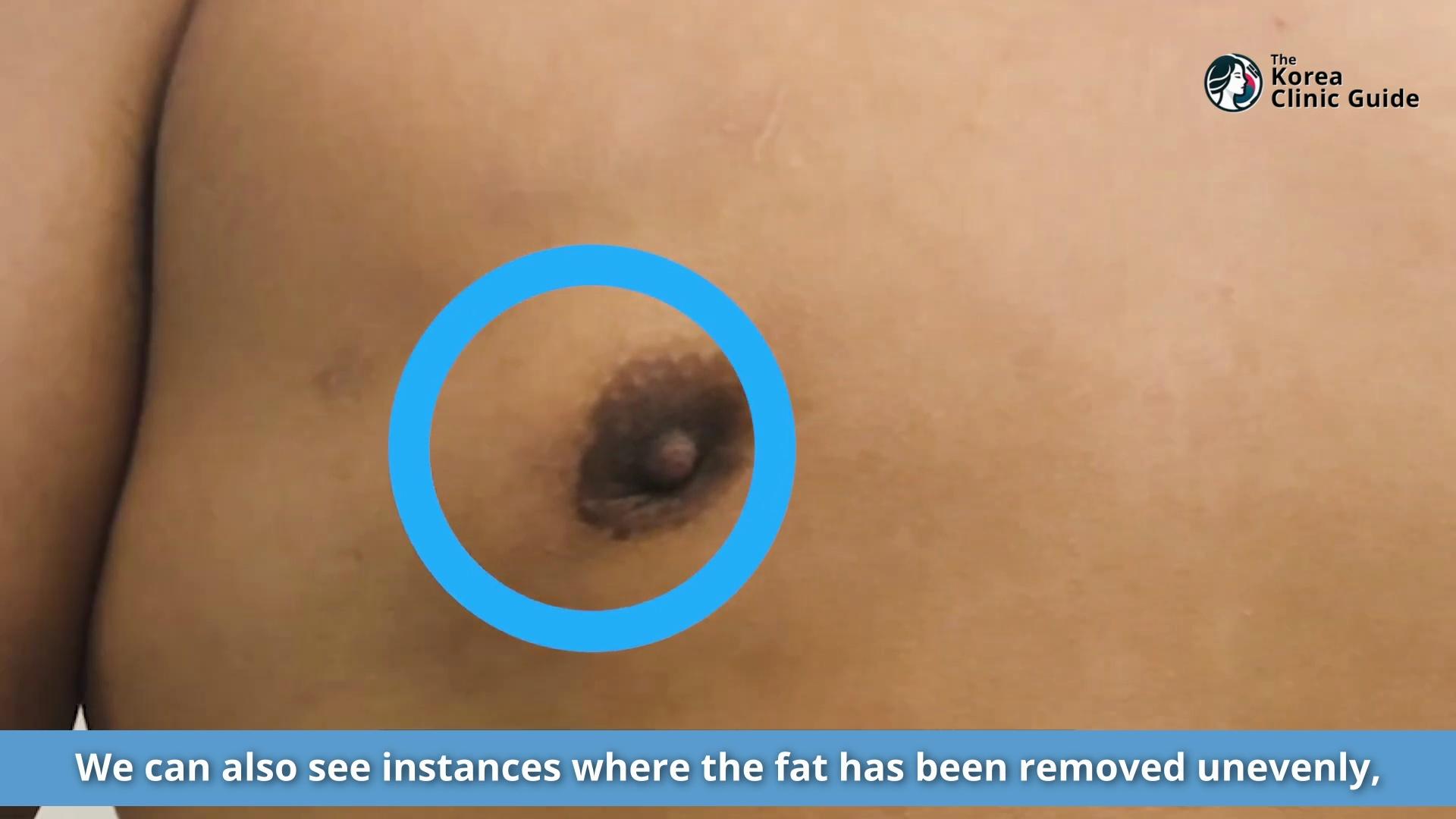
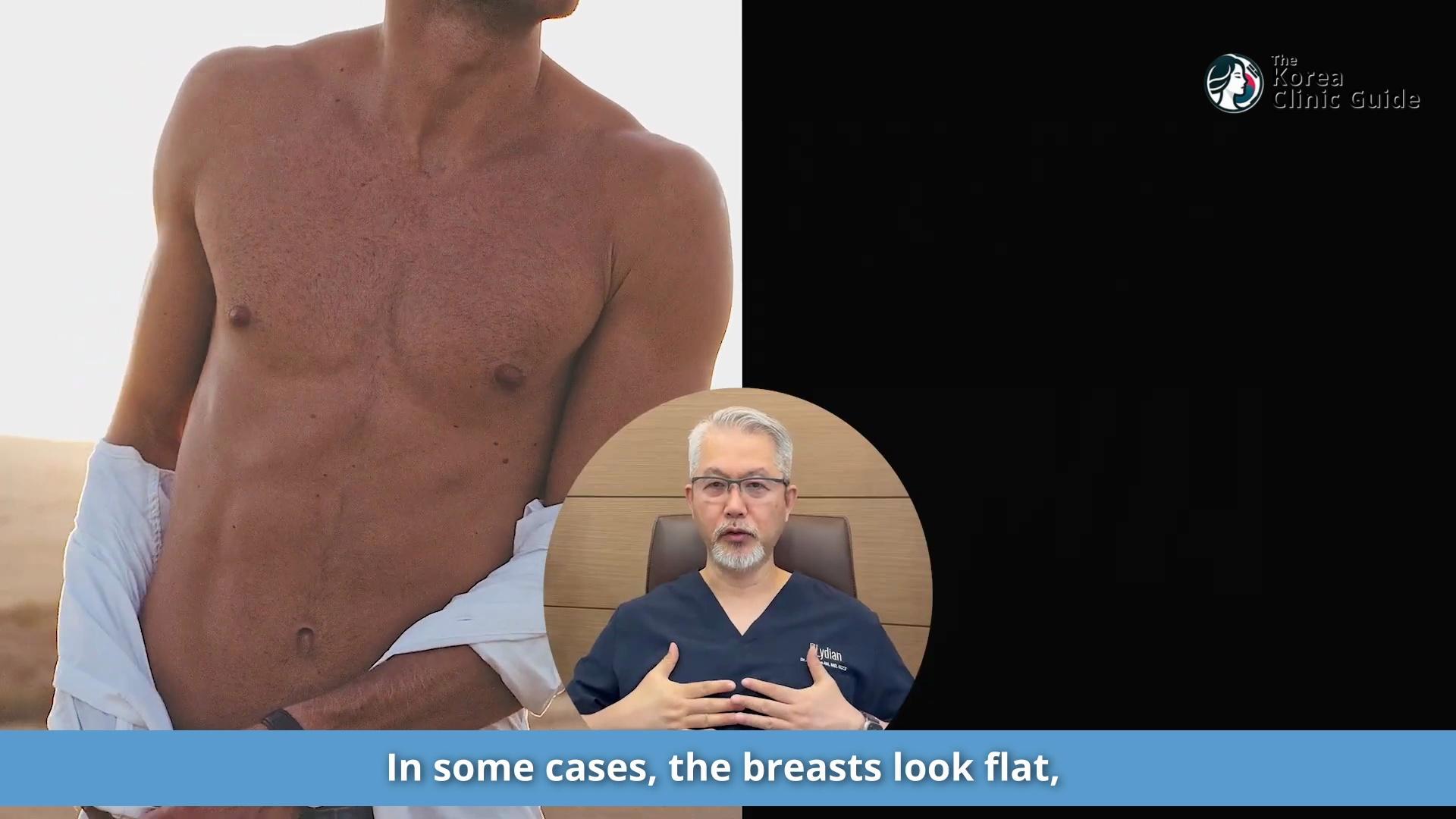
A pattern I see frequently is a chest that looks flat from the front because the front was suctioned aggressively, but the side wasn’t addressed enough. The result is a sharp transition: flat centrally, but full laterally. A masculine chest should have smooth, natural contouring from the sternum outward toward the armpit.
2) Scarring and Areola Changes
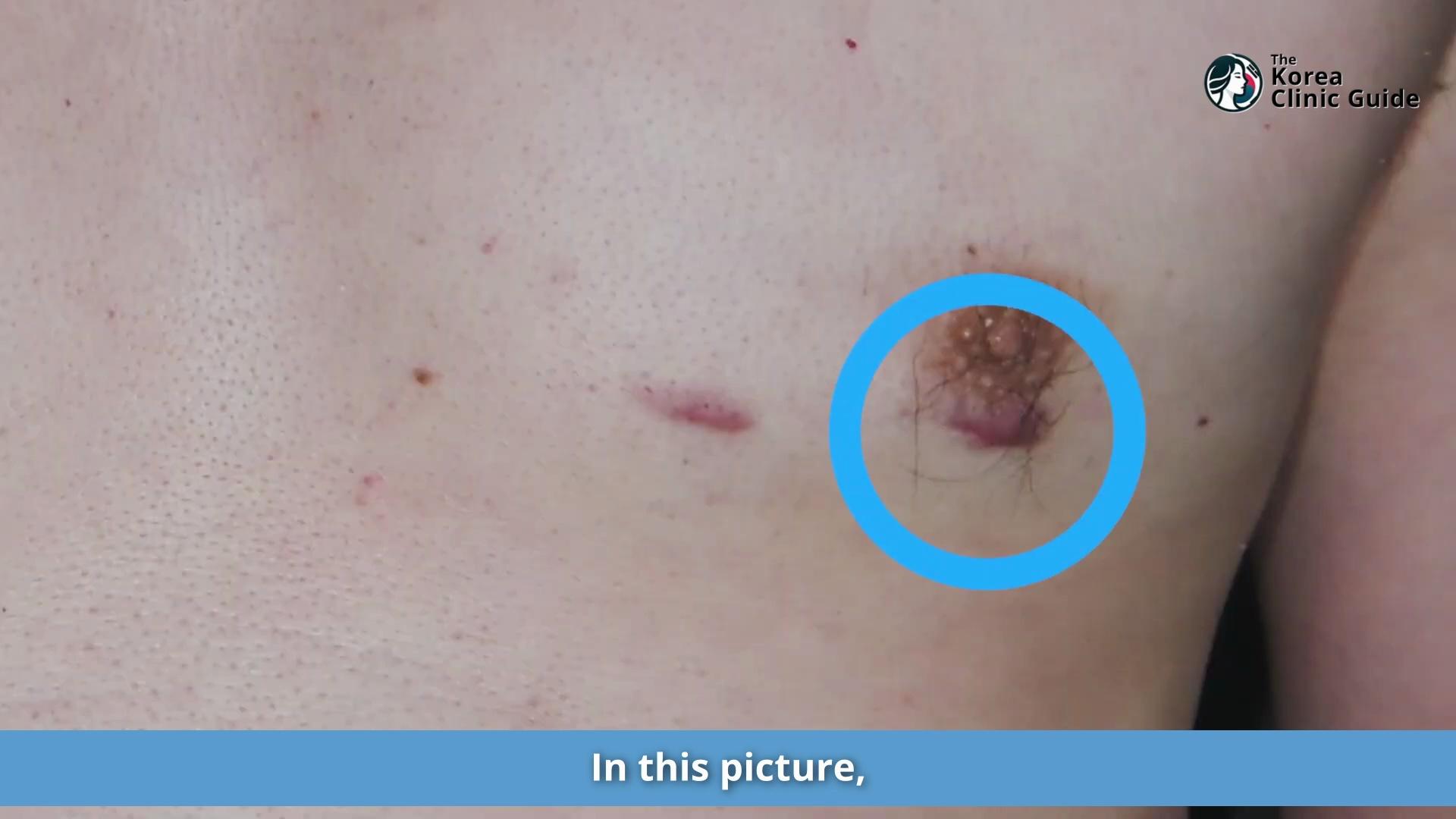
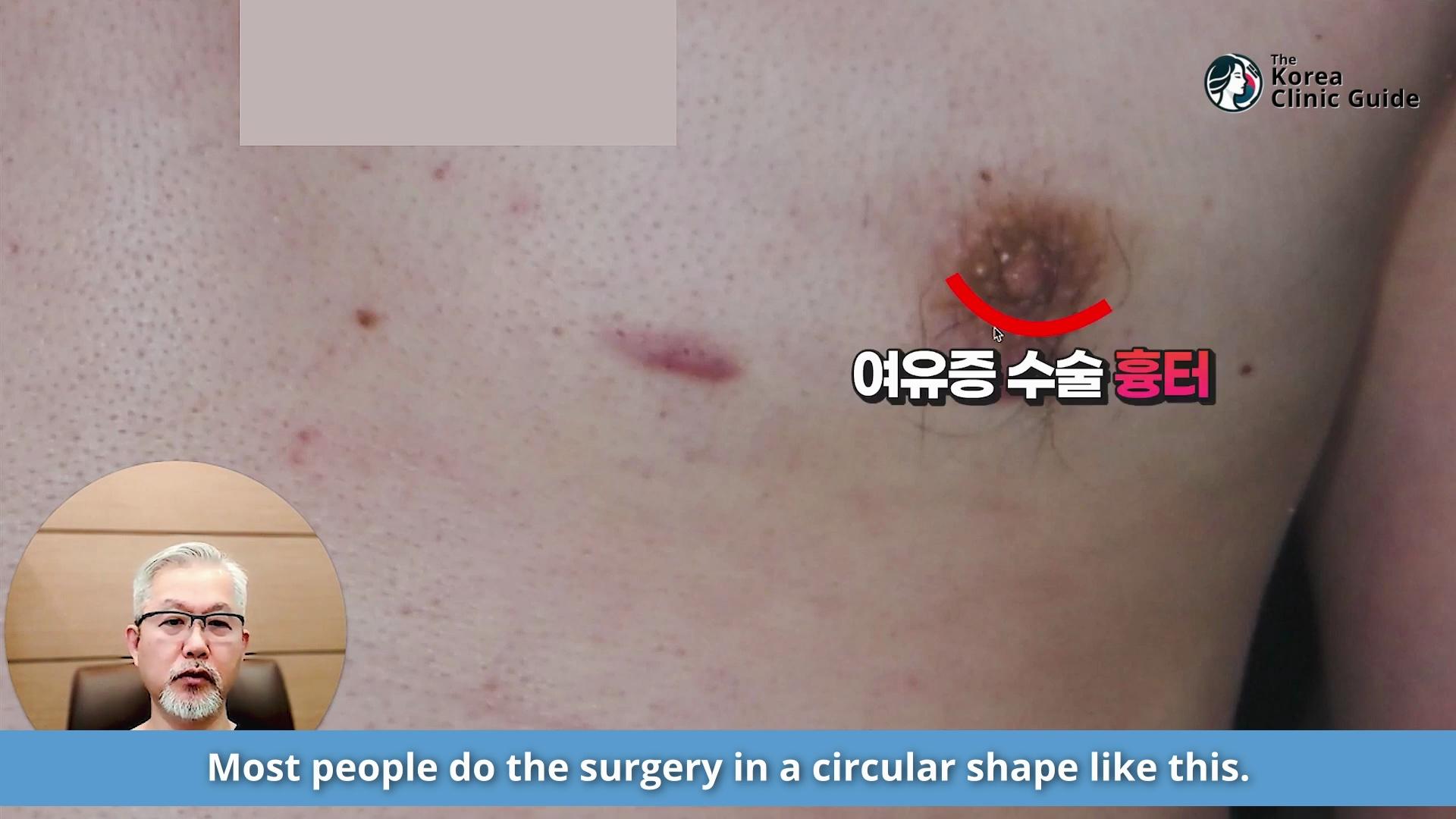
The second issue is scarring. Most surgeons make an incision around the areola. Sometimes the scar is barely noticeable, and sometimes it’s obvious—especially in patients prone to hypertrophic scarring.
The chest is also an area where keloids can form more easily, so scar behavior matters. I’ve also seen cases where, after removing fat and gland tissue, the nipple-areola area changes: the nipple can shrink, wrinkle, and look creased—almost like dried fruit. For some men, that texture change is as distressing as the original gynecomastia.
3) Nerve Damage and Reduced Nipple Sensation
The third issue is nerve damage. When sensation is reduced—or in the worst case, lost—patients may feel the surgery “worked” visually but came at a cost they weren’t expecting. Preserving sensation depends on careful technique and realistic expectations about the risks involved.
A Real Revision Case: Flat From the Front, Full on the Side
One patient I treated was a 34-year-old man who had already undergone surgery. From the front, his chest looked flat. But there was tissue remaining toward the side near the armpit, and he didn’t like that. From the side, he looked like an average middle-aged man, but the crease and contour irregularity were still there.
When he raised his arms, the problem became much more obvious: the nipple sank inward, creating that “caving” appearance that patients often describe as the chest looking damaged or unnatural.
This is exactly why I evaluate results dynamically—how the chest looks when the arms are at rest and when they’re raised. Many post-surgical issues only reveal themselves with movement.
The Solution: Contour Restoration First, Then Fat Grafting
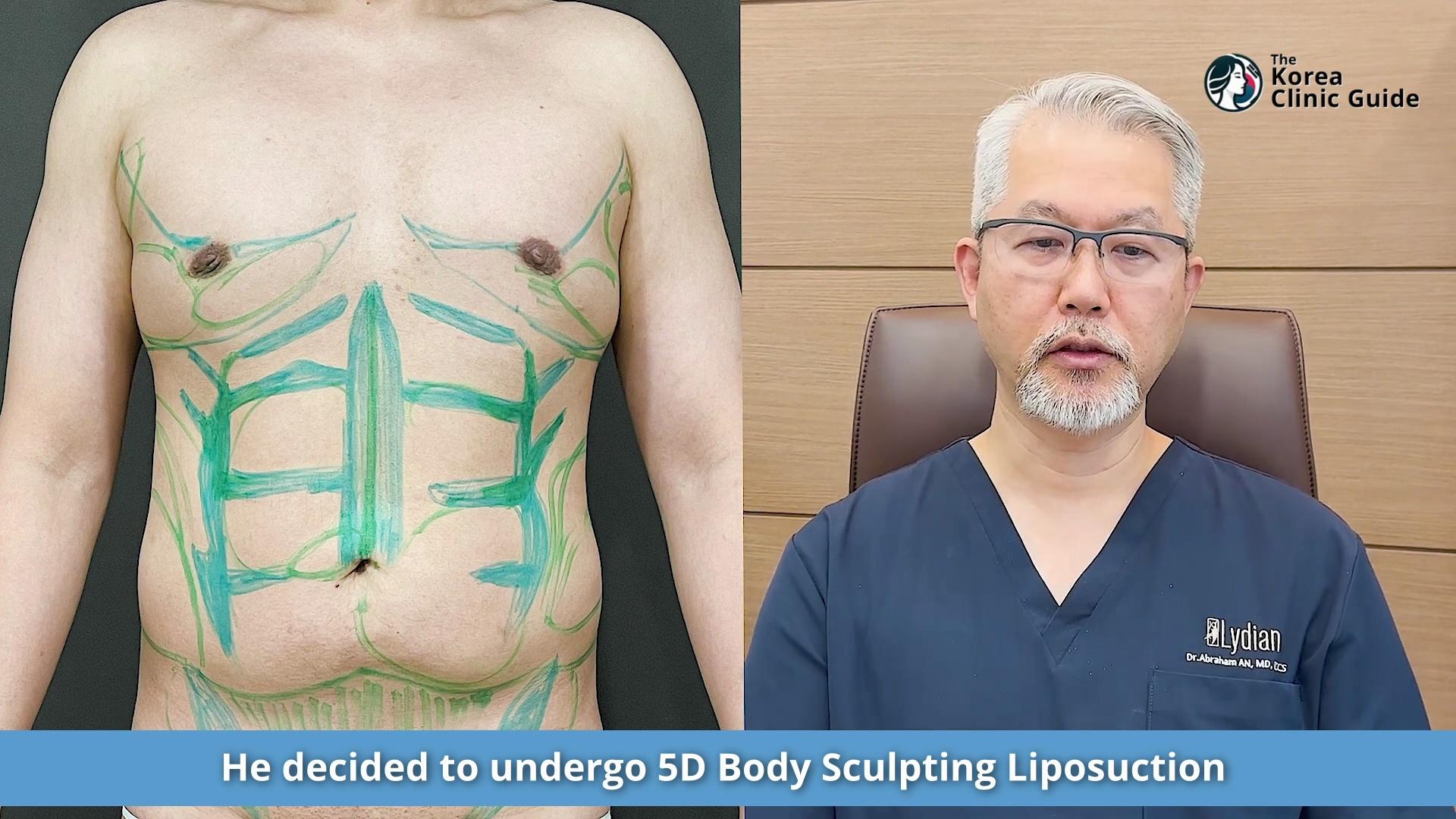
For this patient, we decided to operate with a plan designed to restore natural contour. First, he chose what I call “Strawberry” fat sculpting—an approach focused on reshaping rather than simply removing.
In addition, he chose a body contouring technique designed to make the abdominal lines look more defined. This involves liposuction down to the lower abdomen, even the pubic area, to create stronger ab definition. In many men, when the abdomen becomes more defined, it becomes motivating—they work out more consistently because they can finally see the shape they’ve been trying to build.
Two months after surgery, his chest and abdomen looked significantly improved, though the chest didn’t yet look completely natural. That timing is important: early healing can still show stiffness, swelling, and subtle irregularities.
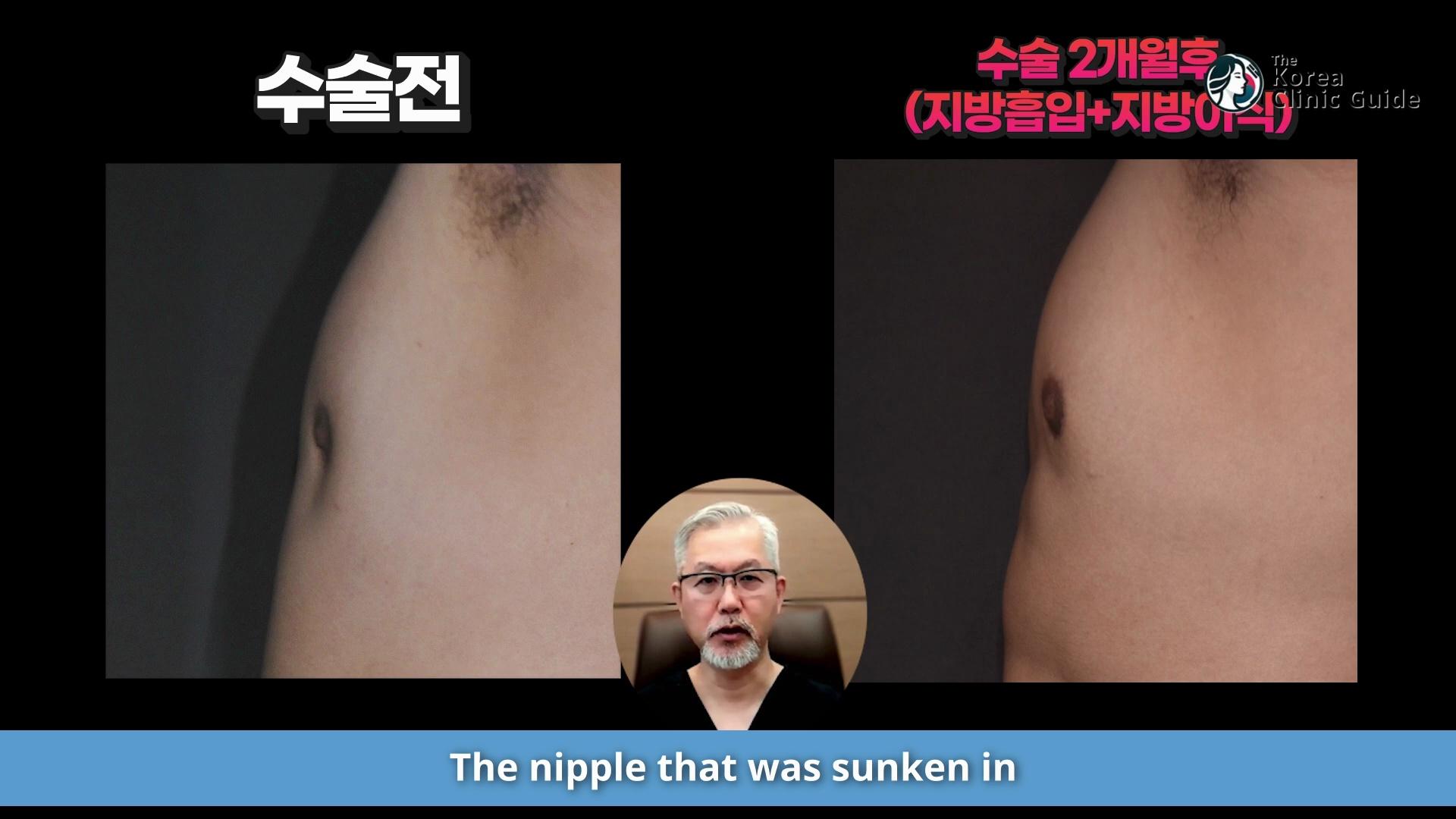
To correct the indentation, we planned additional fat grafting. And this is a key point: you can’t do fat grafting right away. You typically wait about two months, then perform it. That delay allows the tissues to settle so the grafting can be targeted accurately.
After fat grafting, the sunken look was gone. With more time, it continued to look more natural. Even when he raised his arms, there was still a slight dent, but it was improved a lot—and the nipple that used to cave in now barely sank at all.
What a “Natural” Result Really Means
A natural-looking chest isn’t just about being flat. It’s about having the right contour from the center of the chest to the sides, having a nipple that sits naturally instead of being tethered inward, and having smooth transitions that still look good when the body moves.
When you compare before-and-after photos in a revision case like this, the biggest difference is not just volume—it’s shape. The chest looks like a chest again, not like tissue was removed in a way that left a hollow or an abrupt edge.
Conclusion: Plan for Shape, Not Just Removal
Gynecomastia surgery can be life-changing, but outcomes depend on understanding what’s actually being treated. Gland removal alone may be covered by insurance, but it doesn’t always create the natural contour most patients want—especially from the side or with arms raised.
In my practice, I focus on preventing the three most common post-surgical problems—indentation, scarring issues, and sensation changes—by planning the procedure around anatomy and movement. And when a patient comes in with side effects from prior surgery, revision is often possible with a thoughtful sequence: contour correction first, then fat grafting after tissues settle.
If you’re considering gynecomastia correction, the best starting point is a clear evaluation of gland versus fat, and a plan aimed at a natural chest contour—not just a flatter one.
More about Lydian Plastic Surgery Clinic
For men considering gynecomastia surgery in Korea, Lydian Plastic Surgery Clinic in Cheongdam, Gangnam (Seoul) positions its approach around precision body-contouring expertise and structured recovery, led by Dr. An Kyung Chun—recognized as one of Korea’s Top 18 Aesthetic Plastic Surgery Experts, Director of the 5D Liposculpture Academy, listed among the World’s Top 100 Doctors in Stem Cell Aesthetic Medicine, and repeatedly selected for excellence in liposuction while also training other physicians in high-definition body sculpting and liposuction devices. The clinic differentiates itself with ongoing investment in up-to-date equipment rather than relying on outdated systems, and with an anatomy-based design process that plans chest contour and overall proportions to suit each patient’s frame, curves, and symmetry—an important factor in avoiding a “flat” or uneven postoperative look. As with any gynecomastia procedure, patients should be aware of potential side effects such as swelling, bruising, temporary numbness, contour irregularities, scarring, or asymmetry, and Lydian emphasizes a 4-step systematic aftercare program focused on swelling reduction, irregularity correction, skin elasticity recovery, and residual fat contouring to support smoother healing. For those seeking revision options after suboptimal prior surgery—such as persistent puffiness, remaining gland or fat, dents, asymmetry, or scar-related contour issues—the clinic’s combination of detailed contour planning, modern device support, and structured aftercare is presented as a pathway toward more refined correction and a more natural chest shape.
Find more about this clinic here: Lydian Plastic Surgery Clinic