Medical Tourism Blog
Treating Double Vision with Strabismus Surgery: Advanced Solutions Available in Korea
Table of contents
- Strabismus Surgery: A Comprehensive Overview
- Best Clinics in Korea for Double Vision
- Navigating Strabismus Surgery in South Korea: A Medical Tourist's Guide
- Cost Analysis: Strabismus Surgery in South Korea vs. Global Destinations
- Patient Perspectives: Life After Strabismus Surgery for Double Vision
- Conclusion
- References
Considering treatment in Korea? Everything you need to know e.g. — how to avoid scams, visas, interpreters, recovery tips — in our Medical Tourism Master Guide. Plan with confidence in minutes, not weeks!
Double vision, or diplopia, is a condition where a single object appears as two overlapping images, which can impair daily activities. [Strabismus surgery](/blog/strabismus-surgery-korea), also known as eye muscle surgery, is a primary treatment for correcting eye misalignment—a common cause of double vision—restoring binocular vision and enhancing quality of life. South Korea has become a sought-after destination for strabismus surgery due to its advanced medical technology, skilled ophthalmologists, and competitive pricing, making it especially appealing for international patients.
Double vision, medically referred to as diplopia, involves seeing two images of a single object at the same time. These images may appear side by side, one above the other, diagonal, or tilted. Diplopia can be constant or come and go.
Definition and Common Pseudonyms
“Diplopia” is the precise medical term for double vision. Though “double vision” is widely understood, "diplopia" is used among healthcare professionals for specificity.
Types of Double Vision
Identifying the type of double vision is essential for accurate diagnosis and effective treatment.
- Monocular Diplopia: Present even when one eye is closed, this form arises from problems within the eye, such as issues with how light reaches the retina. Patients might describe a "ghost" or "shadow" next to the real image.
- Binocular Diplopia: Only occurs with both eyes open and disappears when either eye is closed. This type commonly signals eye misalignment, called strabismus.
Determining whether double vision resolves when an eye is closed helps clinicians distinguish between intrinsic eye issues and alignment problems early in the evaluation.
Common Causes and Associated Symptoms
There are many causes for double vision, ranging from minor to potentially serious:
- Monocular Diplopia:
- Refractive errors like astigmatism or outdated glasses
- Cataracts that cloud the natural lens
- Dry eyes from insufficient lubrication
- Corneal diseases including scars or opacities
- Retinal alterations such as epiretinal membranes
- Binocular Diplopia:
- Strabismus (Eye Misalignment): The most common cause, due to imbalance in the six muscles controlling eye movement. It may be present from childhood or occur suddenly in adults.
- Neurological conditions like myasthenia gravis, multiple sclerosis, stroke, aneurysms, or head trauma
- Systemic disorders such as hyperthyroidism (Graves’ disease)
- Neuromuscular junction problems affecting signal transmission between nerves and muscles
- Central nervous system alterations involving brain pathways
- Mechanical problems in the eye’s muscles
Double vision can disrupt daily activities like reading, using digital screens, or driving, and may even lead to falls.
Diagnosis and When to Seek Medical Advice
Doctors begin with a detailed history, asking whether covering one eye resolves double vision, how the double images are oriented, duration and severity, and any factors that alter symptoms. A full eye exam assesses vision, alignment, and muscle function, sometimes using prisms for measurement. For monocular diplopia, a slit lamp may be used to view internal eye structures.
Neurological or muscle disorders may require MRI or CT scans, blood tests, or electromyography. Seek prompt medical attention for sudden double vision, severe eye pain, vision loss, floaters, flashers, or neurological symptoms, as these can signal a severe condition.
Table 1: Types of Double Vision and Common Causes
| Type of Diplopia | Characteristics | Common Causes |
|---|---|---|
| Monocular Diplopia | Seen with only one eye open; "ghost" or "shadow" image remains with other eye closed | Refractive errors, Cataracts, Dry eyes, Corneal diseases, Retinal alterations |
| Binocular Diplopia | Occurs with both eyes open; disappears when either eye is closed | Strabismus, Neurological conditions, Systemic disorders, Neuromuscular issues, CNS changes, Mechanical problems |
Strabismus Surgery: A Comprehensive Overview
Strabismus surgery (eye muscle surgery) is performed when glasses or patching fail to correct misaligned eyes. The primary goal is to realign the eyes so they work together, improving binocular vision and alleviating diplopia.
What is Strabismus Surgery? (Definition and Objectives)
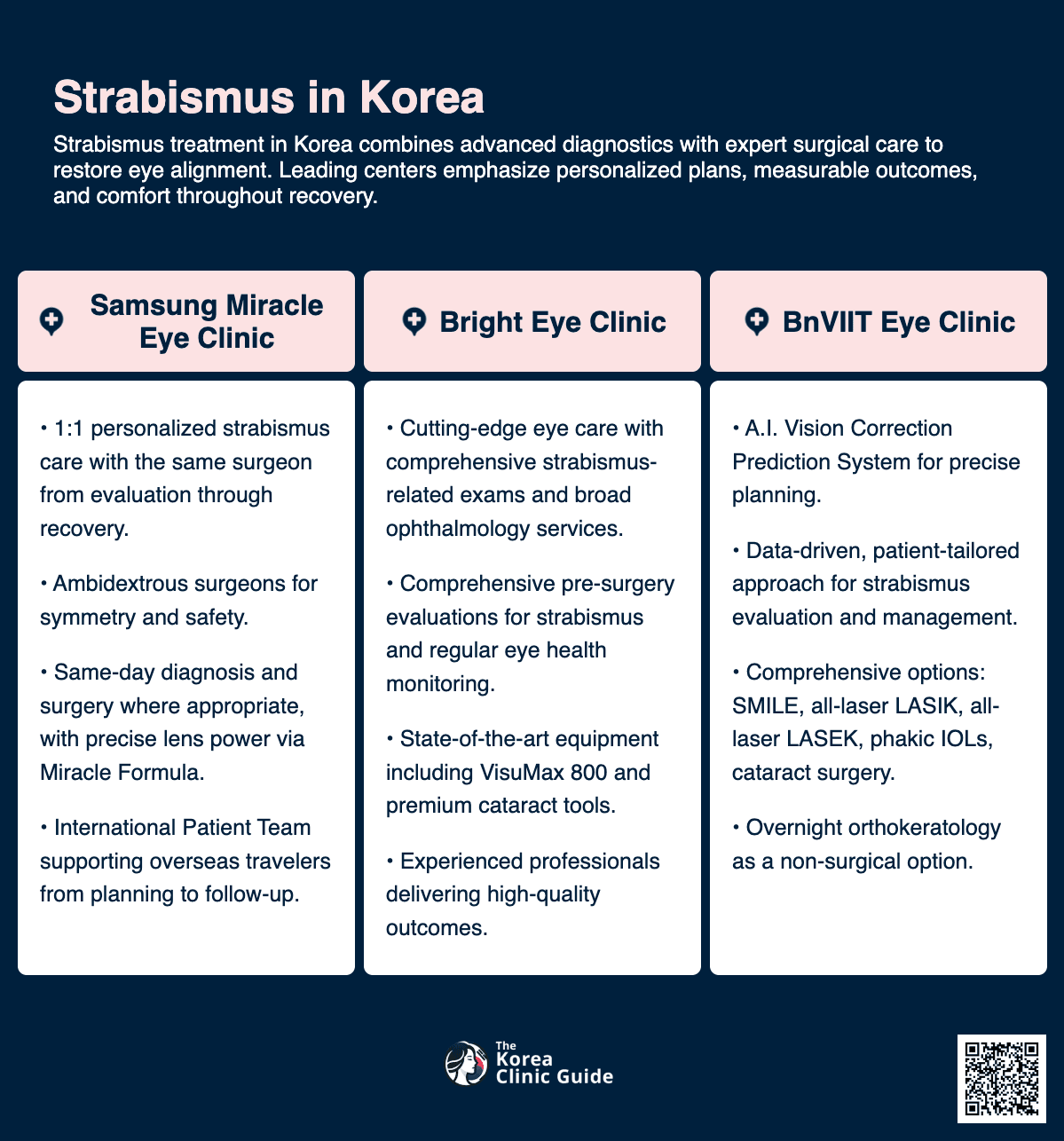
The main objective is to realign the eyes, which supports visual function and fusion—blending the two eyes’ images into a single, three-dimensional perception. The surgery also seeks to eliminate double vision and abnormal sensory adaptations, while expanding visual fields and correcting abnormal head posture. Note, however, that while alignment is usually achieved, visual improvement varies depending on individual circumstances.
Detailed Explanation of Surgical Techniques
- Resection: Shortens an eye muscle by removing a segment, strengthening its pull.
- Recession: Moves the muscle attachment further back to weaken the pull.
- Plication: Folds and sutures a muscle without tissue removal, achieving strength similar to resection.
- Adjustable Suture Technique: Allows for post-operative adjustment of sutures, often in complex or adult cases, for optimal alignment.
Pre-operative Preparations and Considerations
A full pre-operative assessment includes detailed vision tests, alignment measurements, and a review of the patient’s medical and surgical history, medications, and allergies. Patients receive instructions on fasting, stopping certain medications, and other preparations before surgery.
What to Expect During the Procedure
- Anesthesia: General anesthesia is most common, ensuring patient comfort and immobility. Adults may also have eye numbing with sedation.
- Process: The surgeon uses a speculum to hold the eye open, incises the conjunctiva, and then adjusts the targeted eye muscles before closing with dissolvable sutures.
- Duration: Usually takes 30 minutes to two hours, depending on complexity.
Post-operative Care and Recovery Timeline
Most patients go home the same day with a responsible adult and are monitored briefly in recovery.
- Immediate side effects: Can include redness, soreness, or a scratchy feeling; temporary double vision may persist.
- Medications: Prescribed eye drops/ointment help with discomfort and prevent infection; over-the-counter pain relievers can be used.
- Recovery: Eyes may stay red for weeks but improve after about one week. Most adults return to work within a week; children often return to school in three days. Full healing takes 3–12 weeks.
- Follow-Up: Vital for monitoring healing and assessing alignment; further adjustments or surgeries may be needed.
Best Clinics in Korea for Double Vision
Listed below are the best clinics in Korea for double vision:
| Clinic Name | Key Features | Special Techniques |
|---|---|---|
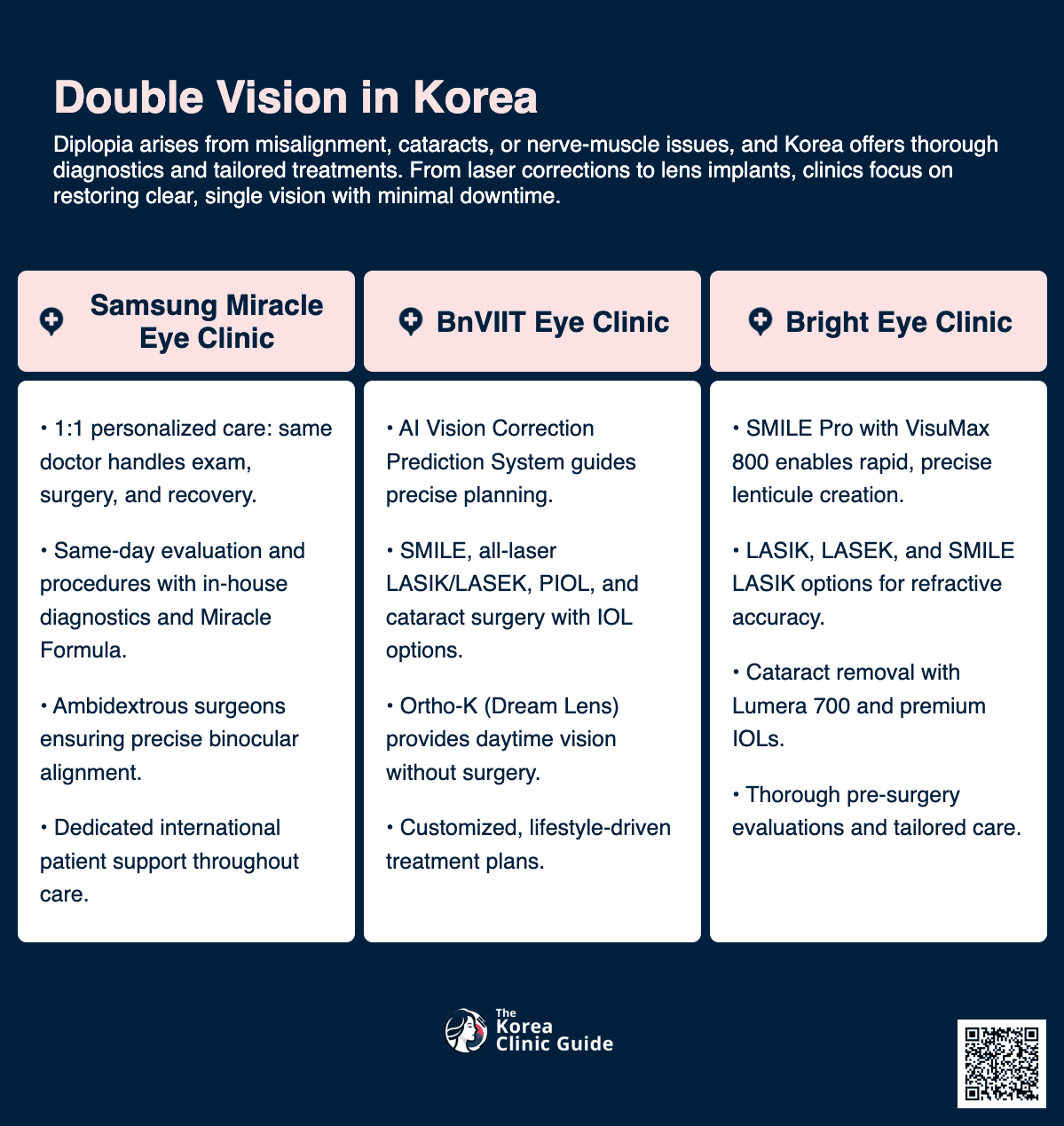
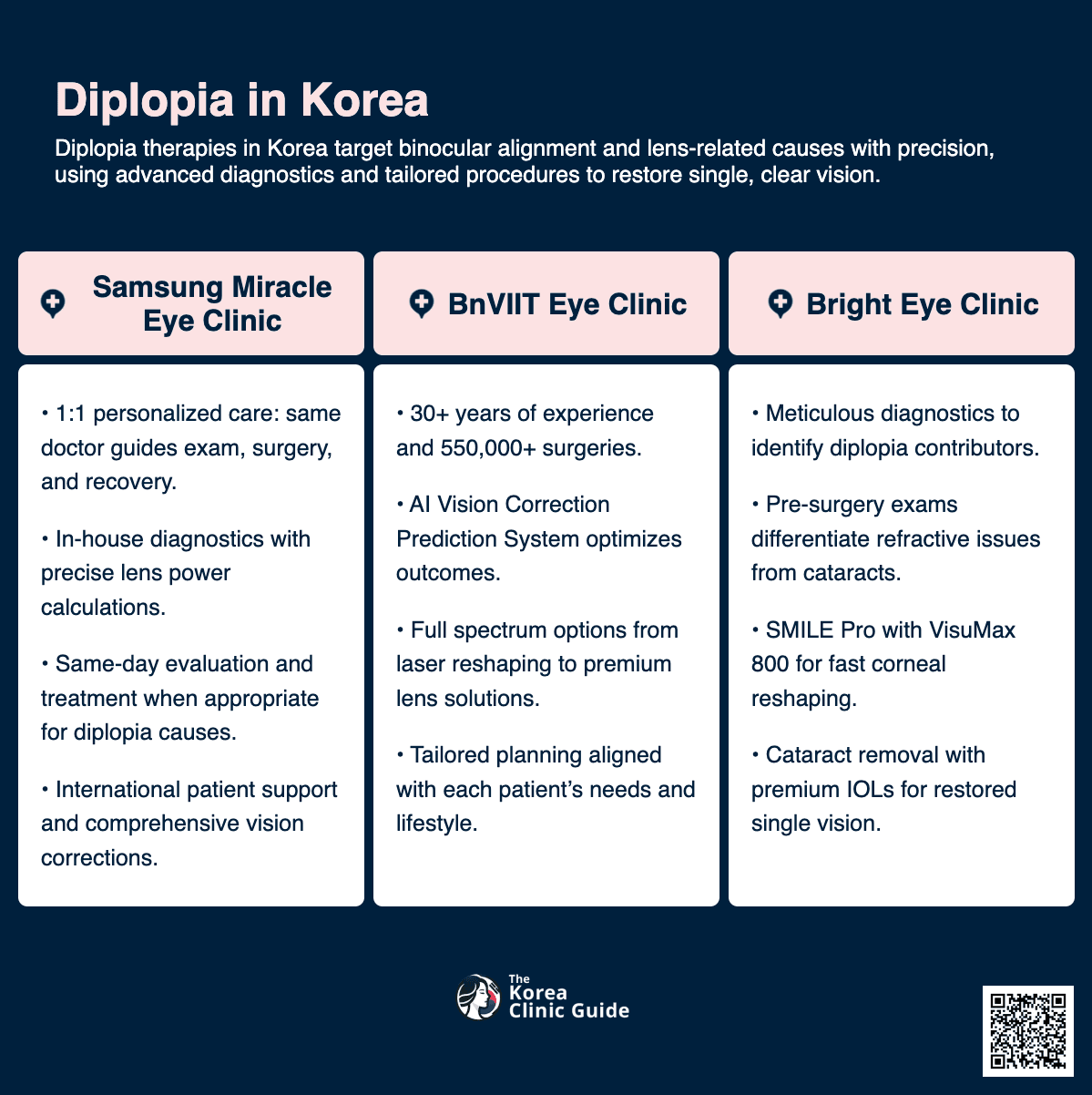
| BnVIIT Eye Clinic Website | - Proven track record: Over 30 years of clinical experience and 550,000 successful eye surgeries, reflecting deep expertise and consistent outcomes. - Advanced decision support: A.I. Vision Correction Prediction System helps guide precision-focused planning and selection of the most suitable correction approach. - Comprehensive vision correction options under one roof, enabling tailored care for complex visual complaints such as double vision: - SMILE: Minimally invasive laser vision correction with a small incision approach. - All-laser LASIK: Laser reshaping of the cornea to address myopia, hyperopia, and astigmatism. - All-laser LASEK (PRK): Surface laser option well-suited for patients with thinner corneas. - PIOL (Phakic Intraocular Lenses): Implantable lens option for high refractive errors not ideal for laser procedures. - Cataract surgery: Removal of the cloudy lens with replacement by an artificial intraocular lens to restore clear vision. - Orthokeratology (Ortho-K/Dream Lens): Overnight lenses that temporarily reshape the cornea for clear daytime vision without glasses or contacts. - Highly individualized care: Strong emphasis on customizing options to align treatment with the patient’s unique visual needs, eye measurements, and lifestyle priorities for optimal satisfaction. | - SMILE: Minimally invasive laser vision correction with a small incision approach. - All-laser LASIK: Laser reshaping of the cornea to address myopia, hyperopia, and astigmatism. - All-laser LASEK (PRK): Surface laser option well-suited for patients with thinner corneas. - PIOL (Phakic Intraocular Lenses): Implantable lens option for high refractive errors not ideal for laser procedures. - Cataract surgery: Removal of the cloudy lens with replacement by an artificial intraocular lens to restore clear vision. - Orthokeratology (Ortho-K/Dream Lens): Overnight lenses that temporarily reshape the cornea for clear daytime vision without glasses or contacts. |
| Bright Eye Clinic Website{data-slug="bright-eye-clinic" data-position="2"} | - World-class technology and expertise in Gangnam, trusted by international patients seeking high-quality eye care. - Comprehensive eye exams that help pinpoint vision-related causes of double vision and determine whether surgical or non-surgical options are most appropriate. - Advanced refractive surgery options to correct focusing problems that can contribute to visual strain and overlapping images: - SMILE Pro using VisuMax 800, creating a lenticule in under 10 seconds for highly precise, minimally invasive correction. - SMILE LASIK with a small incision designed for minimal discomfort and faster recovery. - LASIK to reshape the cornea and treat myopia, hyperopia, and astigmatism. - LASEK for patients with thin corneas by treating the corneal surface. - High-precision cataract care for patients whose double vision may be linked to lens clouding: - Cataract removal using the Lumera 700 microscope for enhanced surgical visualization. - IOL (intraocular lens) implantation to restore clear vision after cataract removal. - A range of premium IOL lens types selected to match individual visual needs. - Pre-surgery evaluations that emphasize safety, candidacy, and personalized planning to support strong outcomes. - Ongoing general eye health checkups to monitor vision changes over time and detect issues early, supporting long-term clarity and comfort. | - SMILE Pro using VisuMax 800, creating a lenticule in under 10 seconds for highly precise, minimally invasive correction. - SMILE LASIK with a small incision designed for minimal discomfort and faster recovery. - LASIK to reshape the cornea and treat myopia, hyperopia, and astigmatism. - LASEK for patients with thin corneas by treating the corneal surface. - Cataract removal using the Lumera 700 microscope for enhanced surgical visualization. - IOL (intraocular lens) implantation to restore clear vision after cataract removal. - A range of premium IOL lens types selected to match individual visual needs. - Pre-surgery evaluations that emphasize safety, candidacy, and personalized planning to support strong outcomes. - Ongoing general eye health checkups to monitor vision changes over time and detect issues early, supporting long-term clarity and comfort. |
BnVIIT Eye Clinic
BnVIIT Eye Clinic (B&VIIT Eye Center) is a premier ophthalmology clinic located in Gangnam, Korea, trusted for advanced vision care backed by over 30 years of experience and 550,000 successful eye surgeries. For patients dealing with double vision, BnVIIT stands out for its precise, data-driven evaluations and highly personalized treatment planning, supported by its cutting-edge A.I. Vision Correction Prediction System and a full spectrum of vision correction solutions designed to match each patient’s eye condition and daily needs.
- Proven track record: Over 30 years of clinical experience and 550,000 successful eye surgeries, reflecting deep expertise and consistent outcomes.
- Advanced decision support: A.I. Vision Correction Prediction System helps guide precision-focused planning and selection of the most suitable correction approach.
- Comprehensive vision correction options under one roof, enabling tailored care for complex visual complaints such as double vision:
- SMILE: Minimally invasive laser vision correction with a small incision approach.
- All-laser LASIK: Laser reshaping of the cornea to address myopia, hyperopia, and astigmatism.
- All-laser LASEK (PRK): Surface laser option well-suited for patients with thinner corneas.
- PIOL (Phakic Intraocular Lenses): Implantable lens option for high refractive errors not ideal for laser procedures.
- Cataract surgery: Removal of the cloudy lens with replacement by an artificial intraocular lens to restore clear vision.
- Orthokeratology (Ortho-K/Dream Lens): Overnight lenses that temporarily reshape the cornea for clear daytime vision without glasses or contacts.
- Highly individualized care: Strong emphasis on customizing options to align treatment with the patient’s unique visual needs, eye measurements, and lifestyle priorities for optimal satisfaction.
Find more about this clinic here: BnVIIT Eye Clinic Website
Bright Eye Clinic
Bright Eye Clinic in Gangnam is a leading eye center known for cutting-edge vision correction and cataract surgery delivered with world-class technology and experienced expertise, drawing patients from around the world for exceptional care. For people experiencing double vision (diplopia), the clinic’s strength lies in its thorough diagnostic approach and its ability to address common vision-related contributors—such as refractive errors and cataracts—through precise, modern procedures and carefully tailored treatment planning.
- World-class technology and expertise in Gangnam, trusted by international patients seeking high-quality eye care
- Comprehensive eye exams that help pinpoint vision-related causes of double vision and determine whether surgical or non-surgical options are most appropriate
- Advanced refractive surgery options to correct focusing problems that can contribute to visual strain and overlapping images:
- SMILE Pro using VisuMax 800, creating a lenticule in under 10 seconds for highly precise, minimally invasive correction
- SMILE LASIK with a small incision designed for minimal discomfort and faster recovery
- LASIK to reshape the cornea and treat myopia, hyperopia, and astigmatism
- LASEK for patients with thin corneas by treating the corneal surface
- High-precision cataract care for patients whose double vision may be linked to lens clouding:
- Cataract removal using the Lumera 700 microscope for enhanced surgical visualization
- IOL (intraocular lens) implantation to restore clear vision after cataract removal
- A range of premium IOL lens types selected to match individual visual needs
- Pre-surgery evaluations that emphasize safety, candidacy, and personalized planning to support strong outcomes
- Ongoing general eye health checkups to monitor vision changes over time and detect issues early, supporting long-term clarity and comfort
Find more about this clinic here: Bright Eye Clinic Website
Navigating Strabismus Surgery in South Korea: A Medical Tourist's Guide
South Korea is a top choice for medical tourists seeking strabismus surgery, blending advanced care with patient-centered services.
Why South Korea for Strabismus Surgery?
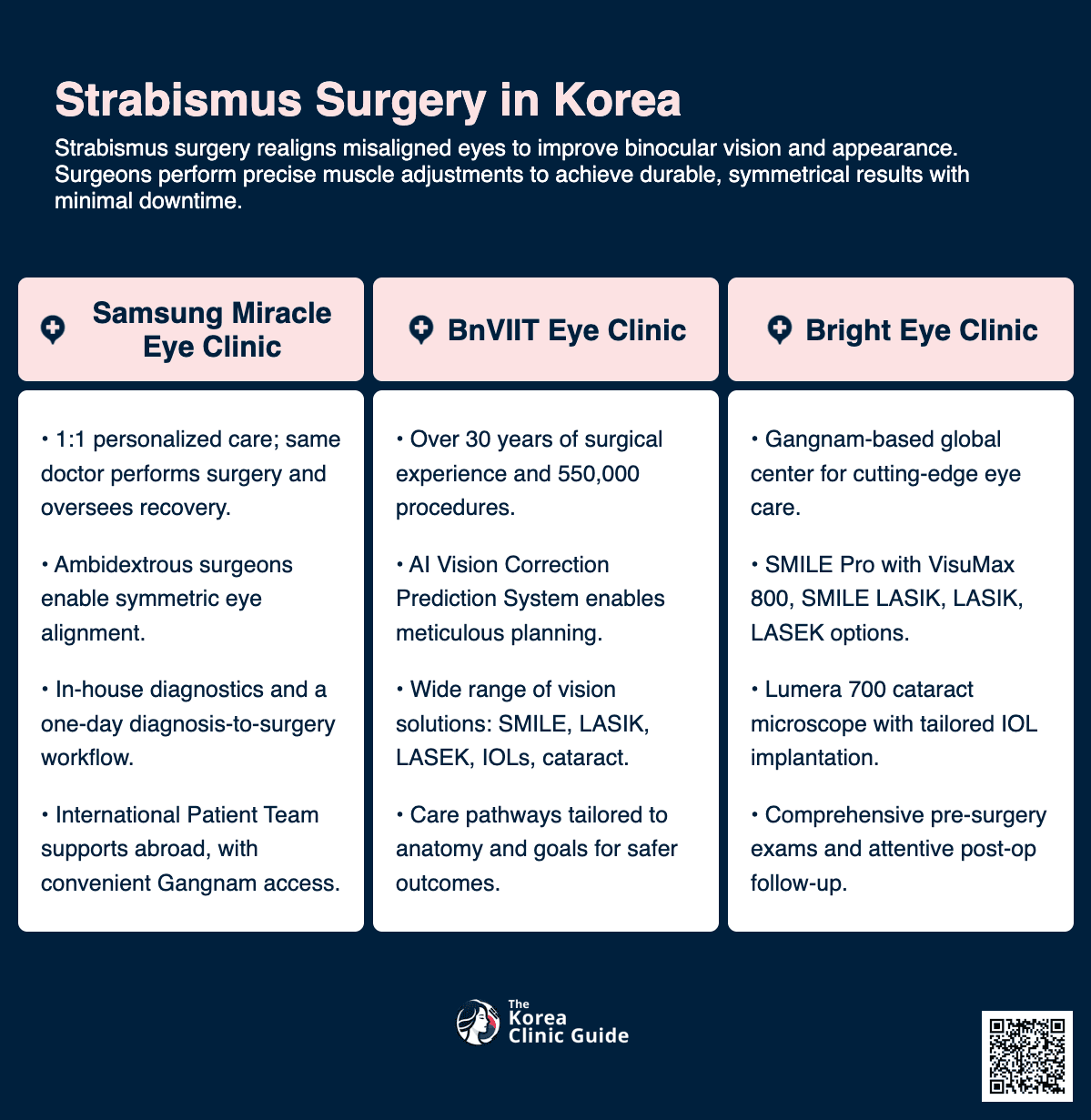
South Korea offers:
- Advanced Technology and Facilities: Hospitals are equipped with leading diagnostic and surgical equipment.
- Highly Skilled Surgeons: Reputable ophthalmologists with extensive strabismus surgery experience; clinics like Kim's Eye Hospital and Samsung Medical Center perform hundreds yearly.
- High-Quality Outcomes: International accreditations ensure consistent standards.
- Competitive Pricing: Costs are generally lower than in Western countries, with no compromise on quality.
- Comprehensive Patient Support: Many hospitals provide international services, language assistance, and patient coordinators.
- Renowned Institutions: Specialized centers include Kim's Eye Hospital, Severance Hospital, Seoul National University Bundang Hospital, and Asan Medical Center.
Step-by-Step Process for Medical Tourists
South Korea’s well-developed system ensures medical tourists receive thorough support:
- Initial Consultation and Coordination: Patients often begin with online consultations and may need to make a deposit to secure a surgery date.
- Pre-Surgical Assessment: Upon arrival, patients complete detailed evaluations to finalize the surgical plan.
- Surgical Procedure: Surgery is conducted as described, typically without requiring an overnight stay.
- Post-operative Care and Follow-Up: Includes recovery observation and one or more follow-up appointments within the week after surgery.
- Recovery and Departure: Patients rest for about seven days and should plan travel to accommodate essential follow-ups.
Key Considerations for International Patients
Travelers should plan for:
- Travel and Accommodation: Budget for airfare, hotels, transportation, and meals.
- Miscellaneous: Include extra funds for sightseeing, daily needs, and possible visa fees.
- Post-Operative Care: Clarify what’s included in the fee and what may cost extra.
- Surgeon’s Credentials: Verify the surgeon’s qualifications and experience.
- Insurance: Confirm whether strabismus surgery is covered or if payment will be out-of-pocket.
Cost Analysis: Strabismus Surgery in South Korea vs. Global Destinations
Cost is a major factor in choosing where to have strabismus surgery. Prices vary based on location, surgeon expertise, and case complexity.
Detailed Breakdown of Costs in South Korea
Strabismus surgery in South Korea typically costs between $1,500 to $6,000 USD. This includes:
- Pre-surgery Assessments: Medical evaluations and tests
- Anesthesia Fees: A significant portion of costs
- Surgical Procedure: Alignment correction
- Hospital Stay (if needed)
- Post-operative Consultations: Usually at day one and one week post-surgery
- Additional Treatments: For recovery support
Expenses not included in the surgery fee:
- Travel: Airfare, accommodation, local transport, meals
- Miscellaneous: Attractions, cultural activities, and souvenirs
- Insurance: Separate from surgery costs
- Visa Fees: If applicable
Pricing depends on the surgeon’s reputation, hospital location, strabismus complexity, and surgical techniques.
Comparison with Other Countries from a Medical Tourist’s Perspective
Value for medical tourists involves not just price but care quality and support.
- South Korea: $1,500–$6,000 USD; known for technology, skilled surgeons, and comprehensive care.
- United States: $4,000–$10,000 USD; prices vary by region and practitioner.
- Turkey: $1,919–$4,000 USD; offers affordable, high-quality care.
- Mexico: $1,500–$4,000 USD; close to the US, notable cost savings.
- Colombia: $1,500–$3,500 USD; reputable clinics, competitive pricing.
- Brazil: $2,500–$5,000 USD; strong reputation in ophthalmic surgery.
South Korea offers a balanced choice with modern facilities, international experience, and costs competitive with other top destinations.
Table 2: Strabismus Surgery Cost Comparison for Medical Tourists
| Country | Typical Cost Range (USD) | Key Considerations |
|---|---|---|
| South Korea | $1,500 - $6,000 | Advanced technology, skilled surgeons, comprehensive support |
| United States | $4,000 - $10,000 | High cost; expertise and technology vary |
| Turkey | $1,919 - $4,000 | Affordable, growing medical tourism hub |
| Mexico | $1,500 - $4,000 | Substantial savings, experienced clinics |
| Colombia | $1,500 - $3,500 | Competitive pricing, reputable centers |
| Brazil | $2,500 - $5,000 | Renowned expertise in ophthalmic surgery |
Patient Perspectives: Life After Strabismus Surgery for Double Vision
Strabismus surgery patients frequently experience improvements extending well beyond eye alignment, with positive changes in vision, task performance, comfort, and psychosocial well-being.
Reported Improvements in Vision
- Sharper, clearer vision and better focus
- Enhanced eye movement and field of vision
- More comfortable, natural vision, with less distraction from strabismus
- Reduced need to close one eye for concentration
Improvements in Daily Task Performance
- Increased confidence in driving
- Fewer mistakes and improved productivity at work and on computers
- Better performance in precision tasks like reading, DIY, or cooking
- Better judgment of depth, improved balance, and reduced clumsiness
Resolution or Improvement of Physical Symptoms
- Relief from eye discomfort, pain, strain, and excessive tearing
- Headaches often resolve or improve
- Comfortable, aligned vision reduces physical strain
Enhanced Confidence, Emotional Well-being, and Social Interactions
- Better emotional health, with less anxiety and greater self-image
- Improved social interactions, including more eye contact and comfort in public
- Professional benefits like confidence during interviews or workplace engagement
- Decreased social stigma and embarrassment
Discussion of Success Rates Based on Various Criteria
Success depends on the measure:
- Motor Criteria Alone: High success (around 90%) for alignment
- Diplopia Criteria Alone: About 74% overall; 68% for those with double vision pre-surgery
- Health-Related Quality of Life (HRQOL) Criteria Alone: Around 60% overall; 66% for pre-surgery double vision patients
- Combined Criteria (motor + diplopia): About 67%; combining HRQOL lowers to 50–54%
While alignment is usually achieved, full relief from diplopia and HRQOL improvements may be more variable—highlighting the importance of discussing expectations.
Table 3: Patient-Reported Outcomes After Strabismus Surgery
| Category of Improvement | Specific Examples | Impact on Daily Life |
|---|---|---|
| Vision | Sharper, clearer vision; better focus; wider field; less distraction | Easier reading, driving, awareness; less need for compensation |
| Task Performance | Increased work accuracy; better computer use; improved everyday tasks | More productive, safer, less eye strain |
| Physical Symptoms | Reduced discomfort and headaches | Improved comfort, fewer breaks |
| Confidence & Emotions | Greater confidence, less anxiety, improved socializing | Better self-esteem, social engagement, professional progress |
Conclusion
Double vision (diplopia) significantly disrupts daily life but strabismus surgery provides a highly effective solution by realigning the eyes and restoring functional vision. South Korea offers advanced care, skilled specialists, and competitive pricing, making it ideal for medical tourism. While most patients enjoy improved alignment, vision, and psychosocial well-being, the full extent of outcome varies. Careful planning, realistic expectations, and thorough research are key to optimizing the benefits of strabismus surgery.
References
1, 2, 3, 4, 5, 6, 7, 8, 9, 10, 11, 12, 13, 14, 15, 16, 17, 18, 19, 20, 21, 22