
Medical Tourism Blog
Periodontal Disease Treatment in Korea: Methods, Recovery, Travel Planning, and Aftercare
Table of contents
- Periodontal Disease Treatment at a Glance
- What Is Periodontal Disease Treatment?
- Who Is a Good Candidate for Periodontal Disease Treatment?
- How Is Periodontal Disease Treatment Performed?
- Why Visit Korea for Periodontal Disease Treatment?
- Key Information for International Patients
- Which Are the Best Clinics in Korea for Periodontal Disease Treatment?
- Periodontal Disease Treatment From Start to Finish
- Alternatives to Periodontal Disease Treatment
- How Can I Prepare for Periodontal Disease Treatment?
- Aftercare Advice
Considering treatment in Korea? Everything you need to know e.g. — how to avoid scams, visas, interpreters, recovery tips — in our Medical Tourism Master Guide. Plan with confidence in minutes, not weeks!
Last updated: September 2026
Periodontal Disease Treatment at a Glance
- Staged gum-disease care — Treatment starts with plaque-control instruction and professional cleaning, then uses scaling and root planing below the gumline; persistent deep pockets may require flap or regenerative surgery after reassessment.
- Best candidates — A periodontal assessment is appropriate for bleeding gums, swelling, bad breath, recession, loose teeth, or suspected bone loss; probing measurements and radiographs, not appearance alone, determine whether periodontitis is present.
- Not a permanent cure — Gingivitis can usually be reversed, but periodontitis has already caused irreversible attachment and bone loss; treatment controls inflammation and helps retain maintainable teeth through lifelong maintenance.
- Recovery and results — Deep cleaning commonly causes mild tenderness, slight bleeding, and temperature sensitivity for several days, with reassessment at about 4 weeks; regenerative surgical results are evaluated over months.
- Korea travel time — Allow 2–4 business days for assessment and non-surgical treatment; after flap, graft, or regenerative surgery, remain for the early review at 7–10 days, or 10–14 days if in-person suture removal is planned.
- Maintenance is essential — Supportive periodontal visits are individualized every 3–12 months, commonly every 3–6 months for higher-risk patients, because missed plaque control and maintenance increase recurrence and tooth-loss risk.
- Korea-specific verification — Choose a Korean institution registered to treat international patients, which must carry malpractice liability insurance, but confirm periodontist involvement, English consent, emergency access, follow-up, and transferable records directly.
What Is Periodontal Disease Treatment?
Periodontal disease treatment is a staged approach to controlling gum infection and inflammation through professional cleaning, deep cleaning below the gumline, and, when needed, surgery. It aims to reduce bleeding and pockets, slow further loss of tooth support, and help retain teeth that can be maintained. Treatment is usually non-surgical or minimally invasive, while selected persistent cases require surgical care.
Who Is a Good Candidate for Periodontal Disease Treatment?
- People with warning signs — Bleeding during brushing, swollen or red gums, persistent bad breath, visible calculus, recession, loose teeth, chewing discomfort, or a previous periodontitis diagnosis warrant a periodontal assessment.
- People with established disease — Candidates for active treatment have periodontal pockets, attachment loss, bone loss on radiographs, furcation involvement between molar roots, or bleeding sites identified through periodontal charting.
- People seeking tooth preservation — Treatment is designed to control infection and inflammation, reduce bleeding and pockets, and retain teeth that have a maintainable prognosis; it does not restore bone already lost in every case.
- People committed to maintenance — Effective daily brushing, interdental cleaning, risk-factor control, and continuing periodontal reviews are essential because periodontitis is managed long term rather than permanently cured.
Gingivitis is generally reversible, while periodontitis has caused irreversible loss of attachment and supporting bone. Advanced disease can produce few obvious symptoms, so appearance alone cannot establish candidacy; probing, tooth mobility and bite assessment, and radiographs are needed. Periodontal surgery should be delayed until adequate plaque control is established and sustained. Uncontrolled diabetes, unstable medical illness, unresolved bleeding risk, acute infection, nicotine exposure, and medicines affecting bleeding, immunity, or bone healing require individualized planning; do not stop prescribed anticoagulants, antiplatelets, or other medicines independently. Pregnancy does not preclude urgent infection care or needed non-surgical treatment, but elective surgery and nonessential radiographs are usually deferred or coordinated with the obstetric clinician.
How Is Periodontal Disease Treatment Performed?
Treatment follows a staged plan based on tooth-by-tooth findings, disease severity, risk factors, and response to initial care. Current periodontal guidance supports behavioural change, risk-factor control, professional mechanical plaque removal, reassessment, and further treatment only where indicated.
- Cause control and supragingival cleaning — The clinician removes plaque and calculus above the gumline, teaches brushing and interdental cleaning, and addresses contributors such as nicotine use and poor glycemic control. This is foundational at every stage.
- Subgingival instrumentation — Often called scaling and root planing or deep cleaning, hand and ultrasonic instruments remove biofilm and calculus below the gumline. Treatment is often divided into quadrants, and local anesthetic is used when deep pockets or sensitivity require it.
- Selected antimicrobial adjuncts — Antiseptics or locally delivered antimicrobials can be considered for selected sites. Routine systemic antibiotics are not standard because allergy, interactions, adverse effects, and antimicrobial resistance must be weighed against benefit.
- Laser or photodynamic adjuncts — These approaches can be added in selected cases but do not replace meticulous mechanical instrumentation and home plaque control. Ask what measurable benefit is expected in the specific site rather than accepting a claim of a universal laser cure.
- Flap surgery for residual pockets — After healing and reassessment, persistent deep bleeding pockets can require repeat instrumentation or access-flap surgery. The gum is lifted for direct root debridement, repositioned, and sutured; pocket reduction can involve more recession and root sensitivity.
- Regenerative surgery — Suitable intrabony or selected furcation defects can be treated with a membrane, bone-derived graft, and/or enamel matrix derivative to attempt regeneration. Defect shape, tooth prognosis, hygiene, nicotine exposure, and systemic health determine suitability.
- Soft-tissue or recession procedures — Grafting can improve root coverage, sensitivity, attached tissue, or cleaning access. It does not independently control generalized periodontitis.
Why Visit Korea for Periodontal Disease Treatment?
Korea has a formal registration framework for medical institutions serving foreign patients. This allows visitors to check whether a prospective provider is registered, but registration does not establish clinical outcome superiority or guarantee English-language consent, sedation, or emergency coverage. For complex disease, confirm that a periodontist will provide or supervise planning and treatment.
- International-patient registration — Registered institutions must carry medical-malpractice liability insurance under Korea’s international-patient registration system. Verify registration before booking rather than relying on marketing claims.
- Specialist planning — A periodontist is particularly relevant for residual deep pockets, furcations, regenerative surgery, tooth-prognosis decisions, implant planning, and cases requiring coordination with restorative dentistry.
- Product transparency — For a proposed membrane, graft, enamel matrix derivative, local antibiotic, laser, or sedation medicine, request the generic or product name, purpose, alternatives, and records. Korea’s MFDS medical-device information system can support product-level verification, but does not show whether a specific clinic stocks the item or whether it suits an individual defect.
- Evidence limit — No high-quality comparative evidence establishes that periodontal treatment outcomes in South Korea are better than those in other countries. The defensible advantage is the ability to verify administrative safeguards and arrange specialty care, not an outcome guarantee.
Key Information for International Patients
- Minimum stay — Plan 2–4 business days for examination, periodontal charting, radiographs, hygiene instruction, and non-surgical treatment. Multiple quadrants can require separate appointments.
- Surgical stay — Remain in Korea through the early postoperative review, commonly 7–10 days after flap, graft, or regenerative surgery. Allow 10–14 days when non-resorbable suture removal is planned in person.
- Reassessment and repeat care — Non-surgical treatment is commonly reassessed at about 4 weeks. This can be transferred to a home periodontist when complete charts, radiographs, diagnosis, treatment notes, and prescriptions are supplied.
- Flight timing — No universal no-fly interval is established for deep cleaning. Wait until numbness has resolved and bleeding and pain are controlled. Do not depart before the surgical review unless the surgeon has specifically approved a written follow-up plan.
- Sedation and companion rules — A companion is generally unnecessary for local-anesthetic treatment but is prudent, and often mandatory, after oral or IV sedation or general anesthesia. Do not drive or travel alone immediately after sedatives.
- Records and remote follow-up — Before travel, confirm English-language consent, interpreter or coordinator access, after-hours contact, remote review process, and release of transferable records. KHIDI advises international patients to confirm interpreter arrangements, emergency response, record access, and after-return care.
Travel note: Identify a dentist or periodontist at home before surgery. Long-haul travel, sightseeing, and an early departure can make wound assessment and prompt management of complications harder.
Which Are the Best Clinics in Korea for Periodontal Disease Treatment?
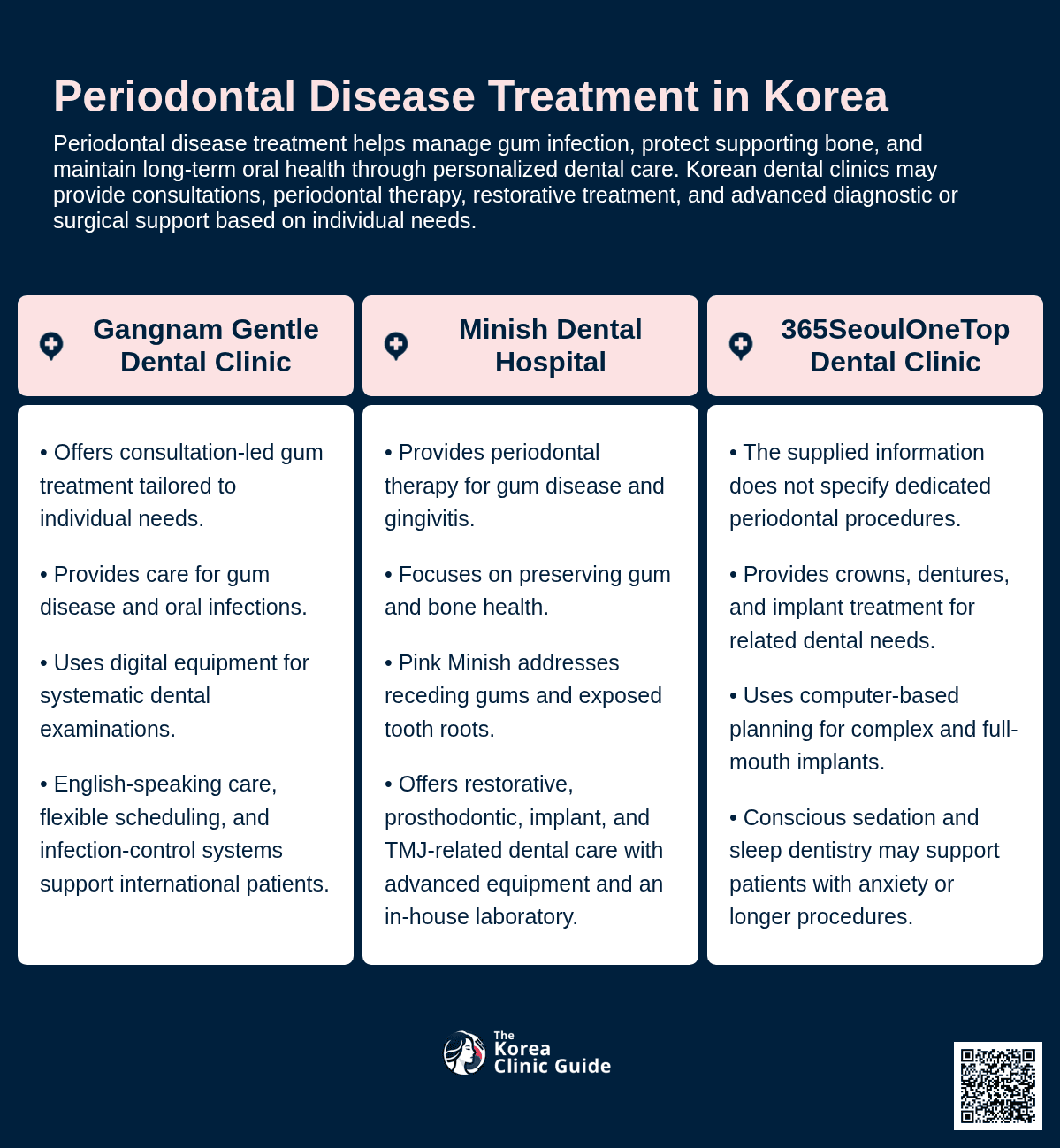
Listed below are some of the best clinics in Korea for periodontal disease treatment.
1. Gangnam Gentle Dental Clinic
For periodontal disease treatment, you can expect a consultation-led approach to gum treatment, with care tailored to your individual needs and an emphasis on providing only necessary treatment. The clinic also uses digital equipment for systematic examinations and maintains infection-prevention and sterilization systems.
- URL: Gangnam Gentle Dental Clinic Website
- Location: Seocho-gu, Seoul
- Gum care:
- Gum treatment is offered for gum disease and infections.
- Thorough consultations are used to determine an individualized treatment plan.
- Care considerations:
- Dr. Travis Kim speaks fluent English, which may help you discuss symptoms, treatment options, and follow-up care clearly.
- Weekday and weekend availability is described, along with emergency dental treatment for urgent concerns.
- Root-canal treatment, tooth extraction, restorative fillings, and implant services are also available when related dental needs are identified.
2. Minish Dental Hospital
You may consider Minish Dental Hospital for periodontal disease treatment if you want therapy focused on preserving gum and bone health, including care for gum disease and gingivitis, within a facility that also provides restorative and prosthodontic services when periodontal problems affect teeth. The hospital describes personalized treatment planning, advanced dental equipment, an in-house laboratory and technology company, and care designed to avoid language barriers for international visitors.
- URL: Minish Dental Hospital Website
- Location: Gangnam-gu, Seoul
- Periodontal therapy:
- Periodontal therapy is offered to help preserve gum and bone health, including treatment for gum disease and gingivitis.
- Pink Minish is described for receding gums associated with dental aging, trauma, or severe periodontal issues, addressing exposed roots and the appearance of elongated teeth.
- Related dental care:
- Treatment setting:
- The facility reports 19 advanced dental equipment systems and an in-house laboratory.
- Its clinical team includes veneer, orthodontic, and general dental specialists.
3. 365SeoulOneTop Dental Clinic
If you are considering 365SeoulOneTop Dental Clinic while seeking periodontal disease treatment, the supplied information supports specialist-led dentistry with detailed planning and patient-centered care, but it does not specify periodontal therapy or gum-disease procedures. You may nevertheless find its restorative, implant, and sedation services relevant if your dental evaluation identifies associated tooth loss, damaged teeth, or treatment anxiety.
- URL: 365SeoulOneTop Dental Clinic Website
- Location: Seoul, Gangseo-gu, Gangseo-ro 179, 4F
- Relevant restorative options:
- Dental crowns are available to rebuild damaged or heavily filled teeth for chewing function.
- Dentures can replace multiple missing teeth and are designed to support eating, speaking, and facial support.
- Implant treatment, including full-mouth and complex implant surgery, uses computer-based planning and restoration design.
- Comfort during care:
- Conscious sedation is offered to help reduce anxiety and discomfort while you remain responsive.
- Deeper sleep dentistry may be used for longer or more sensitive procedures.
- Planning approach:
- The clinic describes detailed pre-planning for complex implant cases.
- Orthodontic planning considers bite alignment and facial balance.
Periodontal Disease Treatment From Start to Finish
- Remote enquiry and record review — Send recent bitewing, periapical, panoramic, or CBCT images when available, plus a medication list with doses, allergies, medical history, and previous periodontal records. Confirm the consultation language, interpreter availability, periodontist involvement, estimated number of visits, and whether treatment can realistically fit the travel window.
- In-person periodontal assessment — The dentist or periodontist takes a medical and dental history, measures probing depths around each tooth, records plaque and bleeding, recession, mobility, bite, and furcation involvement, and reviews radiographs for bone loss, decay, fractures, and root-canal problems.
- Diagnosis and staged plan — Expect a diagnosis and, where used, periodontitis stage and grade, a tooth-by-tooth prognosis, alternatives, and an explanation of which teeth are maintainable. Discuss whether local anesthetic, sedation, antimicrobials, flap surgery, regeneration, extraction, or restorative planning is indicated.
- Initial disease control — Professional cleaning and oral-hygiene instruction address plaque and calculus above the gumline. The clinician also addresses contributors such as nicotine exposure, diabetes control, and ineffective interdental cleaning.
- Deep cleaning where indicated — Scaling and root planing or subgingival instrumentation removes deposits from root surfaces below the gumline using ultrasonic and/or hand instruments. It is often completed by quadrant under local anesthetic and followed by same-day discharge.
- Healing and reassessment — Mild tenderness, slight bleeding, and temperature sensitivity can last several days after non-surgical treatment. At roughly 4 weeks, the clinician reassesses bleeding, pocket depth, plaque control, and sites that need further care.
- Surgery for persistent disease — For selected residual pockets or regenerative defects, outpatient surgery under local anesthesia, with selective sedation where appropriate, lifts the gum for direct treatment. The surgeon may place a graft, barrier membrane, or enamel matrix derivative before suturing the tissue.
- Early review and transfer of care — Surgical review is commonly scheduled at 7–10 days; sutures are often removed within 1–2 weeks. Leave with periodontal charts, images, treatment details, anesthesia and material information, prescriptions, and a written maintenance plan for remote and home-clinician follow-up.
Alternatives to Periodontal Disease Treatment
The appropriate alternative depends on whether disease is limited to reversible gingivitis, whether periodontitis has caused deep pockets or bone loss, and whether a tooth remains maintainable. Non-surgical options avoid surgical wound recovery but cannot replace surgery for every persistent deep defect; extraction can be more predictable for a hopeless tooth but ends natural-tooth retention.
Professional Cleaning for Gingivitis
- Best fit — Plaque-induced gingivitis with no attachment loss, bone loss, or pathologic periodontal pockets.
- Tradeoff — Routine professional cleaning plus effective brushing and interdental cleaning can resolve gingivitis, but it is not an adequate substitute for subgingival treatment when established periodontitis is present.
Extraction and Tooth Replacement
- Best fit — A tooth with a hopeless prognosis because of severe bone loss, fracture, uncontrolled infection, or non-maintainable anatomy.
- Tradeoff — Extraction removes the diseased tooth but requires a restorative decision. An implant replaces a missing tooth; it does not treat active periodontitis and can itself develop peri-implant disease without stable gum health and maintenance.
No Active Treatment
- Best fit — A fully informed person who declines care after understanding the prognosis.
- Tradeoff — Untreated periodontitis can continue to progress, causing greater mobility and eventual tooth loss. This choice still requires discussion of infection control, symptoms, and emergency access with a dental clinician.
How Can I Prepare for Periodontal Disease Treatment?
- Send records early — Provide recent radiographs, periodontal charts, dental history, medical conditions, allergies, and a complete medicine list before travel. Bring copies in an accessible digital format.
- Disclose bleeding, bone, and immune medicines — Specifically report anticoagulants, antiplatelets, diabetes medicines, corticosteroids, bisphosphonates, denosumab, antiangiogenic medicines, immunosuppressants, and recent antibiotics. Do not stop prescribed medicines without an agreed plan from the prescribing clinician and treating dentist.
- Report supplements and drug interactions — Tell the clinic about fish oil, vitamin E, ginkgo, garlic, ginseng, turmeric/curcumin, St John’s wort, CBD, and all non-prescription products. These can affect bleeding, sedation, or drug metabolism.
- Control nicotine exposure — Stop smoking, vaping, and other nicotine exposure before treatment and continue abstinence through healing. Nicotine compromises healing and regenerative outcomes; tobacco use is also a recognized periodontal disease risk factor.
- Follow fasting instructions exactly — Fasting is usually unnecessary for local anesthesia alone unless the clinic says otherwise. Oral or IV sedation and general anesthesia require clinic-specific fasting, medication, escort, and transport instructions.
- Plan accommodation and transport — Stay near the clinic through the planned review after surgery. Arrange an adult escort and private transport after sedatives; keep flights flexible until the surgeon confirms that departure is appropriate.
- Avoid alcohol around surgery — Do not drink alcohol while wounds heal or when taking interacting medicines. In particular, do not consume alcohol with metronidazole.
Travel note: Ask in writing about the planned review date, suture type, emergency contact route, and what records will be sent to the home clinician before purchasing a non-changeable return ticket.
Confirm the treating doctor’s individualized medicine, fasting, hygiene, and travel requirements; these take precedence over general guidance.
Aftercare Advice
Protect the treated area, keep plaque control effective everywhere else, and attend reassessment or surgical review as scheduled.
- Expect short-term effects after deep cleaning — Mild tenderness, slight bleeding, and hot/cold sensitivity commonly last several days. Use only pain relief approved for your medical history, especially with anticoagulants, kidney disease, ulcer risk, or anti-inflammatory medicine restrictions.
- Protect surgical wounds — Do not pull the lip or cheek to inspect the site, forcefully rinse, spit, or disturb a periodontal dressing, graft, or membrane. Do not brush or floss the operated area until the surgeon says to restart.
- Use rinses as prescribed — Chlorhexidine can be prescribed for a limited period after surgery. It can alter taste and stain teeth or the tongue with extended use; do not extend its use without instruction.
- Choose non-traumatic food and activity — Start with soft, cool-to-lukewarm foods. Avoid hard, crunchy, spicy, very hot, acidic, and seedy foods near the wound, along with vigorous exercise, nicotine, and alcohol during early healing.
- Keep reviews and maintenance — Reassessment after non-surgical care is commonly at about 4 weeks. Long-term supportive periodontal care is individualized, commonly every 3–12 months, with many higher-risk patients reviewed every 3–6 months.
- Know urgent warning signs — Seek prompt care for bleeding that does not stop with the instructed pressure method, worsening swelling or pain, fever, pus or foul taste with illness, spreading facial swelling, allergy symptoms, persistent numbness, wound opening, displaced graft or membrane, or inability to eat and drink adequately.
- Allow time for final assessment — Inflammation can improve within weeks, but regenerative healing is evaluated over months. Persistent bleeding pockets can require further instrumentation or surgery despite correct initial treatment.
Follow the treating doctor’s written instructions over general advice, and contact the Korean clinic and a local dentist or periodontist promptly when something appears wrong.
Frequently Asked Questions
Related Blogs
Korea vs Global: Discover the True Cost of Gum Bleaching Across Major Destinations
Discover the ins and outs of gum bleaching in Korea, where advanced dental procedures meet affordability. Explore how this cosmetic treatment can rejuvenate your smile, and gain insights into the costs and considerations involved.
Updated: Oct 21, 2026

Experience Premier Dental Care Abroad: The True Cost of Inlay Fillings in Korea vs Global Alternatives
Discover the cost and benefits of inlay fillings in Korea, where high-quality dental care meets affordability. Learn why many choose Korea for their dental needs and what to expect in terms of pricing and procedures.
Updated: Oct 20, 2026
Explore the True Costs of Gum Contouring: Why Korea May Be Your Best Option Compared to the USA, UK, and More!
Discover the ins and outs of gum contouring in Korea, including an overview of costs and what to expect. Explore how this cosmetic dental procedure can enhance your smile while fitting various budgets.
Updated: Oct 20, 2026
Smile Bright: Investing in Teeth Whitening in Korea vs. Global Costs
Discover the affordable and high-quality teeth whitening options available in Korea, where advanced dental technology meets exceptional care. Explore the factors influencing costs and find the best solutions for achieving your brightest smile at a fraction of the price compared to Western countries.
Updated: Oct 20, 2026
Clinics offering Periodontal Disease Treatment

Minish Dental Hospital: Korea's Premier Dental Clinic Offering Advanced Treatments and Personalized Care
Sinsa

Gangnam Gentle Dental Clinic: Your Trusted Dental Care Provider in Korea Offering Comprehensive Services with Optimal Comfort and Safety
Sinnonhyeon Station
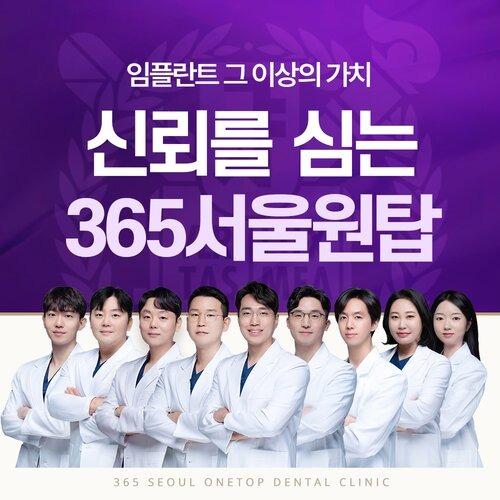
365SeoulOneTop Dental Clinic Korea | Specialist Implants, Sedation, Cosmetic Dentistry & Invisalign in Hwagok
Hwagok