Medical Tourism Blog
NK Cell Test in Korea: Methods, Results, Travel Planning, and Limitations
Table of contents
- NK Cell Test at a Glance
- What Is NK Cell Test?
- Who Is a Good Candidate for NK Cell Test?
- How Is NK Cell Test Performed?
- Why Visit Korea for NK Cell Test?
- Key Information for International Patients
- Which Are the Best Clinics in Korea for Nk Cell Test?
- NK Cell Test From Start to Finish
- Alternatives to NK Cell Test
- How Can I Prepare for NK Cell Test?
- Aftercare Advice
Considering treatment in Korea? Everything you need to know e.g. — how to avoid scams, visas, interpreters, recovery tips — in our Medical Tourism Master Guide. Plan with confidence in minutes, not weeks!
Last updated: September 2026
NK Cell Test at a Glance
- What it measures — An NK Cell Test is a blood-based immune assessment, but the method matters: it may measure NK-cell number, phenotype, target-cell killing, degranulation, perforin, or stimulated interferon-gamma release.
- Best candidates — Testing is most useful when a specialist is investigating severe or unusual recurrent infections, a suspected inborn immune disorder, familial HLH, or a possible cytotoxic-lymphocyte pathway disorder.
- Not a wellness screen — An NK result does not diagnose “low immunity,” screen for cancer, explain nonspecific fatigue or infertility, or establish eligibility for NK-cell therapy.
- Korea-specific option — Korea offers NK Vue, a Korean-developed whole-blood stimulated IFN-gamma assay that incubates a 1 mL sample for 20–24 hours; it measures cytokine release, not NK-cell count or direct killing ability.
- Travel timing — Allow at least 2 business days for NK Vue, or 2–5 business days if a results consultation, specialist referral, or confirmatory flow-cytometry or cytotoxicity testing may be needed.
- Interpretation limit — NK assays are not standardized between laboratories, and illness, medicines, sleep disruption, stress, and strenuous exercise can affect results, so an isolated abnormal value may need repeat or confirmatory testing.
- Recovery and risks — Recovery is typically immediate after routine venipuncture; temporary soreness, bruising, minor bleeding, or light-headedness can occur and usually resolve within hours to a few days.
What Is NK Cell Test?
An NK Cell Test is a blood test that assesses natural killer cells by measuring their number, characteristics, or immune activity, depending on the laboratory method. It helps specialists investigate certain unusual or recurrent infections and suspected disorders affecting immune-cell function, rather than providing a general immunity score. It is a non-surgical diagnostic test performed through routine venipuncture.
Who Is a Good Candidate for NK Cell Test?
- Specialist-directed immune investigation — Appropriate when an immunologist, hematologist, infectious-disease physician, or similarly qualified clinician has a specific question about immune function.
- Concerning infection pattern — Testing can form part of an evaluation for severe, recurrent, persistent, atypical, or treatment-resistant herpesvirus-family infections, extensive treatment-resistant HPV disease, or a suspected inborn error of immunity.
- Possible cytotoxic-pathway disorder — Direct cytotoxicity, CD107a degranulation, and perforin testing are relevant when a specialist is investigating familial hemophagocytic lymphohistiocytosis (HLH) or another disorder affecting cytotoxic lymphocytes.
- Need to clarify an existing result — A person with a prior abnormal NK-related result may need method-specific repeat testing or a broader immune work-up, because NK-cell number, phenotype, and function are different measurements.
An NK Cell Test is not a general immunity score, cancer screen, fatigue test, fertility test, or a way to establish eligibility for immune-cell treatment. A simple blood draw has no usual absolute contraindication, but disclose needle phobia, previous fainting, difficult venous access, bleeding disorders, and anticoagulant use. Postpone non-urgent testing or interpret it cautiously during fever, acute infection, immediately after major surgery or trauma, major sleep disruption, or exhausting exercise, which can alter circulating NK-cell measures. Do not change corticosteroids, chemotherapy, biologics, transplant immunosuppressants, antivirals, or other prescribed medicines to influence a result. Suspected HLH or severe immune dysfunction requires urgent local hospital assessment, not elective medical travel.
How Is NK Cell Test Performed?
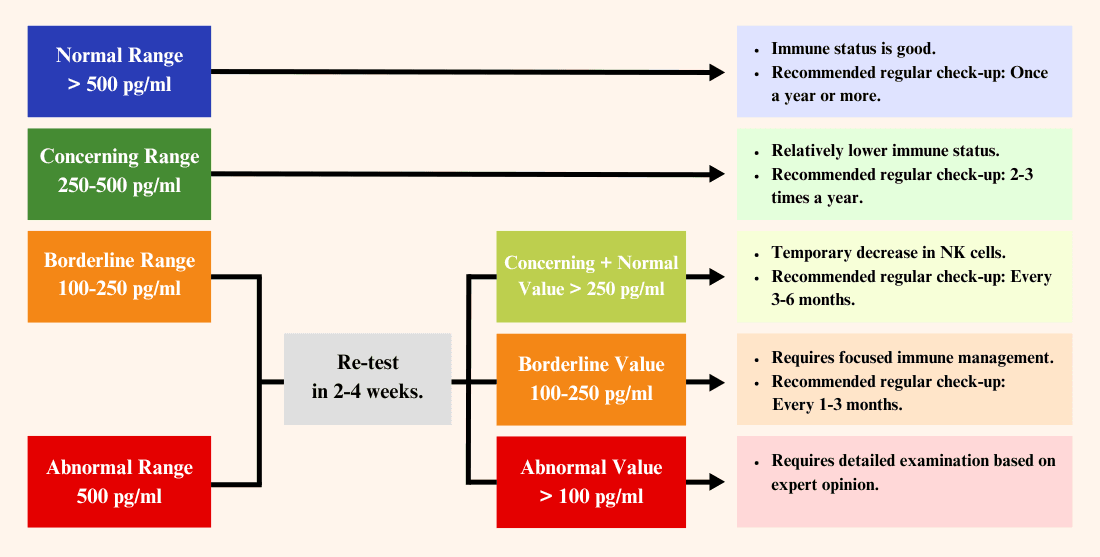
“NK Cell Test” covers several non-interchangeable laboratory methods. Confirm the exact assay before booking: a normal cell-count panel does not prove normal NK-cell killing function, and a cytokine-release result is not a direct NK-cell count.
- NK-cell count and phenotype — Flow cytometry identifies and quantifies NK-cell populations, commonly defined by CD3-negative and CD16/CD56-positive markers. It can identify reduced, absent, expanded, or unusual NK-cell populations, but does not assess cytotoxic function.
- Direct NK cytotoxicity assay — Patient cells are tested against susceptible target cells, classically K562 cells. This investigates target-cell killing, but specimen handling, cell viability, laboratory controls, and assay design substantially affect the result.
- CD107a and perforin testing — These flow-cytometry methods assess granule release after stimulation and intracellular perforin expression. They are useful in specialist assessment of cytotoxic-pathway disorders and familial HLH.
- NK Vue stimulated IFN-γ assay — This Korean commercial format uses 1 mL of whole blood in a Promoca-containing tube, followed by 20–24 hours at 37°C and ELISA measurement of released interferon-gamma. It measures induced cytokine release, not direct cell count or target-cell killing.
Why Visit Korea for NK Cell Test?
Korea offers access to NK Vue, a Korean-developed stimulated whole-blood IFN-γ assay. This supports local availability of one commercial testing format, not better diagnostic accuracy or clinical outcomes from traveling to Korea. Choose the laboratory for the exact assay and interpretation pathway needed, rather than for a broad “NK activity” claim.
- Korean-developed commercial assay — The manufacturer states that NK Vue received Republic of Korea Ministry of Food and Drug Safety authorization as a Class II in-vitro diagnostic device in October 2012 and uses a defined 20–24-hour incubation workflow.
- Foreign-patient registration framework — Medical Korea’s registered-provider system requires participating institutions to carry malpractice liability insurance. Its foreign-patient accreditation program evaluates patient safety and international-patient services, including interpretation-related criteria.
- Important verification limits — Registration and accreditation do not confirm that a facility performs the specific NK assay needed, offers an English report, has an appropriate reference interval, or provides immunology or hematology review. Confirm each point in writing before paying or traveling.
- Evidence limitation — Korean health-technology assessments considered NK activity immunoassay use in gastric- and prostate-cancer contexts; this does not validate it as population cancer screening or as a general wellness biomarker.
Key Information for International Patients
- Minimum stay — Allow at least 2 business days for an NK Vue assay: collection is followed by 20–24 hours of incubation before ELISA analysis. Plan 2–5 business days when an in-person results consultation, confirmatory flow cytometry or cytotoxicity testing, or specialist referral is expected.
- Advance confirmation — Direct cytotoxicity and flow-cytometry work-ups can require advance booking and prompt specimen processing. Confirm the assay name, specimen-acceptance rules, turnaround, English-report availability, reference interval, and abnormal-result pathway before booking flights.
- Flight timing — A routine blood draw has no procedure-specific flight restriction. Travel after collection when feeling well; postpone onward travel if light-headedness, persistent bleeding, or a significant fainting episode occurs.
- Repeat visits — An isolated abnormal result can require repeat testing under more stable conditions or confirmation with a different method. Keep travel plans flexible rather than assuming one draw provides a permanent measure of immune health.
- Remote follow-up — Arrange an English-language report and identify the clinician at home who will receive it. The report should state the assay, collection date and time, units, laboratory reference interval, and relevant flow-cytometry parameters where applicable.
Travel note: Bring a passport, concise medical history, prior laboratory reports, vaccination and infection history, allergies, and a complete list of medicines and supplements with doses. A companion is not medically necessary for venipuncture, but is useful for children, people with prior fainting, severe needle anxiety, mobility needs, or language-support needs.
Which Are the Best Clinics in Korea for Nk Cell Test?
Listed below are some of the best clinics in Korea for nk cell test.
1. SH Clinic
For an NK cell test inquiry, SH Clinic’s documented focus is regenerative medicine and women’s health, with stem-cell services and gynecologic screening among its available care areas. The supplied information does not confirm that an NK cell test itself is offered, so you should expect the need to verify test availability, eligibility, and how any results would be interpreted before arranging care.
- URL: SH Clinic Website
- Location: Seocho-gu, Seoul
- Relevant care areas:
- Stem Cell Center services include personalized regenerative-treatment planning and stem-cell treatments such as hair-loss and BMAC knee injections.
- Gynecology services include Pap smears, HPV testing, ultrasound, and care for urinary incontinence.
- Additional considerations:
- The clinic also offers aesthetic dermatology and cosmetic plastic-surgery services, separate from immune or laboratory testing.
- No specific NK cell assay, sample method, turnaround time, or result-based treatment pathway is described in the supplied information.
2. Painezer hospital
For an NK cell test inquiry, Painezer Hospital’s documented services are centered on nonsurgical spine, joint, and sports-related pain care, with an immune-support section that includes thymosin alpha-1 injections. The supplied information does not confirm that it performs NK cell testing, so you should verify whether testing is available and whether the clinic can provide clinically appropriate interpretation of any immune results.
- URL: Painezer hospital Website
- Location: #502,#503, 5th Floor, Parkrio A complex, Olympicro 37 gil 130, Sonngpa-gu, Seoul, Korea
- Immune and supportive infusions:
- Thymosin alpha-1 injection is listed in the clinic’s immune-therapy services as immune-activation support.
- Placenta extract injection, high-dose amino-acid IV therapy, albumin infusion, and TPN-style nutrition IV are listed among supportive infusion options.
- Primary clinical focus:
- Image-guided interventions for spine and joint pain include selective nerve root blocks and epidural adhesiolysis.
- Rehabilitation options include manual therapy, therapeutic exercise, Schroth-method exercises, and focused extracorporeal shockwave therapy.
- Additional considerations: No NK cell assay, laboratory collection process, turnaround time, or NK-test-specific treatment plan is described in the supplied information.
NK Cell Test From Start to Finish

- Confirm the clinical question before travel — Request an English or virtual consultation where available. Send the referral or clinical summary, infection history, prior immune results, medicine list, and the reason for testing; ask which specific NK method can answer that question.
- Verify laboratory logistics — Confirm the assay, collection date and time, specimen requirements, turnaround, report language, reference interval, cost, and who will interpret an abnormal result. Direct cytotoxicity and flow-cytometry studies need different handling from NK Vue.
- Attend the clinical assessment — The clinician reviews personal and family history, recurrent or unusual infections, recent fever or vaccination, surgery, sleep disruption, exercise, medicines, supplements, and prior CBC, immunoglobulin, and lymphocyte-subset findings.
- Have blood collected — A clinician performs routine venipuncture. For NK Vue, the manufacturer specifies collection directly into the dedicated tube, gentle mixing, and incubation within 15 minutes; departures from this process can make the result unreliable.
- Laboratory processing — NK Vue blood incubates for 20–24 hours at 37°C before IFN-γ ELISA analysis. Flow cytometry, CD107a/perforin, and direct cytotoxicity assays use distinct processing, controls, and reporting procedures.
- Leave after observation if needed — Apply pressure at the puncture site. Most people leave immediately; remain seated longer after a previous vasovagal faint or if dizziness develops.
- Review the result in clinical context — Discuss the assay-specific result with the ordering clinician. NK functional assays are not standardized across laboratories, so do not compare values directly with another laboratory’s score or reference range.
- Arrange overseas follow-up — Obtain the signed English report and forward it to the home clinician. Abnormal findings can require repeat, confirmatory, infection-directed, hematology, immunology, or genetic testing; they do not automatically justify supplements, IV treatments, or cell therapy.
Alternatives to NK Cell Test
The best alternative depends on the clinical question. A broader or condition-directed investigation is often more actionable than a standalone NK activity score; specialist functional testing is more appropriate when a cytotoxic-pathway disorder is suspected.
Standard immune evaluation
- Best for — Recurrent-infection assessment or a first investigation of possible immune dysfunction.
- What it includes — CBC with differential, immunoglobulins, infection-directed tests, vaccine-antibody assessment when appropriate, and lymphocyte-subset flow cytometry.
- Tradeoff — These tests do not directly measure NK killing, but they often identify broader immune, hematologic, or secondary causes that a commercial NK activity assay cannot establish.
NK phenotype and subset testing
- Best for — Determining whether NK cells are quantitatively reduced, absent, expanded, or phenotypically unusual.
- What it measures — Flow-cytometry populations rather than target-cell killing.
- Tradeoff — It is more informative than a cytokine-release score for NK-cell number and phenotype, but a normal subset panel does not establish normal cytotoxic function.
Direct cytotoxicity and degranulation testing
- Best for — Specialist investigation of possible cytotoxic-pathway disorders, selected inborn errors of immunity, or familial HLH.
- What it measures — Target-cell killing, CD107a degranulation, and/or perforin expression.
- Tradeoff — This is more clinically targeted than a commercial IFN-γ release score, but requires specialized laboratory handling and careful interpretation.
Condition-directed testing
- Best for — A defined symptom or suspected disease rather than a nonspecific immunity concern.
- Examples — Suspected cancer needs guideline-based organ-specific screening or diagnostic tests; suspected HLH needs urgent hematology-led assessment; recurrent infections need identification of infection type and secondary causes.
- Tradeoff — This approach addresses the suspected condition directly rather than inferring risk from an NK result.
NK Cell Therapy
- Role — NK Cell Therapy is a treatment concept, not a diagnostic alternative.
- Key limitation — An NK test result alone does not diagnose an immune disorder, prove low immunity, or establish eligibility for therapy.
How Can I Prepare for NK Cell Test?
- Confirm the assay — Ask for the full test name, method, sample requirements, turnaround, report language, and whether collection must occur at a particular time. “NK Cell Test” alone is not enough information to plan travel.
- Disclose medicines and supplements — Provide doses and timing for corticosteroids, chemotherapy, biologics, transplant immunosuppressants, antivirals, anticoagulants, hormones, vitamins, herbal products, and all supplements. Do not stop or change prescribed treatment unless the ordering clinician specifically directs it.
- Report recent immune influences — Tell the clinic about fever, infection symptoms, recent vaccination, surgery, major trauma, major stress, poor sleep, smoking or vaping, alcohol use, and recent strenuous exercise. These factors can affect interpretation.
- Fasting — NK testing alone does not inherently require fasting. Fast only when the clinic requires it because blood is being collected with glucose, lipids, triglycerides, sedation-related tests, or a broader health-check panel.
- Prepare for venipuncture — Drink water unless fasting instructions prohibit it, wear clothing that exposes the upper arm easily, and report prior fainting, difficult blood draws, bleeding disorders, or anticoagulant use.
- Plan travel conservatively — Avoid booking a non-refundable departure before the report and follow-up plan are confirmed. Reserve 2 business days for NK Vue and longer for specialist functional testing or in-person interpretation.
Travel note: For NK Vue, the manufacturer’s handling instructions require dedicated-tube collection and incubation within 15 minutes; these are laboratory requirements, not reasons to fast or independently withhold medicines.
Confirm the treating clinic’s individual requirements, which take precedence over general preparation guidance.
Aftercare Advice
After an uncomplicated NK Cell Test, care is limited to standard blood-draw precautions; the more important task is obtaining accurate interpretation rather than trying to improve the number.
- Puncture-site pressure — Keep firm pressure on the site as instructed, particularly when taking anticoagulants or when bruising easily. A small bruise, soreness, or hematoma generally settles within hours to a few days.
- Arm activity — Avoid heavy lifting with the affected arm while it is sore or bruised. No skincare, sun avoidance, compression garment, or procedure-specific recovery regimen is required.
- Dizziness — Sit or lie down promptly if light-headed. Do not drive or continue travel until fully recovered after a fainting episode.
- Warning signs — Seek medical advice for persistent bleeding, rapidly increasing swelling, severe pain, numbness, spreading redness, fever at the site, or fainting that does not promptly resolve.
- Results and next steps — Obtain the full report, including assay name, units, reference interval, and collection conditions. Illness, medicines, sleep and circadian timing, stress, and strenuous exercise can affect NK measures, so an isolated result may need repeat or broader testing rather than being treated as a fixed measure of immune health.
Follow the treating doctor’s instructions and contact the clinic promptly when a puncture-site problem or concerning symptom appears.
Frequently Asked Questions
Related Blogs
Discovering the True Cost of Keloid Ear Surgery: Korea vs. Global Alternatives
Discover the cost of keloid ear surgery in Korea, where advanced medical techniques combine with affordability to offer effective treatment options. Learn about factors influencing prices and why many choose Korea for their cosmetic and reconstructive surgery needs.
Updated: Sep 27, 2026
Comparing Costs: Why Korea Is a Top Destination for Foreign Body Removal vs Global Alternatives
Discover the costs and procedures involved in Foreign Body Removal in Korea, a popular destination for affordable and high-quality medical care. Learn about the factors influencing prices and how Korea's healthcare system ensures safe and efficient treatments for overseas patients.
Updated: Sep 26, 2026
Discover the Global Spectrum of Scar Removal Surgery Costs and Why Korea Leads the Way
Discover how much scar removal surgery costs in Korea, a popular destination for affordable cosmetic procedures. Explore factors influencing the pricing and what to expect during your medical journey in this comprehensive guide.
Updated: Sep 25, 2026
Otoplasty in Korea: Methods, Recovery, Risks and Travel Planning
Otoplasty reshapes or repositions outer-ear cartilage for prominent ears, asymmetry, and selected congenital or revision concerns, usually as a 1–3 hour outpatient procedure using sutures, cartilage modification, or both. International patients planning treatment in Korea should allow 10–14 days for assessment, early wound review and possible suture removal, follow activity and dressing restrictio
Updated: Sep 21, 2026