Medical Tourism Blog
Misgendering Due to Voice: Voice Change Surgery Solutions in Korea for Gender Affirmation
Table of contents
- Voice Change Surgery: Procedures and Anatomical Transformations
- Overview of Gender-Affirming Voice Surgery
- Best Clinics in Korea for Misgendering Due To Voice
- The Process of Undergoing Voice Change Surgery in South Korea
- Financial Considerations: Costs of Voice Change Surgery in South Korea vs. Global Options
- Patient Experiences and Outcomes: Addressing Misgendering Through Voice Change Surgery
- Alleviation of Gender Dysphoria and Improvements in Mental Well-being
- Conclusion: Empowering Your Authentic Voice Journey
- References
Considering treatment in Korea? Everything you need to know e.g. — how to avoid scams, visas, interpreters, recovery tips — in our Medical Tourism Master Guide. Plan with confidence in minutes, not weeks!
Misgendering happens when someone is referred to or described using language that doesn’t match their affirmed gender. This often results from assumptions based on physical traits, with vocal pitch and range playing a major role. For example, a higher vocal range is often associated with femininity, while a lower range is linked to masculinity. Studies show that vocal pitch is a key cue in how people perceive gender, and listeners often rely on pitch alone to make these judgments. Beyond pitch, vocal resonance—the way sound vibrates through the head, neck, and chest—also shapes how a voice is perceived.
The Profound Psychological and Social Impact (Voice Dysphoria/Vocal Dysphoria)
Frequent misgendering, especially when it’s tied to voice, can lead to feelings of embarrassment, sadness, anger, and even fear for personal safety. This ongoing experience can wear down confidence and self-worth. For transgender, nonbinary, and gender nonconforming individuals, having a voice that doesn’t match their gender identity can cause significant distress, known as "voice dysphoria" or "vocal dysphoria." This is one of the top sources of dysphoria in the transgender and gender diverse (TGD) community.
The effects go beyond emotional pain, often leading to anxiety, frustration, and social withdrawal. Many people avoid speaking in public or at work, fearing misgendering or discrimination. The voice can become an involuntary marker of one’s assigned sex at birth, regardless of other physical changes. This constant risk of being "outed" can cause deep psychological distress, increasing the risk of social anxiety, depression, and hypervigilance. In severe cases, this distress can contribute to thoughts of self-harm or suicide. Clearly, voice-related misgendering is a serious health concern that impacts mental well-being and quality of life.
Common Terms and Experiences
While there aren’t many specific terms for misgendering caused solely by voice, the distress is medically recognized as "voice dysphoria" or "vocal dysphoria." For transgender men (FTM), a "high pitched voice FTM" describes a voice that doesn’t match their masculine identity and is a common trigger for vocal dysphoria. Recognizing this as a named condition helps individuals communicate with healthcare providers and seek targeted care.
Voice Change Surgery: Procedures and Anatomical Transformations
Overview of Gender-Affirming Voice Surgery
Gender-affirming voice surgery, also known as transgender voice therapy and surgery, includes procedures that modify vocal characteristics to better match a person’s gender identity. Because the voice is such a core part of identity, these interventions are considered essential in gender-affirming care.
Voice Feminization Surgery (VFS)
Primary Goals and Expected Vocal Changes:
The main goal of VFS is to raise the speaking pitch and reduce the ability to produce lower pitches, narrowing the vocal range and sometimes decreasing loudness. For many transfeminine individuals, VFS helps create a more typically feminine voice, reducing the effort needed to maintain a higher pitch and preventing accidental drops to a lower register.
Surgical Techniques and Anatomical Modifications:
- Cricothyroid Approximation (CTA): The most common VFS procedure, CTA involves stitching the cricoid cartilage closer to the thyroid cartilage, which tenses and lengthens the vocal folds to raise pitch. It can be combined with a tracheal shave to reduce the Adam’s apple.
- Anterior Glottic Web Formation / Wendler Glottoplasty (WG): This technique creates a web of scar tissue at the front of the vocal cords, shortening their vibrating length and raising pitch. It also narrows the airway slightly.
- Laser Reduction Glottoplasty (LRG) / Laser-Assisted Voice Adjustment (LAVA): These use a carbon dioxide laser to shrink and stiffen the vocal folds, increasing pitch. LAVA is generally not recommended due to high risks and limited benefits.
- Vocal Fold Shortening with Retroplacement of the Anterior Commissure (VFSRAC): Developed in South Korea, this combines shortening and tensioning the vocal folds for a lighter, higher-pitched voice, but comes with higher risks and possible trade-offs in voice quality.
Voice Masculinization Surgery (VMS)
Primary Goals and Expected Vocal Changes:
VMS is mainly for transgender men and others seeking a deeper voice, especially if hormone therapy hasn’t provided the desired results. The goal is to lower pitch and create a more masculine sound by changing pitch, resonance, and prosody.
Surgical Techniques and Anatomical Modifications:
- Thyroplasty Type 3 (Relaxation Laryngoplasty): The most common VMS technique, this involves accessing the larynx through the neck and loosening the vocal cords by removing cartilage, which lowers pitch. The procedure shortens and relaxes the vocal cords, resulting in a deeper voice.
The Crucial Role of Voice Therapy and Hormone Therapy
Achieving a gender-affirming voice usually requires more than surgery.
Voice Therapy (Speech-Language Pathologist - SLP):
Voice therapy is a key part of care, often recommended before and after surgery. Speech-language pathologists help modify aspects of voice and communication that surgery can’t address, such as prosody, resonance, articulation, and non-verbal cues. For many, voice therapy alone can achieve a well-feminized voice, making surgery unnecessary. Therapy is also vital for preventing vocal cord damage and building confidence.
Hormone Therapy (HRT):
For transmasculine individuals, testosterone can lower vocal pitch by thickening the vocal cords, but results vary and some may still need VMS. Estrogen does not affect vocal cords for transfeminine individuals, so voice training or surgery is needed for voice feminization.
It’s important to know that voice change surgery mainly affects pitch. Achieving a truly gender-affirming voice also involves resonance, prosody, and communication style, which are best addressed through therapy. Surgery provides a foundation, but therapy is essential for refining the new voice and preventing complications.
There are also potential downsides to surgery, such as reduced loudness, decreased range, hoarseness, breathiness, and difficulty projecting. Some techniques, like CTA, may not have lasting effects, and others, like LAVA, are generally discouraged. Surgery is not recommended for professional singers due to loss of range and flexibility. Patients should be fully informed about these risks and work with experienced surgeons who discuss all possible outcomes.
Best Clinics in Korea for Misgendering Due To Voice
Listed below are the best clinics in Korea for misgendering due to voice:
| Clinic Name | Key Features | Special Techniques |
|---|---|---|
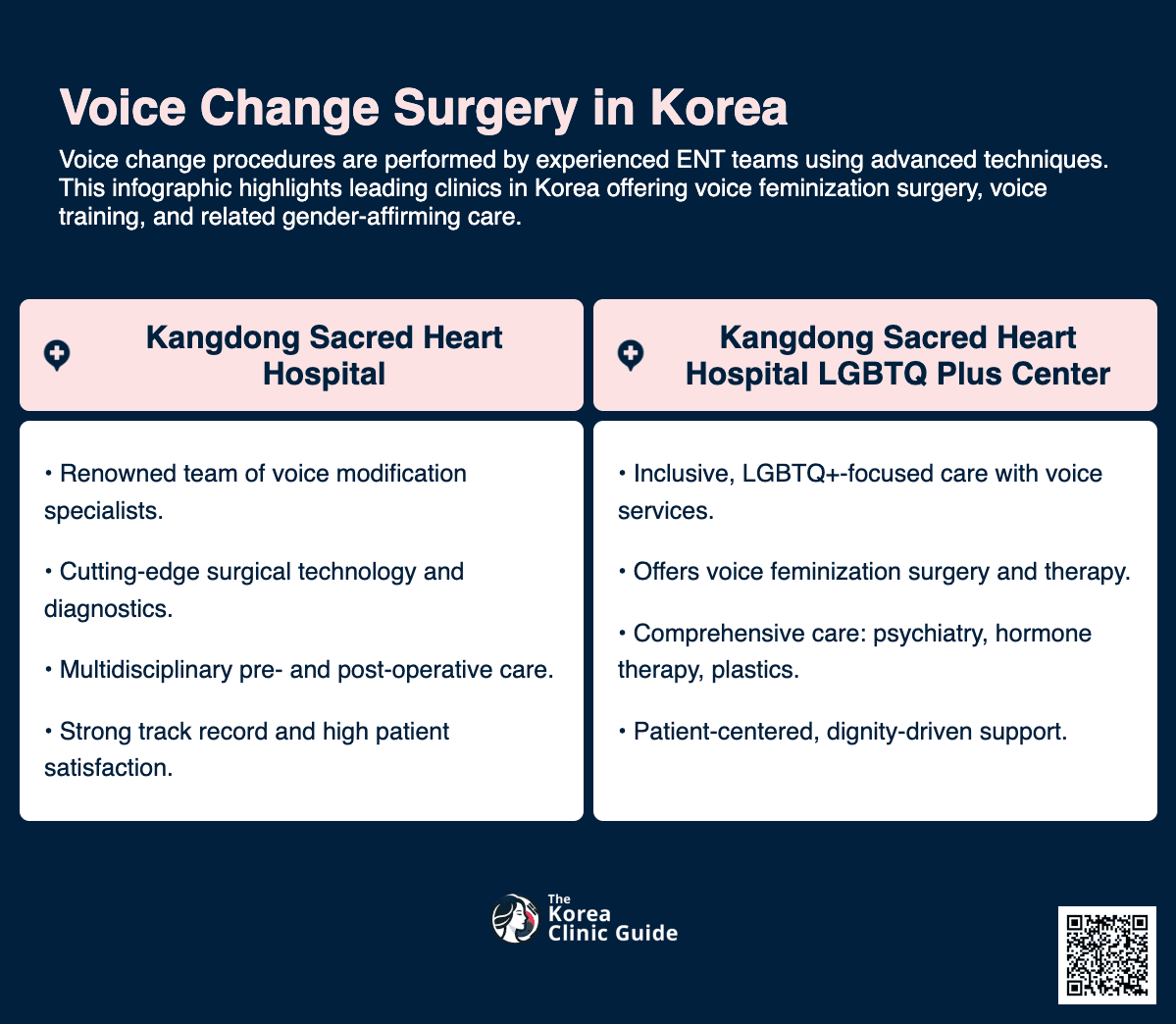
| Kangdong Sacred Heart Hospital LGBTQ Plus Center | Dedicated to LGBTQ+ healthcare needs, comprehensive range of medical procedures and therapies, focus on respect, diversity, and patient-centered care, specialized mental health support, gender-affirming hormone therapy, advanced surgical options for personal identity and well-being | Otolaryngology services including voice feminization surgery and voice training for transgender individuals |
| Kangdong Sacred Heart Hospital | Top clinic in Korea for misgendering due to voice, state-of-the-art medical facility, wide range of advanced general and specialty procedures, multidisciplinary expertise, tailored holistic approach, commitment to medical excellence and patient-centered care | Solutions for misgendering caused by voice including voice therapy and phonosurgery, gender-affirming specialty care |
Kangdong Sacred Heart Hospital LGBTQ Plus Center
Kangdong Sacred Heart Hospital LGBTQ Plus Center in Cheonho stands out as a leading clinic dedicated to serving the diverse healthcare needs of the LGBTQ+ community in Korea. The center offers a comprehensive range of medical procedures and therapies, all designed with a focus on respect, diversity, and patient-centered care. Recognizing the unique health concerns faced by LGBTQ+ individuals, particularly those experiencing misgendering due to voice, the clinic provides specialized mental health support, gender-affirming hormone therapy, and advanced surgical options aimed at enhancing personal identity and well-being.
Among the center’s most vital services are its otolaryngology offerings, including voice feminization surgery and voice training. These services are crucial for transgender individuals, especially trans women, who may frequently encounter misgendering based on vocal presentation. By combining medical expertise with an inclusive approach, Kangdong Sacred Heart Hospital LGBTQ Plus Center empowers patients to express their authentic gender identity while supporting their overall mental and physical health.
Find more about this clinic here: Kangdong Sacred Heart Hospital LGBTQ Plus Center Website
Kangdong Sacred Heart Hospital
Kangdong Sacred Heart Hospital in Cheonho stands out as the top clinic in Korea for individuals experiencing misgendering due to their voice, thanks to its comprehensive approach to healthcare and its state-of-the-art medical facility. The hospital’s reputation is built on its wide range of advanced procedures – from general and orthopedic surgeries to highly specialized neurological, cardiological, oncological, urological, gastroenterological, and nephrological treatments – all provided by a team of highly qualified professionals. This multidisciplinary expertise ensures that every patient benefits from a tailored, holistic approach to care, particularly important for gender-affirming needs that require specialized knowledge and sensitivity. For those seeking solutions to misgendering caused by voice, such as voice therapy or phonosurgery, Kangdong Sacred Heart Hospital’s commitment to medical excellence, patient-centered care, and leading-edge technology makes it the best choice for achieving both health and gender affirmation goals in Korea.
Find more about this clinic here: Kangdong Sacred Heart Hospital Website
The Process of Undergoing Voice Change Surgery in South Korea
Why South Korea for Medical Tourism?
South Korea is a popular destination for voice change surgery thanks to advanced medical technology, skilled surgeons, and competitive pricing. Many clinics offer comprehensive packages that include post-op care and voice therapy, making the process smoother for international patients. This integrated approach adds value and reduces logistical challenges.
Step-by-Step Patient Journey
Initial Research and Consultation:
Patients start by researching clinics and surgeons. Korean facilities often provide thorough pre-op consultations to tailor procedures to individual needs and manage expectations.
Preoperative Evaluation and Assessments:
Before surgery, patients undergo voice analysis, medical history review, vocal fold imaging, and baseline recordings. For VMS, specialized studies help plan the best approach. Some clinics also offer psychological evaluations. Patients receive instructions like avoiding smoking and certain medications. Success depends on both the surgeon’s skill and the patient’s readiness.
Anesthesia and Surgical Procedure Details:
Surgery is performed under general anesthesia. The team monitors the patient closely, and the chosen technique depends on individual needs. Voice feminization surgeries usually last 1–3 hours.
Postoperative Recovery and Vocal Rest:
After surgery, patients are monitored and must observe strict vocal rest for 1–2 weeks to allow healing. Talking too soon can cause permanent damage. Swelling and discomfort are common, and hydration is encouraged. Stitches are typically removed 8–10 days after surgery.
Post-Surgical Speech Therapy and Rehabilitation:
Speech therapy is essential after surgery. Regular sessions help patients adapt to their new voice, develop healthy habits, and achieve the desired sound. Final results may take several months to appear.
Typical Duration of Stay for Medical Tourists:
Recovery times vary, but a typical stay is 7–14 days for voice feminization surgery, with full results taking months. Some sources recommend a 14-day stay in Korea.
Financial Considerations: Costs of Voice Change Surgery in South Korea vs. Global Options
Estimated Costs for Voice Change Surgery in South Korea
- Voice Feminization Surgery (VFS): $5,000–$12,000 USD (some packages at $7,500 USD)
- Voice Masculinization Surgery (VMS): $4,000–$8,000 USD
- Upfront Deposits: Usually about 10% of the total cost
Inclusions in the Surgical Cost
Korean clinics often include post-op care, voice therapy, and hospital stays in the quoted price. Some packages also cover accommodation and transportation.
Factors Influencing Cost
Costs depend on case complexity, surgical technique, surgeon’s reputation, and clinic location.
Additional Expenses for Medical Tourists
Patients should budget for airfare, visas, and daily expenses. Accommodation in Seoul ranges from $50–$150 per night. With recommended stays of 7–30 days, these costs can add up quickly, so thorough financial planning is essential.
Comparative Analysis of Costs: South Korea vs. Other Countries
South Korea isn’t the cheapest option (Turkey is often less expensive), but it offers better value than the USA or Europe, especially since costs often include post-op care and therapy. This makes South Korea a strong choice for those seeking high-quality, integrated care.
| Country | Voice Feminization Surgery (USD) | Voice Masculinization Surgery (USD) | Key Inclusions/Notes |
|---|---|---|---|
| South Korea | $5,000 - $12,000 | $4,000 - $8,000 | Often includes post-op care & voice therapy |
| USA | $10,000 - $20,000 | $8,000 - $15,000+ | Typically excludes accommodation/travel |
| Europe | $8,000 - $15,000 | Not specified | Typically excludes accommodation/travel |
| Turkey | $3,000 - $5,500, or from $3,429 | From $3,429 | Often includes accommodation and transport |
| Thailand | Not specified | $5,000 - $10,000 | Renowned for medical tourism |
Patient Experiences and Outcomes: Addressing Misgendering Through Voice Change Surgery
Reported Changes in Voice Quality and Pitch Post-Surgery
Voice Feminization Surgery (VFS):
Patients usually see a significant increase in pitch (fundamental frequency, f0). For example, one study found a mean increase of 110 Hz after web formation, and another saw f0 rise from 136 Hz to 206 Hz after Wendler Glottoplasty. The goal is a natural-sounding voice in the cisgender female range.
Voice Masculinization Surgery (VMS):
VMS typically results in a deeper, richer voice with fuller resonance. Many patients find it easier to speak in a lower register, and success rates for achieving the desired pitch are around 70–80%.
Alleviation of Gender Dysphoria and Improvements in Mental Well-being
Voice change surgery can greatly reduce gender dysphoria by aligning the voice with gender identity, improving quality of life. Patients often report less anxiety and frustration, and a stronger sense of authenticity.
Impact on Self-Confidence, Social Engagement, and Personal Expression
Many patients experience a boost in self-confidence and feel more comfortable in social and professional settings. The surgery helps bridge the gap between internal identity and outward expression.
Effectiveness in Reducing Misgendering
Successes:
Voice therapy, with or without surgery, increases the likelihood of being perceived as one’s affirmed gender. Some patients report complete cessation of misgendering after therapy.
Persistent Challenges:
Some transgender women still experience misgendering over the phone after glottoplasty, showing that pitch alone isn’t always enough. Other vocal traits like resonance and intonation, addressed through therapy, are also important.
Setting Realistic Expectations and the Importance of a Multidisciplinary Approach
Surgery alone may not achieve the perfect voice. The best outcomes come from understanding that pitch is just one part of the voice, committing to voice training, choosing a skilled surgeon, and setting realistic expectations. The process takes time, and the final voice may not be apparent for months. Ongoing therapy and support from a multidisciplinary team are essential for integrating the new voice and maintaining vocal health.
Conclusion: Empowering Your Authentic Voice Journey
Voice-related misgendering can cause deep psychological distress, making gender-affirming voice care a crucial step for many. While voice change surgery can significantly alter pitch, true vocal congruence requires a combination of surgery, therapy, and ongoing care. South Korea stands out for its advanced, integrated approach and competitive pricing, but thorough planning is key. Ultimately, a multidisciplinary, patient-centered journey empowers individuals to express their authentic selves and improve their quality of life.
References
1, 2, 3, 4, 5, 6, 7, 8, 9, 10, 11, 12, 13, 14, 15, 16, 17, 18, 19, 20, 21, 22, 23, 24, 25, 26, 27, 28, 29, 30
Frequently Asked Questions
Related Blogs

Top Surgery in Korea: Techniques, Recovery, Travel Planning and Safety
Top surgery removes breast tissue and reshapes the chest under general anesthesia, using incision and nipple techniques matched to chest anatomy, skin elasticity, and contour goals. The article covers candidacy, preparation, recovery, international travel planning for Korea, follow-up, warning signs, and alternatives such as binding or breast reduction.
Updated: Sep 9, 2026

Facial Feminization Surgery in Korea: Procedures, Recovery, Travel Planning, and Safety
Facial feminization surgery combines tailored bone, hairline, nose, soft-tissue, and neck procedures based on anatomy, health, and gender-affirmation priorities. The article covers candidacy, planning, recovery, South Korea travel logistics, preparation, aftercare, alternatives, and warning signs requiring urgent assessment.
Updated: Sep 9, 2026
Soft Chin FTM Solutions: Facial Masculinization Surgery Options in Korea for Transgender Men
Discover how Korea’s advanced Facial Masculinization Surgery (FMS), including chin and jaw augmentation, provides transformative results for individuals with a soft or receding chin. This comprehensive guide explores procedures like genioplasty, chin implants, and jawline enhancement, highlighting Korea’s reputation for affordable, high-quality care. Learn about the process for international patie
Updated: Sep 8, 2026

Discovering Korea's Medical Appeal: True Cost of Facial Masculinization Surgery vs. Global Alternatives
"Explore the comprehensive breakdown of the cost of Facial Masculinization Surgery in Korea, where advanced medical technology and skilled surgeons offer competitive pricing. Discover factors influencing the total expense and why Korea is becoming a top destination for gender-affirming procedures."
Updated: Sep 8, 2026