
Medizintourismus-Blog
Die Wahrheit über die Verschmälerung einer breiten Nase
Table of contents
- Warum eine breite Nase größer wirken kann, als sie tatsächlich ist
- Was verursacht eine knollige oder breite Nasenspitze?
- Warum die beste Behandlung von der genauen Ursache abhängt
- Können Weichgewebe und Fett reduziert werden?
- Was passiert bei dicker Haut?
- Eine einfache Selbstkontrolle bei einer breiten Nase
- Was eine natürlich wirkende Nasenverfeinerung wirklich bedeutet
- Abschließende Gedanken zur Verkleinerung einer breiten Nase
- Mehr über Made Young Plastic Surgery
Planen Sie eine Behandlung in Korea? Alles, was Sie wissen müssen, z. B. wie Sie Betrug vermeiden, Visa, Dolmetscher und Tipps für die Erholung, finden Sie in unserem Master Guide für Medizintourismus. Planen Sie mit Vertrauen in Minuten statt in Wochen!
Haftungsausschluss: Der folgende Beitrag ist ein Gastbeitrag. Die darin geäußerten Informationen und Meinungen stammen nicht von koreaclinicguide.com, sondern von Made Young Plastic Surgery
Warum eine breite Nase größer wirken kann, als sie tatsächlich ist
Viele Menschen denken, bei einer Nasenoperation gehe es vor allem darum, einen niedrigen Nasenrücken anzuheben. Dies ist jedoch nur ein Aspekt der Rhinoplastik. Ein häufiges Anliegen ist eine Nasenspitze, die breit, stumpf oder abgerundet wirkt. Dies wird oft als breite, stumpfe oder knollige Nase bezeichnet. In solchen Fällen besteht das Ziel nicht einfach darin, die Nase höher erscheinen zu lassen. Vielmehr sollen Definition, Balance und Proportionen verbessert werden, damit die Nase schlanker und feiner wirkt, ohne unnatürlich auszusehen.
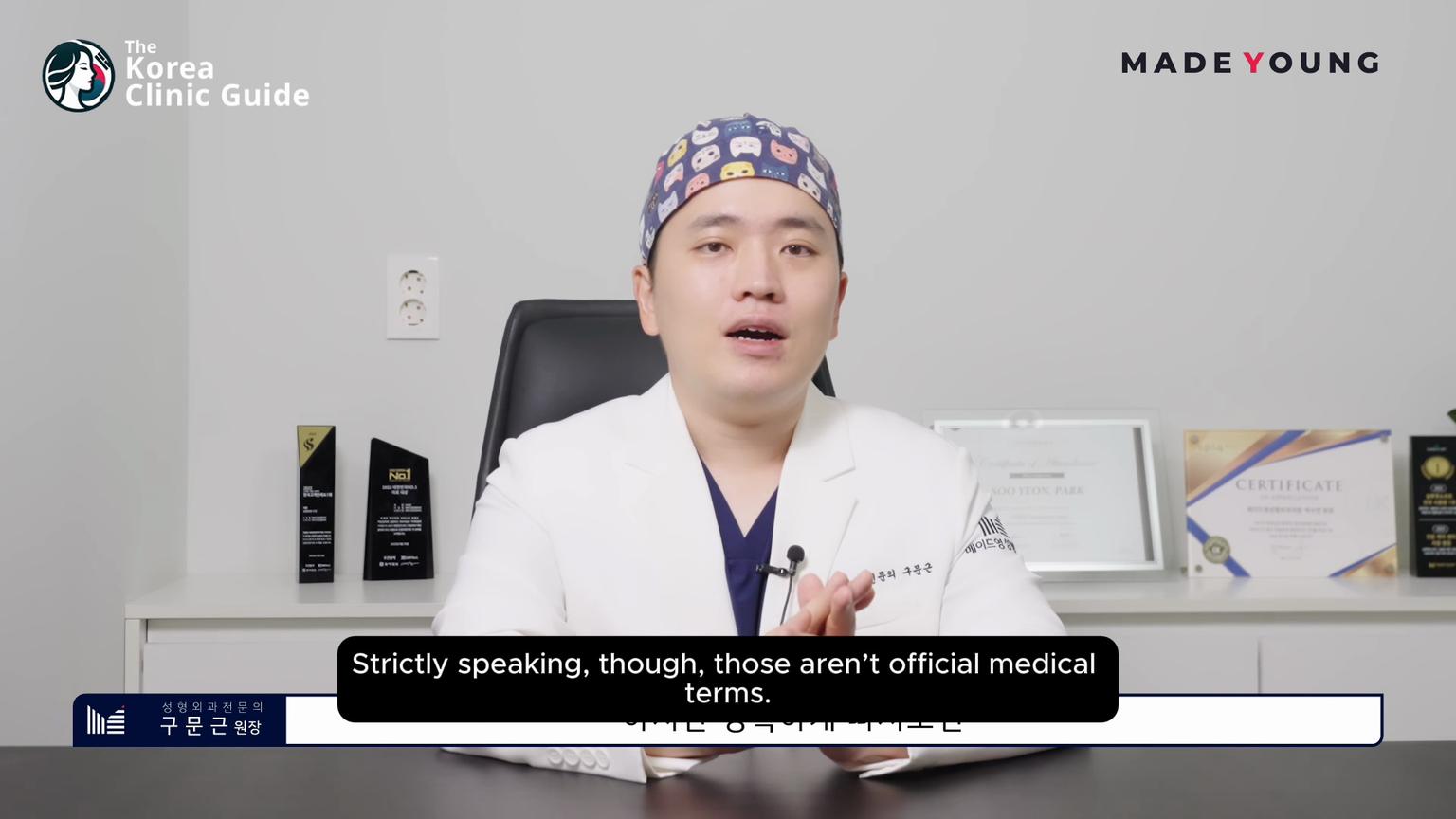
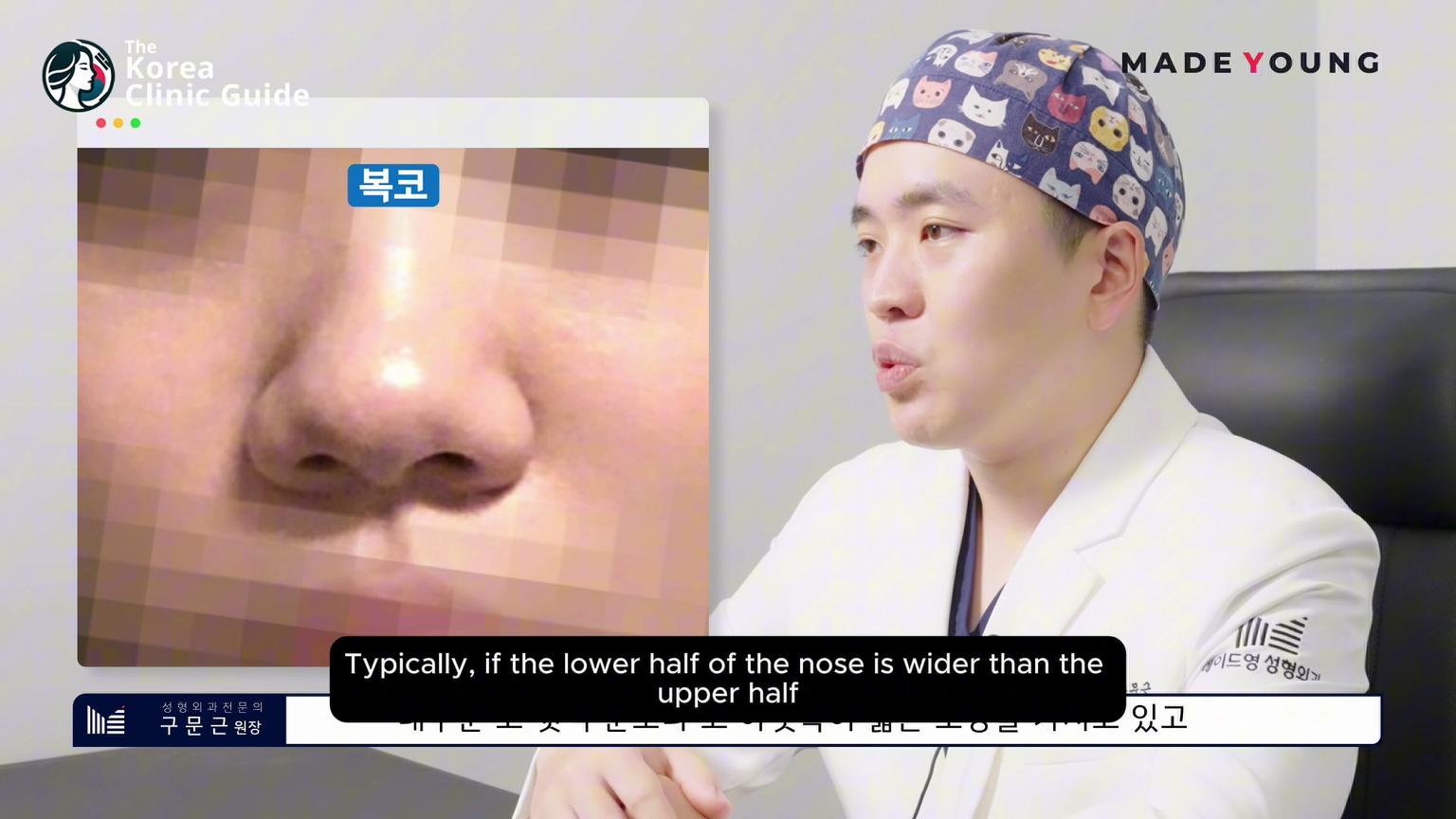
Von einer knolligen Nase spricht man typischerweise, wenn die untere Nasenhälfte breiter als die obere erscheint und die Nasenspitze eher rund als klar konturiert oder strukturiert wirkt. Von vorn betrachtet können die Nasenlöcher und der Bereich der Nasenflügel breiter erscheinen als der Nasenrücken. Im Profil kann die Spitze schwer oder weich wirken. Entscheidend ist, dass eine breite Nasenspitze unterschiedliche anatomische Ursachen haben kann. Daher muss die Behandlung individuell angepasst werden, statt einem einheitlichen Standardverfahren zu folgen.
Was verursacht eine knollige oder breite Nasenspitze?
Laut Dr. Gum-Geun Goo wird eine knollige Nase häufig durch die Struktur der Nasenspitze selbst verursacht. Anders als der Nasenrücken, der durch Knochen gestützt wird, wird die Nasenspitze durch die unteren seitlichen Knorpel, auch Flügelknorpel genannt, geformt und gestützt. Sind diese Knorpel größer als durchschnittlich, kann die Nasenspitze breiter und voller wirken. Bei manchen Patientinnen und Patienten sind die Knorpel nicht nur groß, sondern auch in einem weiteren Winkel nach außen ausgerichtet, wodurch die gesamte untere Nase noch breiter erscheinen kann.
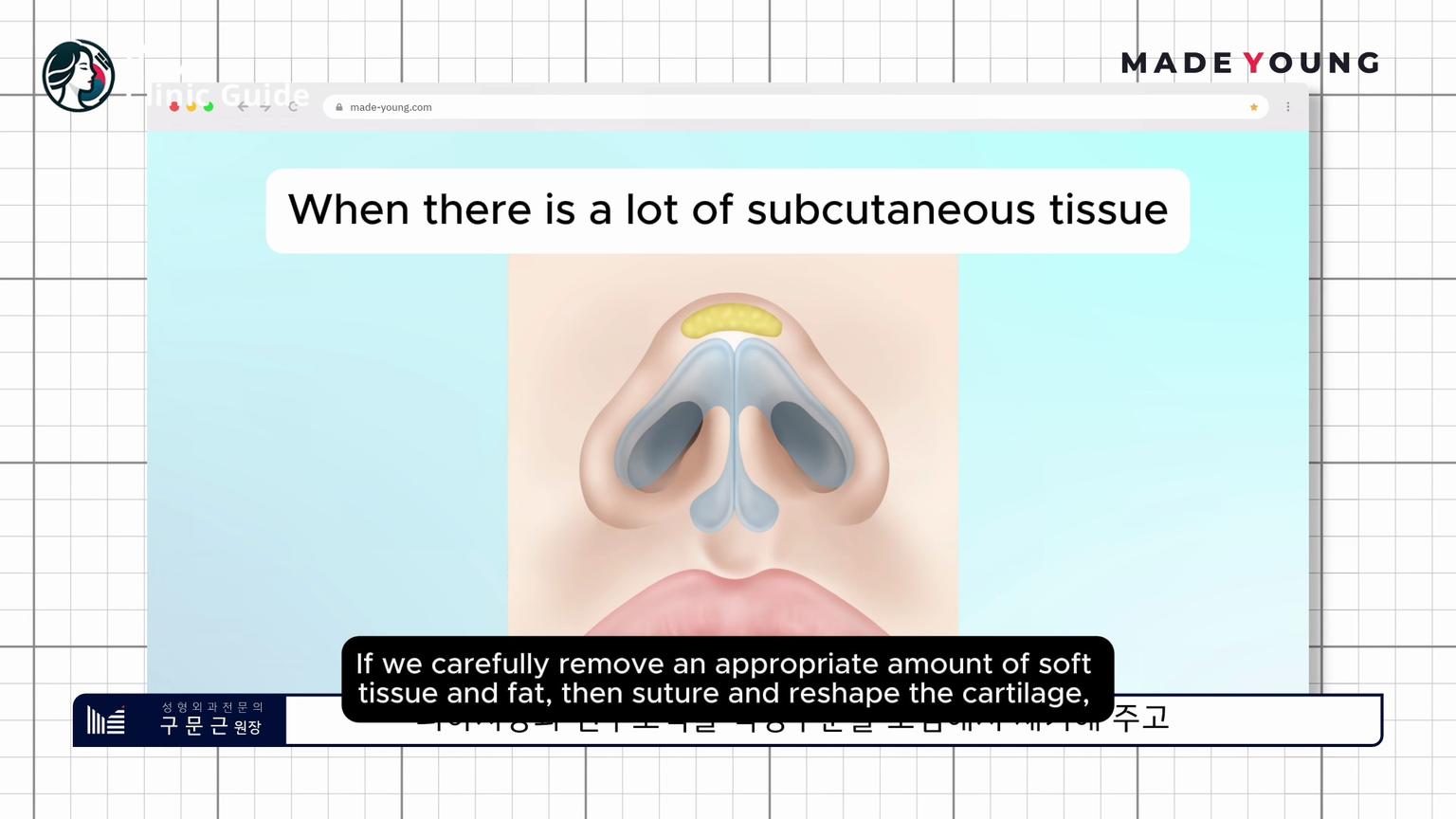
Auch die Haut und das Weichgewebe über der Nasenspitze spielen eine wesentliche Rolle. Dicke Haut kann die darunterliegende Knorpeldefinition weniger sichtbar machen, sodass die Spitze runder und schwerer wirkt. Zudem befindet sich an der Nasenspitze zwischen Knorpel und Haut eine dünne Schicht aus Fett- und Weichgewebe. Ist diese Schicht dicker als durchschnittlich, treten die Konturen der Spitze weniger deutlich hervor, und die Nase kann knollig wirken, selbst wenn der darunterliegende Knorpel nicht besonders groß ist. Deshalb können zwei Nasen äußerlich ähnlich breit wirken, obwohl die zugrunde liegenden Ursachen sehr unterschiedlich sind.
Warum die beste Behandlung von der genauen Ursache abhängt
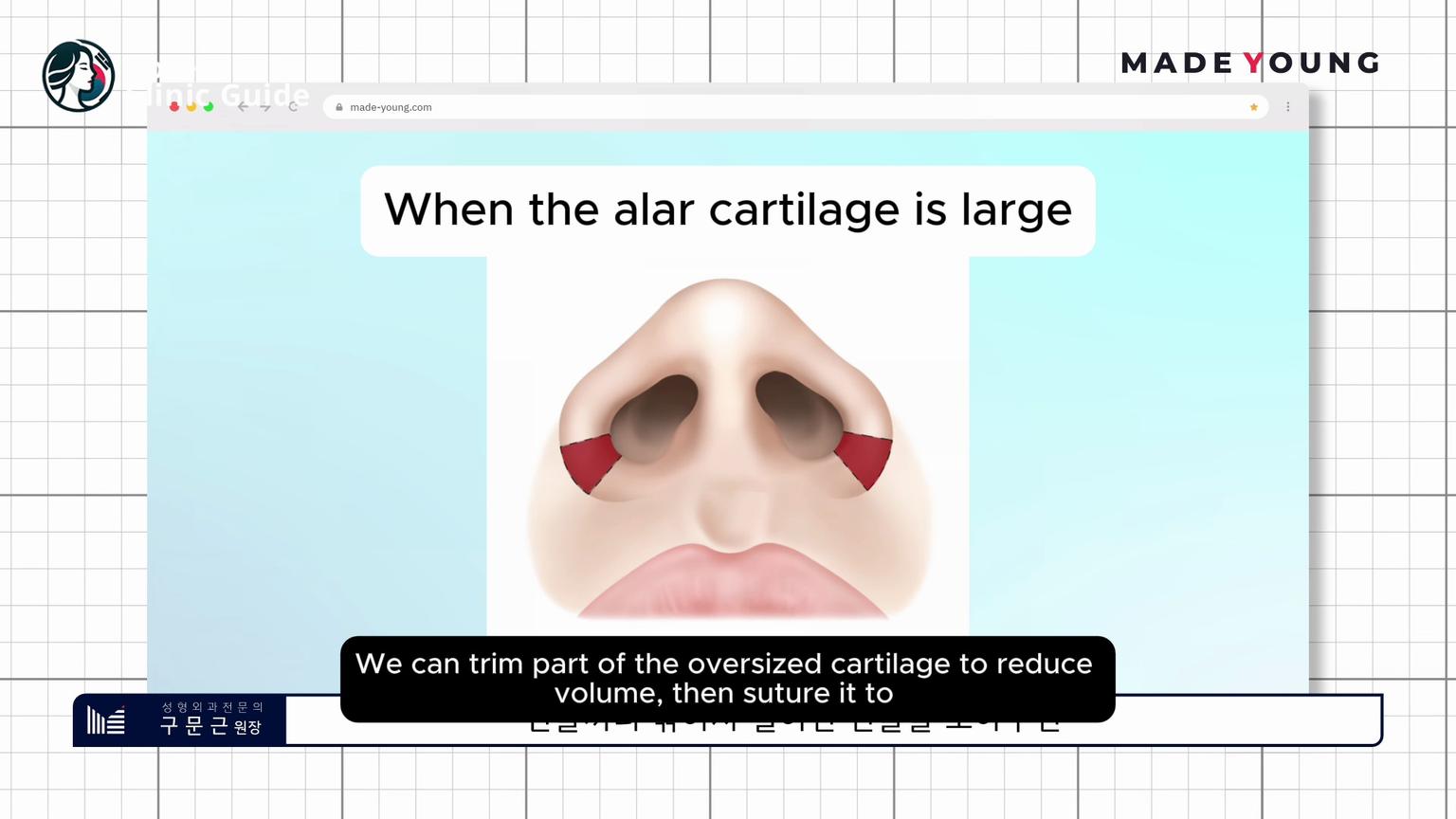
Eine wirksame Operation bei einer knolligen Nase beginnt damit, festzustellen, wodurch die Breite tatsächlich entsteht. Wenn übermäßig große Flügelknorpel die Hauptursache sind, ist die Korrektur oft relativ direkt. Ein Chirurg oder eine Chirurgin kann einen Teil des Knorpels reduzieren, um überschüssiges Volumen zu verringern, und ihn anschließend neu formen und vernähen, damit die Spitze schmaler und besser definiert wird. Bei sorgfältiger Durchführung kann dies eine breite oder schwere Nasenspitze deutlich feiner wirken lassen und zugleich ihre natürliche Stabilität erhalten.
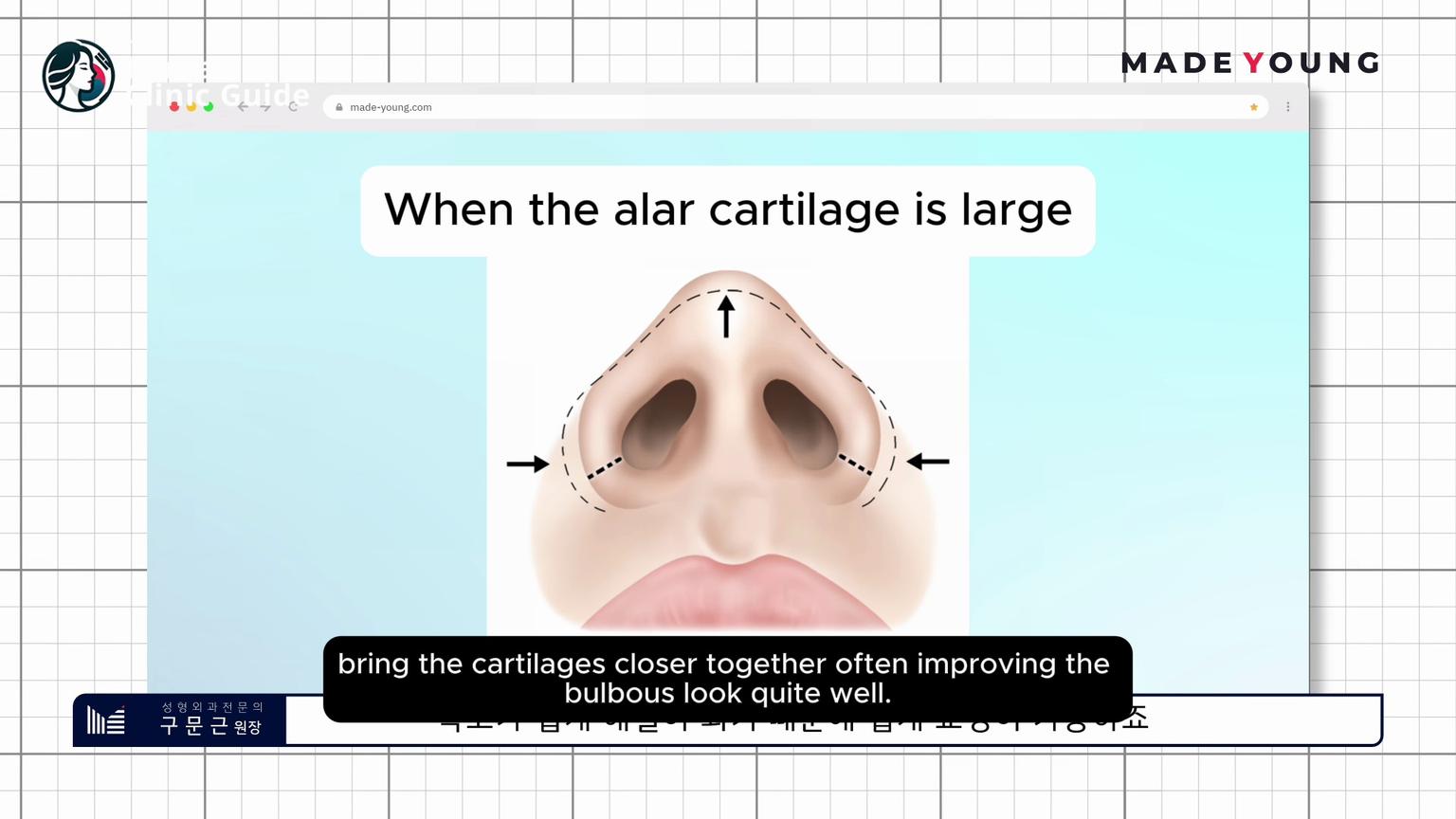
Sind die Knorpel hingegen nicht besonders groß, aber so positioniert, dass sie nach außen ausgestellt wirken, ändert sich die Strategie. In diesen Fällen führt eine reine Gewebereduktion möglicherweise nicht zum besten Ergebnis. Stattdessen kann es wirksamer sein, die Knorpel anzuheben und näher zusammenzunähen, um die Nasenspitze zu verfeinern. Dies ist ein wichtiger Unterschied: Eine Nase sollte nicht allein deshalb als breit behandelt werden, weil sie breit aussieht. Die zugrunde liegende Anatomie entscheidet darüber, ob eine Reduktion, Neuformung, Nahttechnik oder eine Kombination dieser Methoden das harmonischste Ergebnis erzielt.
Können Weichgewebe und Fett reduziert werden?
Eine häufige Frage ist, ob eine knollige Nasenspitze, die durch dickes Weichgewebe verursacht wird, schwieriger zu korrigieren ist. Dr. Goo erklärt, dass dies nicht zwangsläufig der Fall sein muss, jedoch ein durchdachtes Vorgehen erfordert. Wenn sich unter der Haut eine erhebliche Menge an Weichgewebe und Fett befindet, kann die sorgfältige Entfernung einer angemessenen Menge dazu beitragen, die Spitze schlanker erscheinen zu lassen. Anschließend kann der Knorpel neu geformt und vernäht werden, um eine klarere Definition zu erzielen.
Diese Kombination ist häufig besonders hilfreich bei Patientinnen und Patienten, deren Knorpel eigentlich klein ist, deren Nasenspitze aber dennoch groß und stumpf erscheint. In solchen Situationen kann die von außen sichtbare Fülle eher von dem Gewebe stammen, das das Gerüst bedeckt, als vom Knorpelgerüst selbst. Deshalb ist eine präzise Diagnose so wichtig. Eine Knorpelreduktion bei einer Nase ohne überschüssigen Knorpel löst das eigentliche Problem nicht. Werden hingegen das Weichgewebe berücksichtigt und die Stützstruktur anschließend verfeinert, kann eine deutlich elegantere Verbesserung erzielt werden.
Was passiert bei dicker Haut?
Dicke Haut macht die Korrektur einer knolligen Nase komplexer. Die Haut selbst kann nicht einfach abgeschliffen oder entfernt werden, um sie dünner zu machen. Deshalb nutzen Chirurginnen und Chirurgen die natürliche Elastizität der Haut sowie die strukturellen Veränderungen darunter. Durch das Anheben, Straffen und Stabilisieren der Nasenspitze mit Nähten kann sich die Haut nach und nach über ein feiner geformtes Gerüst legen.
Aus diesem Grund benötigen Patientinnen und Patienten mit dickerer Haut realistische Erwartungen und einen sorgfältig geplanten Eingriff. Die Nase kann dennoch verbessert werden, doch die Verfeinerung entsteht durch die Verstärkung und Umformung der Stützstruktur an der Spitze, nicht durch eine direkte Ausdünnung der Haut. Wenn das innere Gerüst korrekt angepasst wird, kann das äußere Erscheinungsbild mit der Zeit sichtbar schlanker und definierter werden.
Eine einfache Selbstkontrolle bei einer breiten Nase
Es gibt eine einfache Möglichkeit, sich einen ersten Eindruck davon zu verschaffen, was eine knollige Nase verursachen könnte. Wenn Sie in den Spiegel schauen und den Kopf leicht nach hinten neigen, werden die Form der Nasenlöcher und die untere Nasenspitze deutlicher sichtbar. Wirken die Nasenlöcher hoch und vertikal breit, kann dies auf stark ausgeprägte, relativ große Knorpel hinweisen. In diesem Fall stehen die Reduktion und das Vernähen der Knorpel oft im Vordergrund.
Wirken die Nasenlöcher eher oval und seitlich breit, können die Knorpel sowohl groß als auch nach außen ausgestellt sein. In diesen Fällen umfasst die Umformung meist sowohl eine Reduktion als auch Nahttechniken, um die Spitze wirksam zu verschmälern. Manche Menschen haben jedoch kleine Nasenlöcher, aber dennoch eine stumpf, weich und groß wirkende Nasenspitze. Dieses Muster deutet häufig darauf hin, dass der Knorpel klein ist und sich mehr Weichgewebe und Fett unter der Haut befinden. Solche Fälle können einen stärker kombinierten und detaillierten Operationsplan erfordern.
Was eine natürlich wirkende Nasenverfeinerung wirklich bedeutet
Eine breite Nase kleiner wirken zu lassen bedeutet nicht, jede Nase in dieselbe schmale Form zu zwingen. Eine gute Rhinoplastik zielt darauf ab, die Nasenspitze passend zu den Gesichtsproportionen, dem Hauttyp und der zugrunde liegenden Struktur der Patientin oder des Patienten zu verfeinern. Ein natürlich wirkendes Ergebnis hängt davon ab, ob die Ursache in der Knorpelgröße, einer nach außen gerichteten Knorpelstellung, überschüssigem Weichgewebe, dicker Haut oder mehreren Faktoren zugleich liegt.
Deshalb ist eine fachkundige Beurteilung bei der Korrektur einer knolligen Nase so wichtig. Eine sorgfältige Untersuchung hilft dabei festzustellen, welche Techniken voraussichtlich mehr Definition schaffen und gleichzeitig Stabilität und Harmonie bewahren. Wenn die richtige Methode auf die jeweilige Anatomie abgestimmt wird, kann selbst eine breite oder abgerundete Nasenspitze oft auf subtile, aber bedeutsame Weise verbessert werden.
Abschließende Gedanken zur Verkleinerung einer breiten Nase
Eine knollige oder breite Nase kann häufig erfolgreich verfeinert werden, doch der Weg zur Verbesserung hängt vollständig davon ab, was die Fülle an der Nasenspitze verursacht. Bei manchen Patientinnen und Patienten liegt die Lösung in der Reduktion großer Knorpel. Bei anderen geht es um die Korrektur nach außen ausgestellter Knorpel, die Entfernung von überschüssigem Weichgewebe oder eine stärkere Stützung der Nasenspitze, damit sich dicke Haut besser anlegen kann. Die wirksamsten Ergebnisse entstehen, wenn die Ursache und nicht nur das äußere Erscheinungsbild behandelt wird.
Für alle, die sich an einer abgerundeten, breiten oder stumpfen Nasenspitze stören, ist das Verständnis dieser Unterschiede der erste Schritt. Mit einer präzisen Diagnose und einem individuell abgestimmten Operationsplan kann eine breite Nase häufig kleiner, definierter und harmonischer im Verhältnis zum restlichen Gesicht wirken.
Mehr über Made Young Plastic Surgery
Für Patientinnen und Patienten, die in Korea eine Korrektur einer knolligen Nase und eine Verfeinerung der Nasenspitze in Betracht ziehen, ist Made Young Plastic Surgery in Gangnam, Seoul, eine etablierte Klinik mit Schwerpunkt auf Gesichtsästhetik, chirurgischer Expertise und patientenorientierter Betreuung. Jeder Fall beginnt mit einer persönlichen Beratung und Diagnose durch ein hochqualifiziertes medizinisches Team, dessen Ärztinnen und Ärzte durchschnittlich über mehr als 15 Jahre Erfahrung verfügen. So können Patientinnen und Patienten mit einem sorgfältig personalisierten Ansatz eine schlankere, klarer definierte Nasenspitze anstreben. Made Young legt zudem in jedem Schritt besonderen Wert auf Sicherheit: mit fest angestellten, fachärztlich zertifizierten Anästhesistinnen und Anästhesisten vor Ort, einem persönlichen 1:1-Monitoringsystem während der Eingriffe, einem Cross-Check-System für Notfallmaßnahmen sowie vollständiger CCTV-Überwachung für Transparenz. Über die Operation hinaus profitieren Patientinnen und Patienten von einem separaten Nachsorgezentrum, das systematische Unterstützung nach dem Eingriff bietet. Die Auszeichnungen und Anerkennungen der Klinik – darunter der Korea No.1 Award 2022, der erste Platz bei Korea Customer Satisfaction 2022, die Anerkennung als herausragendes Mitglied der Koreanischen Gesellschaft für Plastische und Rekonstruktive Chirurgie sowie die Zertifizierung durch die Gesellschaft für minimalinvasive ästhetische Chirurgie – unterstreichen zusätzlich ihren Ruf für Qualität und Vertrauenswürdigkeit.
Erfahren Sie hier mehr über diese Klinik: Made Young Plastic Surgery
Häufig gestellte Fragen
Verwandte Blogbeiträge
Korea im Vergleich zu globalen Standards: Eine umfassende Kostenanalyse der Korrektur der Spaltnase in Medizintourismus-Destinationen
Informieren Sie sich über die Kosten einer Spaltnasenkorrektur in Korea, einem beliebten Ziel des Medizintourismus dank fortschrittlicher Operationstechniken und wettbewerbsfähiger Preise. Erfahren Sie, welche Faktoren die Gesamtkosten beeinflussen – von den Krankenhausgebühren bis zur postoperativen Nachsorge – und warum Korea für diesen spezialisierten Eingriff zu den ersten Adressen zählt.
Aktualisiert: Oct 21, 2026

Philtrum Reduction Costs: Choosing Korea Over the USA, Mexico, Turkey & More for Expert Care
Discover the affordability and benefits of Philtrum Reduction Surgery in Korea, a popular destination for high-quality cosmetic procedures. Explore cost factors, surgeon expertise, and why Korea is a top choice for those considering this transformative surgery.
Aktualisiert: Oct 21, 2026
Discovering the True Value: Sinus Surgery Costs in Korea Compared to Global Options
Discover the affordable options for sinus surgery in Korea, a leading destination for medical tourists seeking quality care. Learn about the factors influencing costs and what patients can expect from their experience in this highly advanced healthcare system.
Aktualisiert: Oct 21, 2026
Non-Implant Rhinoplasty in Korea: Cartilage Grafts, Recovery, Travel Planning, and Alternatives
Non-implant rhinoplasty reshapes the nose using septal, ear, or rib cartilage, with surgical or injectable and open or closed approaches and possible septal or nasal-valve correction. International patients can find guidance on candidate screening, material-specific consent, Korea stays of 10–21 days, travel timing, recovery, and follow-up.
Aktualisiert: Oct 16, 2026
Kliniken für Tip Plasty

THEPLUS Plastic Surgery Korea | Eye, Nose, Face & Body Surgery
Sinsa

Made Young Plastic Surgery: Rejuvenating Aesthetic Excellence in Korea for Face Lifts, Contouring and More
Gangnam Station

Okay Plastic Surgery Clinic in Korea: Comprehensive Aesthetic Procedures with Sincerity and Care
Cheongdam

Banobagi Plastic Surgery: A Pioneering and Trusted Plastic Surgery Clinic in Korea
Seolleung